



Volume 6, Issue 4 (2026) – 10 articles
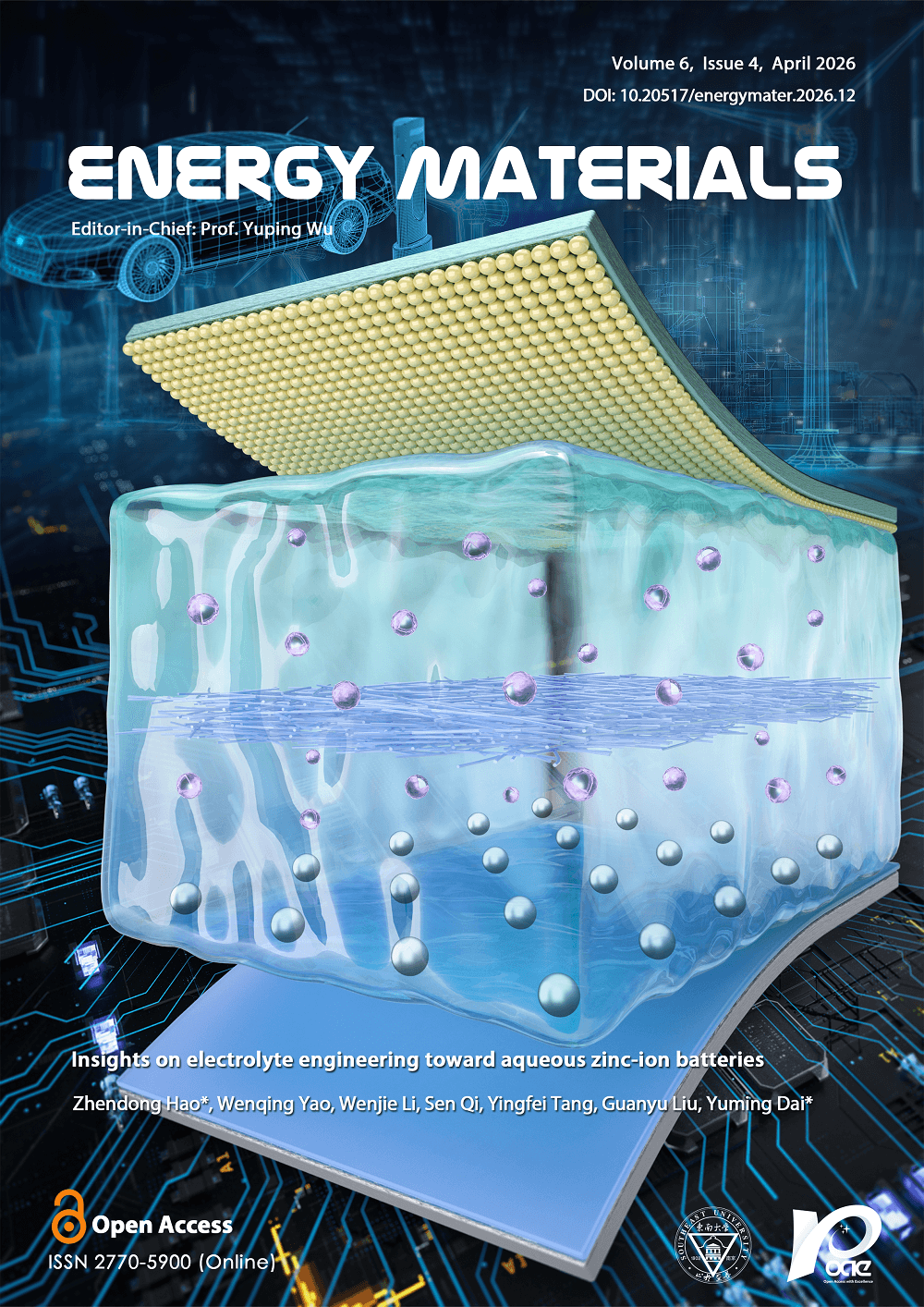
Cover Picture: The pursuit of safety and efficiency in electrochemical energy storage and conversion systems has long been a central theme. Among these systems, aqueous zinc-ion batteries (AZIBs) are considered promising candidates for next-generation energy storage devices due to their high safety, low cost, and high capacity. However, several critical issues associated with Zn2+ ion transport, including dendrite formation and side reactions at zinc (Zn) metal anodes, severely restricted their practical applications. As the “blood” of AZIBs, electrolytes play a crucial role in stabilizing Zn metal anodes by introducing various components or optimizing the liquid environment. Therefore, a comprehensive understanding of electrolyte engineering for AZIBs is of great significance. In this review, the development of electrolytes is first discussed. Then, the roles of electrolytes in AZIBs are summarized based on recent advances, including regulation of the solvation process, optimization of the solid electrolyte interphase layer, and modulation of ionic transport. Finally, perspectives on the further development of electrolytes for AZIBs are provided. This review may offer valuable insights for the design of functional electrolytes for advanced electrochemical energy storage and conversion systems.
view this paper 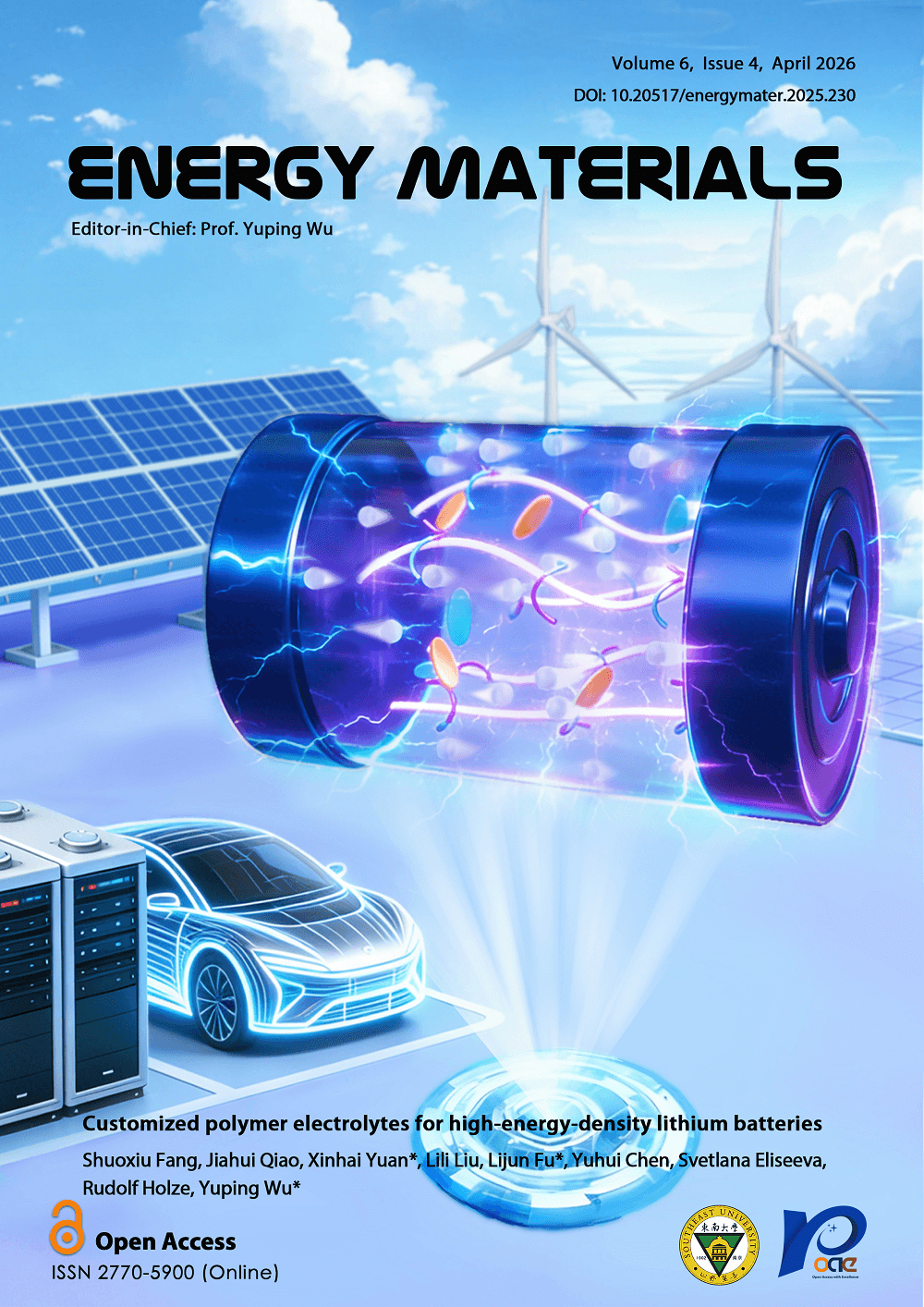
Back Cover Picture: Solid-state batteries with lithium-rich manganese layered oxide (LRMO) cathodes, anode-free architectures, and polymer electrolytes offer high energy density and enhanced safety. However, unstable cathode morphology and irreversible redox reactions at the electrolyte-cathode interface lead to severe interfacial degradation and poor cycling stability. Recently, a fluoropolyether-based polymer electrolyte has been developed, which is a copolymer synthesized via in situ polymerization of poly(ethylene glycol) methyl ether acrylate and fluorohydrocarbon monomers. Its anion-rich solvation environment drives the in situ formation of fluorine-rich interphases at both electrodes and significantly improves the redox reversibility of LRMO. This quasi-solid polymer electrolyte, containing 30 wt% trimethyl phosphate, enables the LRMO cathode to achieve energy densities of 604 Wh kg-1 and 1,027 Wh L-1 in pouch batteries. Despite this progress, practical deployment still requires the development of low-fluorine electrolytes, uniform in situ polymerization in large-format batteries, improved mechanical robustness, and long-term stability with lithium metal and high-voltage LRMO cathodes.
view this paper