
fig3
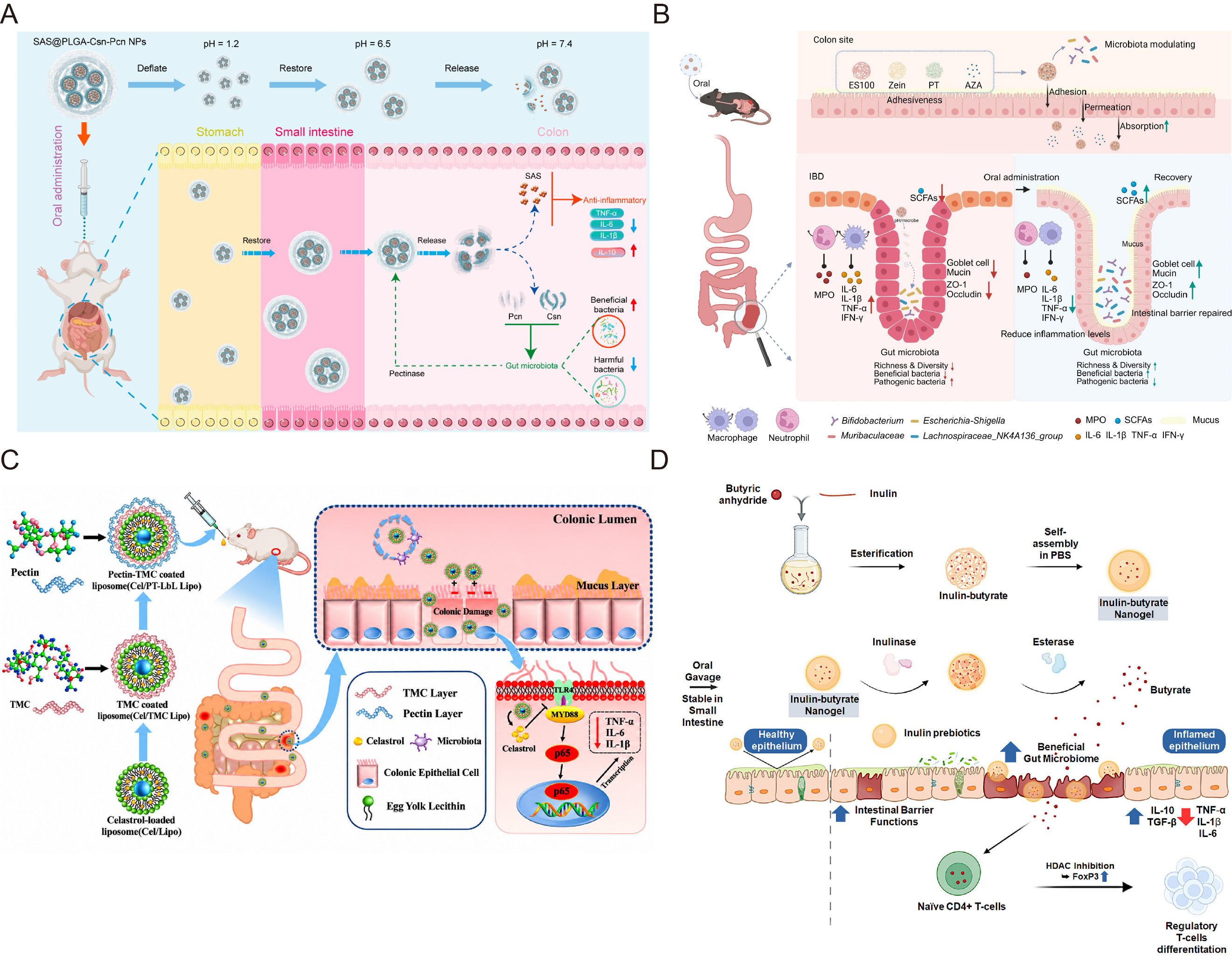
Figure 3. Prebiotic-integrated nanoplatforms combined with conventional drugs and bioactive therapeutics for IBD treatment. (A) Pectin/chitosan-coated PLGA nanoparticles for colon-specific sulfasalazine delivery, with pectinase-triggered shell degradation and microbiota modulation[67]. (A) is adapted from Ref.[67], under CC BY 4.0 License; (B) Pectin/zein/Eudragit S100 nanoparticles for colonic azathioprine delivery and recovery of microbial, SCFA, and barrier indices[68]. (B) is adapted from Ref.[68], under CC BY 4.0 License; (C) Pectin/TMC-coated celastrol liposomes for colonic retention and suppression of inflammatory signaling[69]. (C) is adapted from Ref.[69], under CC BY 4.0 License; (D) Inulin-butyrate nanogels enabling enzyme-responsive release, microbiota remodeling, barrier repair, and Treg promotion[58]. (D) is adapted from Ref.[58], under CC BY 4.0 License. (C) was further modified for improved graphical clarity and text legibility using AI-assisted image editing, without intentional alteration of the scientific content. AZA: Azathioprine; Csn: chitosan; ES100: Eudragit S100; FoxP3: forkhead box P3; HDAC: histone deacetylase; IFN-γ: interferon-γ; IL: interleukin; MPO: myeloperoxidase; MyD88: myeloid differentiation primary response 88; NF-κB: nuclear factor kappa B; NP: nanoparticle; Pcn/PT: pectin; PLGA: poly(lactic-co-glycolic acid); SAS: sulfasalazine; SCFA: short-chain fatty acid; TLR4: Toll-like receptor 4; TMC: trimethylated chitosan; TNF-α: tumor necrosis factor-α; Treg: regulatory T cell; IBD: inflammatory bowel disease.