

fig1
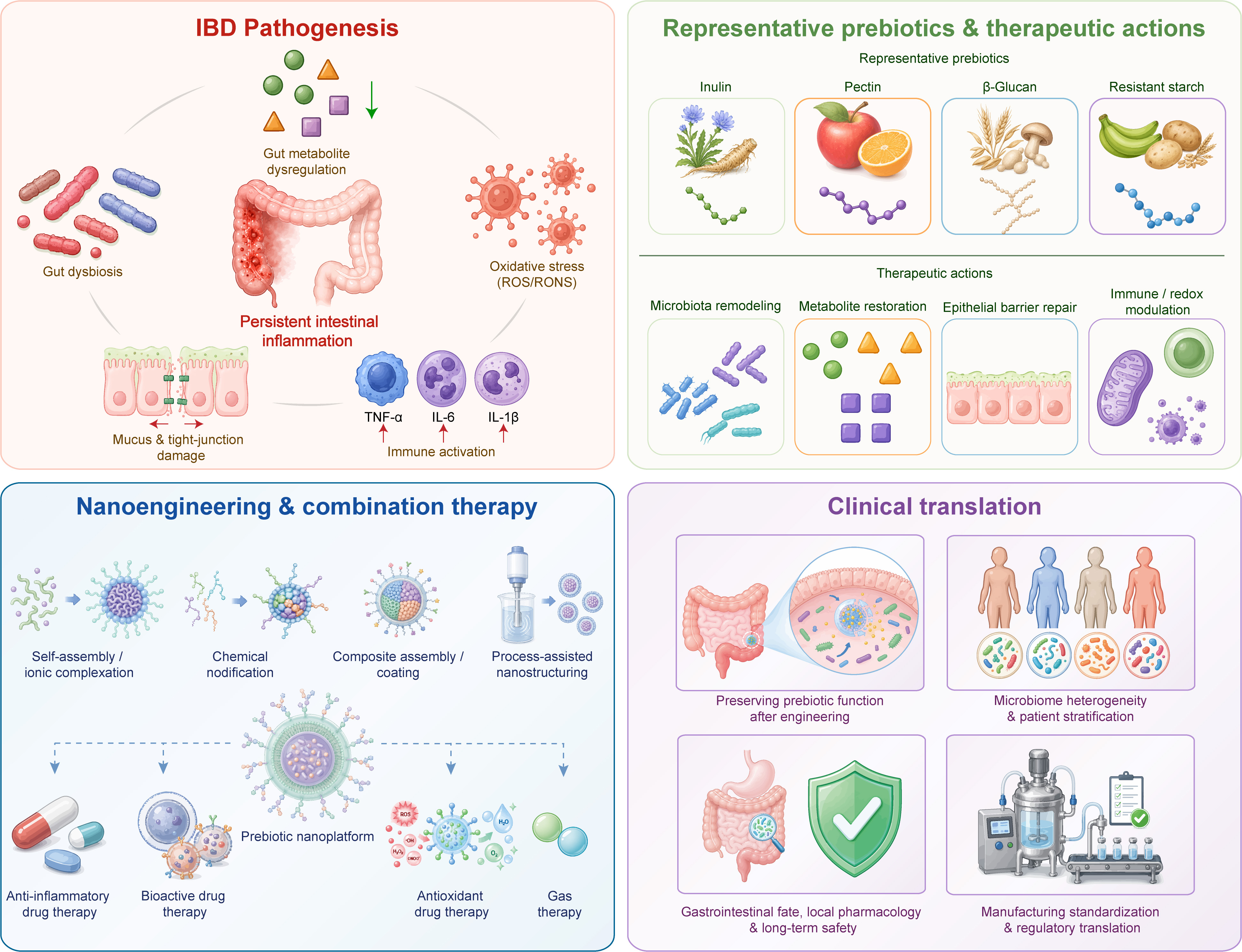
Figure 1. Prebiotic-integrated nanoplatforms for IBD therapy and their translational considerations. IBD involves interconnected disturbances in the gut microbiota, microbial metabolism, epithelial barrier, redox balance, and mucosal immunity. Prebiotics such as inulin, pectin, β-glucan, and resistant starch can act through microbiota remodeling, metabolite restoration, barrier repair, and immune/redox regulation. These materials can be engineered into nanoscale systems through self-assembly, ionic complexation, chemical modification, composite assembly, coating, or process-assisted nanostructuring, and further combined with anti-inflammatory, biological, antioxidant, or gas-based therapies. Key translational issues include retention of prebiotic activity after engineering, microbiome-dependent response variability, gastrointestinal fate and long-term safety, and manufacturing and regulatory standardization. IBD: Inflammatory bowel disease; IL: interleukin; ROS: reactive oxygen species; RONS: reactive oxygen and nitrogen species; TNF-α: tumor necrosis factor-α.