

fig1
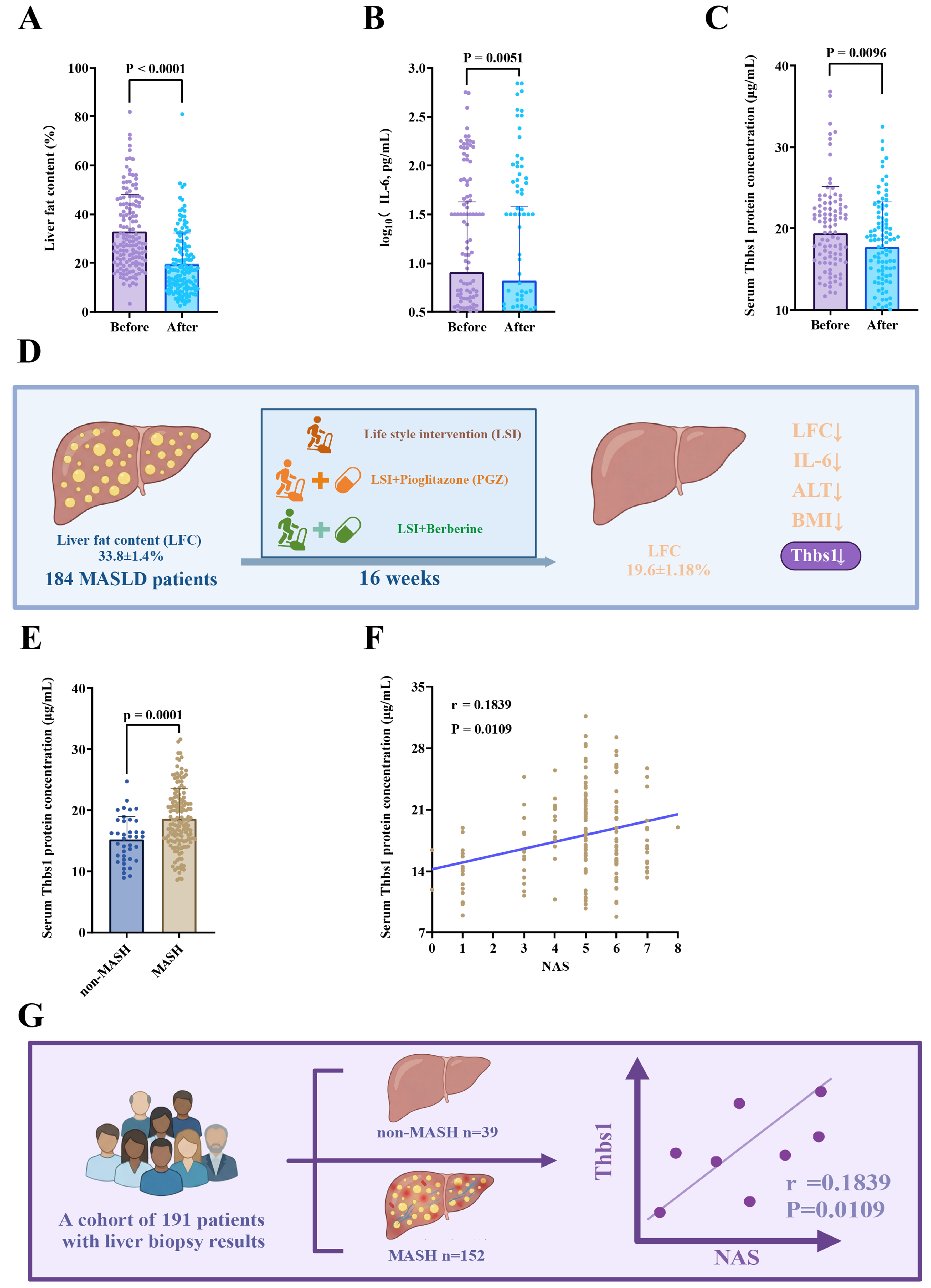
Figure 1. Serum Thbs1 correlates with MASH severity. (A-D) In MASLD patients (RCT, n = 184), 16 weeks of LSI and/or PGZ/BBR reduced LFC, IL-6, ALT, BMI, and serum Thbs1; (E) Patients with MASH showed significantly higher serum Thbs1 levels than those in the non-MASH group; (F) Serum Thbs1 levels showed a modest positive correlation with NAS (r = 0.1839, P = 0.0106). The solid line represents the linear regression fit for visual illustration of the trend; (G) Schematic representation of serum Thbs1 dynamics in MASLD/MASH. Data are presented as mean ± SD. P values are indicated in figures. Statistical analyses were performed using unpaired t-tests or Mann-Whitney tests for group comparisons, and Spearman’s correlation analysis for association studies, as appropriate. P < 0.05 was considered statistically significant. ALT: Alanine aminotransferase; BBR: berberine; BMI: body mass index; IL-6: interleukin-6; LFC: liver fat content; LSI: lifestyle intervention; MASLD: metabolic dysfunction-associated steatotic liver disease; MASH: metabolic dysfunction-associated steatohepatitis; NAS: NAFLD activity score; PGZ: pioglitazone; RCT: randomized controlled trial; SD: standard deviation; Thbs1: thrombospondin-1.