

fig1
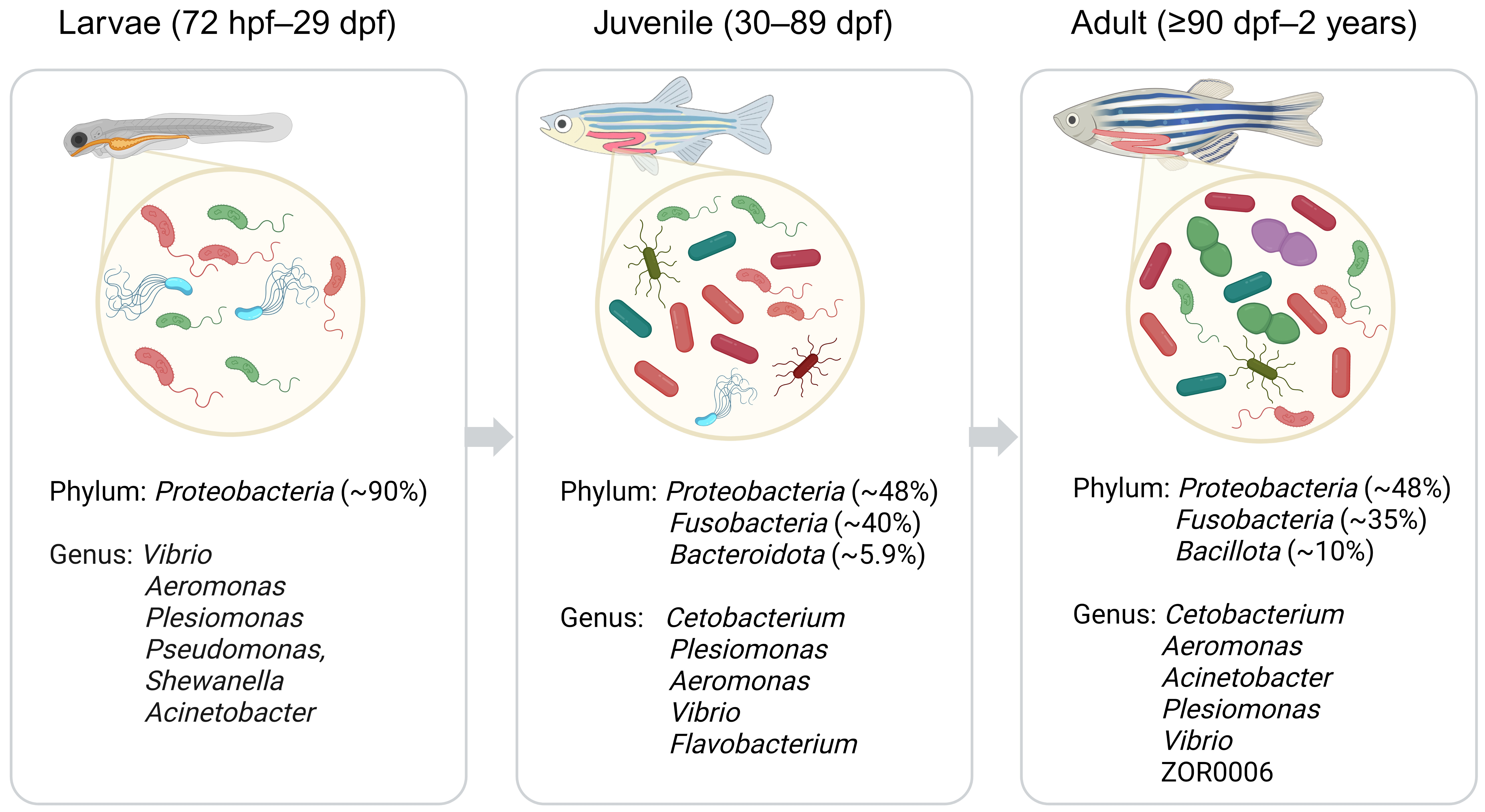
Figure 1. Dominant intestinal taxa across zebrafish development. Larvae (72 hpf-29 dpf) are Proteobacteria-dominant (~ 90%; representative genera: Vibrio, Aeromonas, Plesiomonas, Pseudomonas, Shewanella, Acinetobacter)[27]. Juvenile (30-89 dpf) profiles show Proteobacteria ~ 48%, Fusobacteria ~ 40%, and Bacteroidota ~ 5.9%, with increased relative abundance of Cetobacterium[27]. Adult (≥ 90 dpf-2 years) communities stabilize with Proteobacteria ~ 48%, Fusobacteria ~ 35%, and Bacillota (reported as Firmicutes in the original study) ~ 10% at the phylum level[27]; meta-analytic summaries identify Cetobacterium as the most abundant genus, together with Aeromonas, Acinetobacter, Plesiomonas, Vibrio, and ZOR0006[27]. hpf: Hours post fertilization; dpf: days post fertilization. Created in BioRender. Li, Y. (2026) https://BioRender.com/ik3knnb.