

Engineering Si-bridge mediated g-C3N4/NdFeO3 Z-scheme heterojunction for multifunctional catalytic applications: CO2 conversion, organic pollutant degradation and H2 production
 0
Graphical Abstract
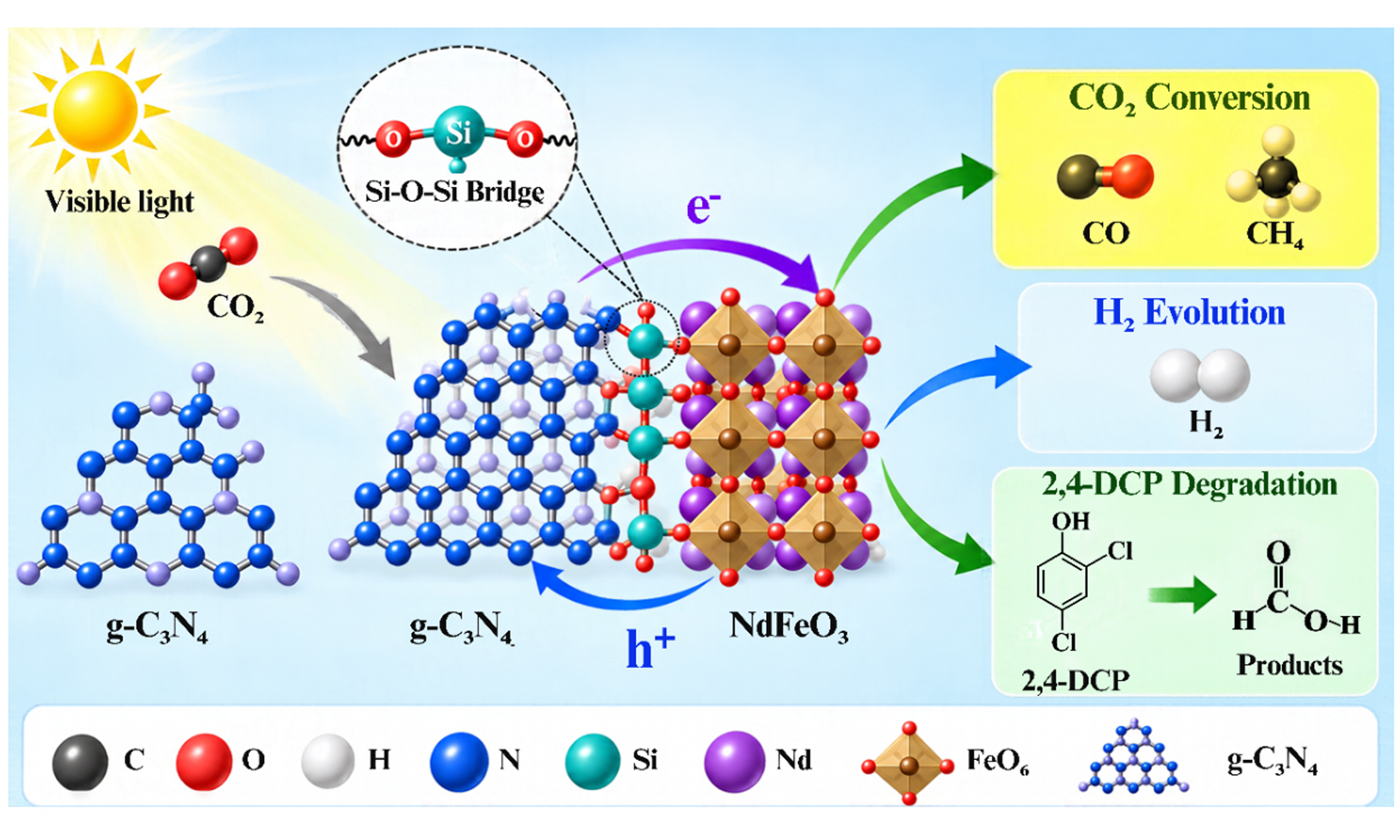
Abstract
Environmental pollution and rapid consumption of energy and fuel resources are two major issues in the modern world. To address these issues, we engineered a silicate-bridged g-C3N4/NdFeO3 Z-scheme nanocomposite and used it for photocatalytic CO2 conversion, 2,4-DCP degradation, and methanol-assisted H2 evolution. Compared to NdFeO3 and g-C3N4 nanoparticles, the NdFeO3 and g-C3N4 nanosheets, respectively, have larger surface areas, developed morphologies, enhanced charge separation, and improved photocatalytic performance. Remarkably, the introduction of g-C3N4 nanosheets into NdFeO3 nanosheets (NFONS) effectively optimizes the band gap position, promotes charge separation through a Z-scheme electron-transfer mechanism, enlarges the surface area, and improves photocatalytic efficiency. In addition, the silicate (Si-O) bridge served as an electronic bridge charge-transfer facilitator, resolved lattice mismatch, and enhanced photocatalytic efficiency by modulating photoelectrons. Compared with pristine NFONS, the optimized 5CNNS-1.5Si/NFONS nanocomposites delivered a 14.17-fold improvement in CO2 conversion activity, a 7.25-fold increase in photocatalytic 2,4-DCP degradation, and a 2.64-fold increase in methanol-assisted H2 generation. Scavenger experiments and the photocatalytic pollutant degradation mechanism confirmed that photogenerated holes (h+) and superoxide radicals (•O2-) are the dominant reactive species that initiate the photocatalytic activities. Our findings offer valuable insights into the design of Z-scheme nanocomposites and their employment for multifunctional photocatalytic applications.
Keywords


 Download PDF
INTRODUCTION
Environmental pollution and the energy crisis are two major global issues. The emission of CO2 and toxic organic pollutants, such as 2,4-dichlorophenol (2,4-DCP), poses a serious threat to the environment[1]. 2,4-DCP is well known to be carcinogenic and is frequently found in industrial wastewater[2]. Moreover, green hydrogen production can offer an alternative to fossil fuels and address the ongoing energy crisis[3]. In this regard, the development of efficient, affordable, and environmentally friendly strategies for CO2 reduction, organic pollutant degradation, and production of green energy fuels is crucial[4].
Recently, nanotechnology and photocatalysis have emerged as prominent strategies to address environmental pollution and the energy crisis[5]. Similarly, semiconductor-based catalysts can convert CO2 into valuable fuels, produce H2, and degrade organic pollutants by utilizing solar energy[6,7]. It is well known that the major part of the solar spectrum is visible light (~50%)[8]. Therefore, it is highly challenging to find suitable visible-light-active materials that can work under visible light and effectively utilize the abundant solar light[9].
Among visible light-active nanocatalysts, NdFeO3 (NFO) has gained tremendous attention and emerged as a potential material in different sectors, owing to its distinctive electronic structure, non-toxic characteristics, and appropriate energy band gap (~2.0 to 2.2 eV)[10,11]. Nonetheless, the overall efficiency of NFO is hindered by multiple factors, such as a small surface area, inadequate morphology, fewer active sites, positive conduction band position, and low charge separation[12]. Therefore, controlling NFO morphology is a suitable approach to address these limitations by increasing surface area and enhancing photocatalytic activity. Notably, NdFeO3 nanosheets (NFONS) offer abundant reactive sites, a large surface area, and shorter distances for transferring photogenerated carriers compared with NFO nanoparticles. However, the positive conduction band of NFONS and poor charge separation still limit their photocatalytic efficiency. Therefore, developing a Z-scheme heterojunction is an effective approach to enhance charge separation and activate photogenerated charge carriers[13]. The Z-scheme heterojunction of p-type NdFeO3 with n-type g-C3N4 improves charge separation and shifts it to the visible region, leading to improved photocatalytic performance[14,15]. Very recently, Z-scheme heterojunctions have attracted considerable attention and considered an effective strategy for simultaneously addressing organic pollutants and energy crises[16]. In addition, g-C3N4 nanosheets (CNNS) offer several advantages, including superior visible-light absorption, a high surface-to-volume ratio, and enhanced photocatalytic activity compared with g-C3N4 nanoparticles (CNNP). Thus, the more negative CB position and high surface area of CNNS make them a good choice for designing Z-scheme heterojunctions and improving NFONS efficiency[17]. However, the interfacial mismatch between these semiconductors (g-C3N4 and NdFeO3) remains a critical issue. Very recently, electronic bridges (Si-O, Mg-O, and Al-O)[18] can address this issue and enhance efficient electron flow across lattice-mismatch materials. With this in mind, we introduced a silicate (Si-O) bridge into the CNNS/NFONS heterojunction, which acts as an interfacial electronic channel and bridge that promotes charge migration, serving as both a linker and a charge-transfer facilitator. In short, this approach resolves the lattice-mismatch issue and improves photocatalytic efficiency[19,20].
In our current research, we successfully engineered a Si-bridge-mediated g-C3N4/NdFeO3 Z-scheme heterojunction and employed it for multifunctional catalytic applications. Our findings will provide new insights into the synthesis of NdFeO3-based materials and their potential applications in pollutant degradation and sustainable energy production.
EXPERIMENTAL
Materials preparation
All starting materials and reagents utilized in the research were of analytical grade, and the experiments were conducted with deionized water that had been subjected to double distillation. The reagents utilized include Ethanol (C2H5OH), ethylene glycol (HOCH2CH2OH), sodium hydroxide (NaOH), nitric acid (HNO3), polyvinylpyrrolidone (PVP), 2,4-dichlorophenol (C6H4Cl2O), and urea (CO(NH2)2) were purchased from Aladdin Group Co., Ltd. Iron(III) nitrate nonahydrate (Fe(NO3)3·9H2O), neodymium(III) nitrate hexahydrate (Nd(NO3)3·6H2O), sodium silicate (Na2SiO3), and methanol (CH3OH) were purchased from Sinopharm Chemical Reagent Co., Ltd, Sigma Aldrich Merck Ltd, China with standard purity and utilized without additional purification.
Synthesis of NFONS
NFONS were synthesized by a hydrothermal method; the detailed synthesis scheme is shown in Supplementary Figure 1A. In the standard experiment,
Synthesis of CNNS
We obtained CNNS by calcination, as shown in Supplementary Figure 1B. In a standard experiment, 15 g of urea was placed in a ceramic crucible and heated in a muffle furnace at 550 °C for 4 h at a rate of 5 °C min-1 (ramp time ≈ 105 min). The furnace was then allowed to cool naturally to room temperature. The collected samples were treated 5 times with 0.2 M HNO3, and then rinsed 3 times with water and absolute ethanol. The purified samples were then dried in an oven at 80 °C for 12 h. Finally, the resulting yellowish product was ground to a fine powder[22].
Synthesis of g-C3N4 nanosheet/NdFeO3 nanosheet Z-scheme nanocomposites
We synthesized the g-C3N4 nanosheet/NdFeO3 nanosheet Z-scheme nanocomposites by a wet chemical method. In the standard experiment, we mixed different amounts of CNNS with the as-prepared NFONS. In a typical procedure, 1 g of NFONS was dispersed in a 100 mL ethanol-water mixture (1:1, v/v). Subsequently, a defined mass of CNNS corresponding to the desired mass ratios (1%, 3%, 5%, and 7%) was added to the NFONS dispersion. The resulting mixture was ultrasonicated for 1 h to obtain a homogeneous dispersion and enhance interfacial contact between the CNNS and NFONS. After ultrasonication, the mixture was stirred continuously at 400 rpm for 4 h at 85.0 °C. Once the solvent was evaporated completely, the powder-form composite was then dried in an oven at 80 °C to remove residual solvents. Finally, the dried material was calcined at 400 °C for 120 min in air, at a heating rate of 5 °C min-1, to remove impurities, improve interfacial bonding, and strengthen the structural features of the composite[23]. Remarkably, the resulting products were denoted as XCNNS/NFONS, where X denotes the mass percentage ratio of CNNS to NFONS.
Fabrication of Si-bridge-mediated g-C3N4/NdFeO3 Z-scheme heterojunction
Si-Bridge-mediated g-C3N4/NdFeO3 Z-scheme heterojunction was synthesized in two steps; the comprehensive synthesis scheme is given in Supplementary Figure 1C. In the 1st step, 0.99 g of as-synthesized NFONS were dispersed in 100 mL of 1.0 M aqueous sodium silicate (Na2SiO3) solution (1.0 M sodium silicate solution was prepared by dissolving 12.21 g of Na2SiO3 in 100 mL of distilled water). The suspension was vigorously stirred for 1 h to facilitate silicate-ion adsorption onto the NFONS surface, forming a silicate bridge. After stirring, the mixture was filtered, and the collected product was dried in an oven at 85 °C for 12 h. The resultant silicate-modified NFONS was labeled as YSi/NFONS, where Y denotes the mole ratio of Si bridge to NFONS. In the 2nd step, 1.0 g of silicate bridge-modified NFONS (YSi/NFONS) was mixed with 0.05 g of previously prepared CNNS in an ethanol-water mixture (1:1, v/v). The mixture was stirred at 85 °C for 4 h. The resulting products were dried in an oven at 80 °C for several hours to remove impurities. Finally, the dried products were calcined in air at 400 °C for 2 h at a ramp rate of 5 °C/min[15]. Additionally, other experimental methods are described in the Supplementary Materials, and a list of abbreviations and acronyms used throughout this manuscript is provided in Supplementary Table 1.
RESULTS AND DISCUSSION
In this research, we synthesized silicate-bridged g-C3N4/NdFeO3 nanosheet-based Z-scheme nanocomposites, which exhibit exceptional visible-light photocatalytic activities for CO2 conversion, 2,4-DCP degradation, and H2 generation. Our findings proved that NFONS and CNNS demonstrate superior performance in terms of surface area, charge separation, and activities compared to NdFeO3 nanoparticles (NFONP) and g-C3N4, respectively. Remarkably, the introduction of g-C3N4 nanosheets into NFONS effectively optimizes the band gap position, promotes charge separation through a Z-scheme electron-transfer mechanism, enlarges surface area, and improves photocatalytic efficiency. In addition, the introduction of a silicate (Si-O) bridge served as an electronic bridge, a charge-transfer facilitator, resolved lattice mismatch, and accordingly enhanced photocatalytic efficiency and modulated photoelectrons.
Comparative investigation of NFONS and NFONP
Here, we successfully prepared NFONS, which have a unique structure, high surface area, enhanced charge separation, and improved multifunctional activities as compared to NFONP. The transmission electron microscopy (TEM) image of NFONP [Figure 1A] and the scanning electron microscopy (SEM) image of NFONP
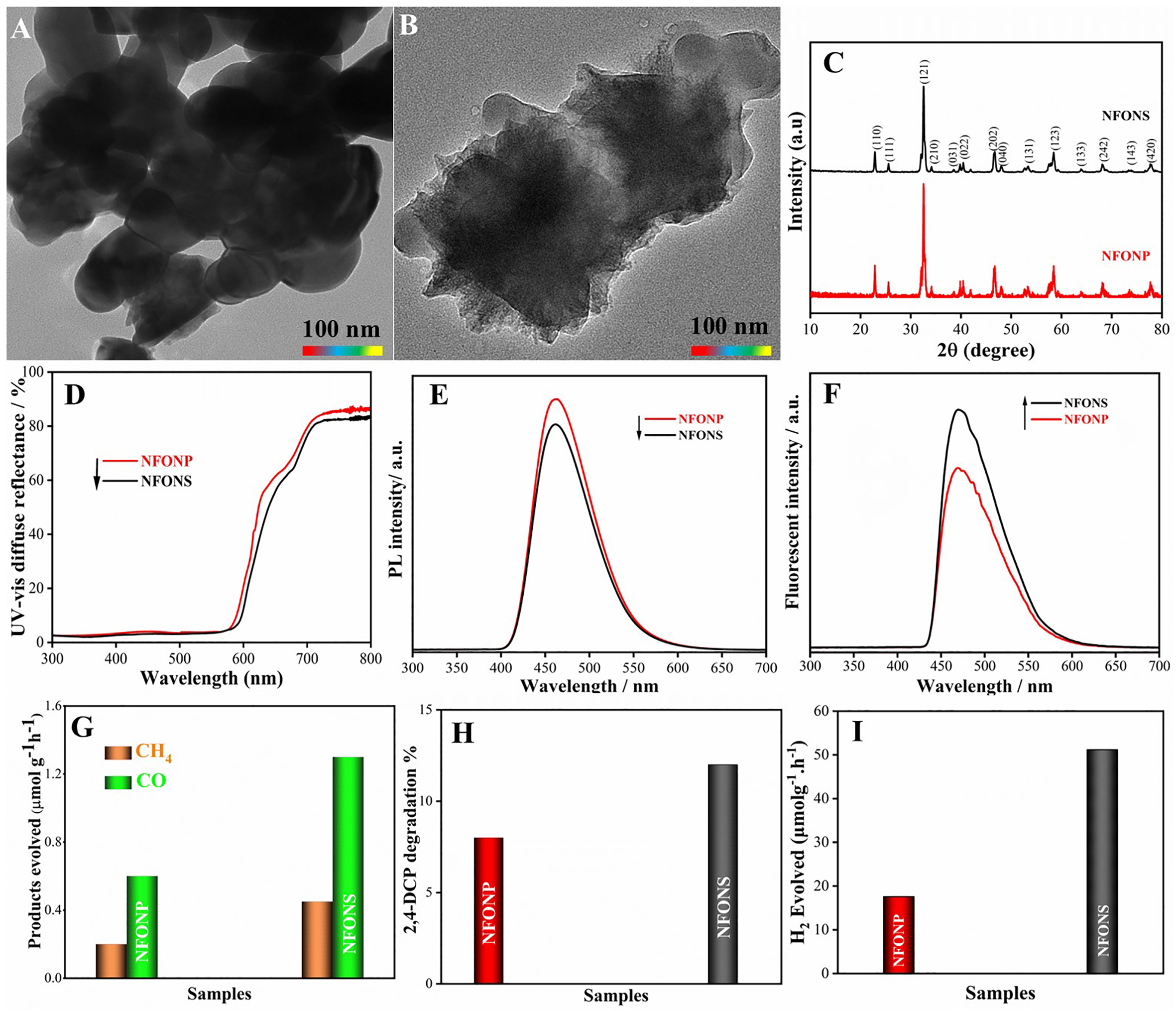
Figure 1. TEM images (A and B), XRD patterns (C), UV-Vis diffuse reflectance spectra (D), PL spectra (E), Fluorescence spectra reacted with coumarin, a fluorescent probe for •OH (F), Photocatalytic activities for CO2 reduction (G), 2,4-DCP degradation activities (H), and Hydrogen generation (I) of NFONS and NFONP.
In practice, comparative multifunctional photocatalytic activity studies showed that NFONS delivered 2.19 times higher CO2 conversion [Figure 1G], 1.50-fold higher 2,4-DCP degradation [Figure 1H], and a 2.9-fold increase in H2 generation [Figure 1I] compared with NFONP[25,26]. Based on these findings, NFONS show well-defined morphology, good crystal structure, enhanced charge separation, more visible-light activity, and improved photocatalytic activity compared with NFONP[27].
An in-depth comparison of CNNS and CNNP
In this phase of our research, we successfully synthesized CNNS by heating urea; remarkably, slow calcination (5 °C min-1) yielded well-exfoliated, high-surface-area CNNS. Our study shows that these CNNS have a markedly larger surface area, better morphology, more pores, and improved photocatalytic performance than CNNP[28]. In short, our experimental results demonstrated that CNNS offer exceptional performance over CNNP. The TEM image of CNNP [Figure 2A] shows aggregation and that the nanoparticles are packed, which hinders their overall performance, while the TEM image of CNNS
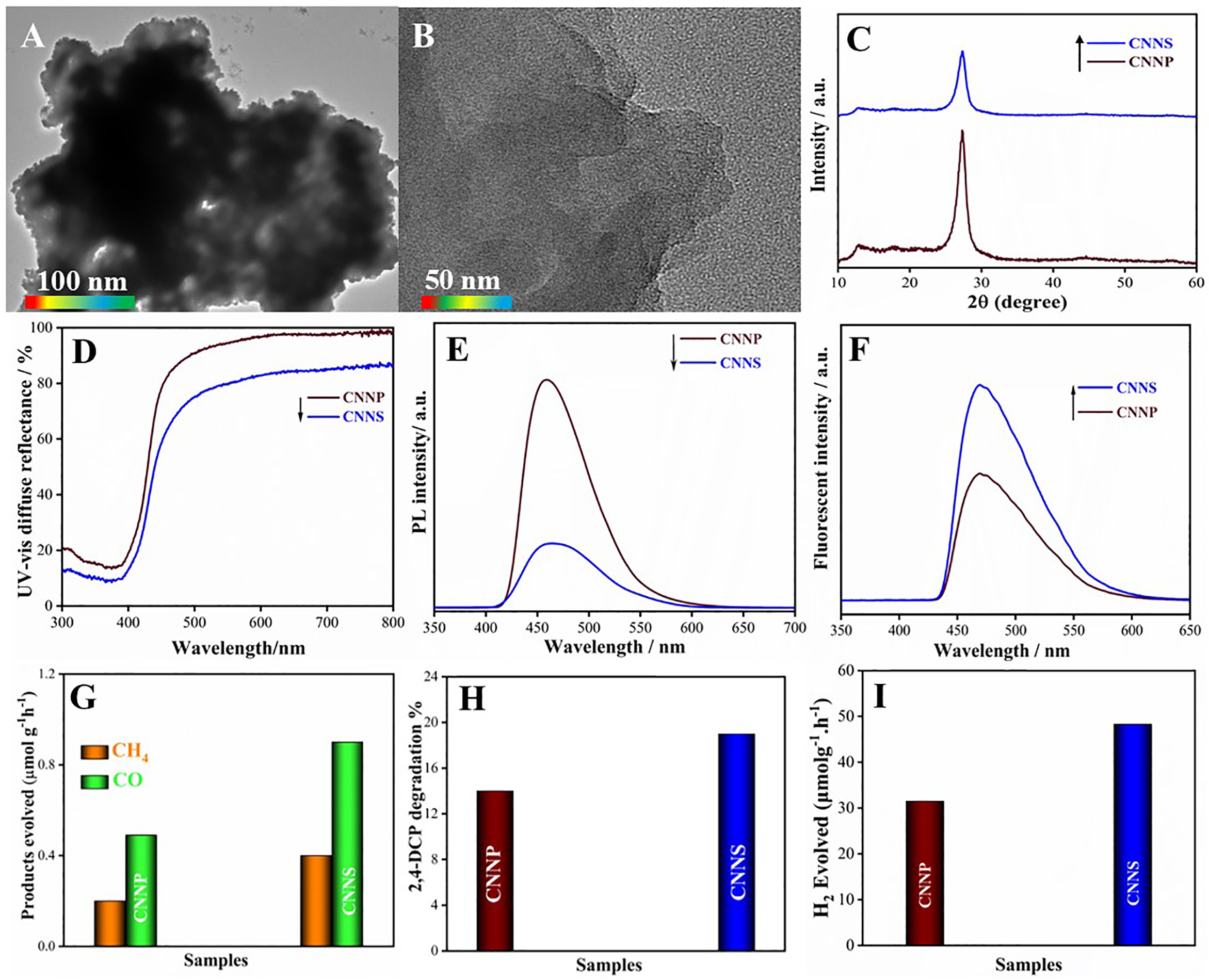
Figure 2. TEM images (A and B), XRD patterns (C), UV-Vis diffuse reflectance spectra (D), PL spectra (E), Fluorescence spectra reacted with coumarin, a fluorescent probe for •OH (F), Photocatalytic activities for CO2 conversion (G), 2,4-DCP degradation (H), and Hydrogen generation activities (I) of CNNS and CNNP.
Comprehensive investigations of g-C3N4/NFONS Z-Scheme heterojunction
As discussed above, the visible light activity of the existing NFONS is still not satisfactory, mainly due to small surface area, low charge separation, and a positive CB. To address these issues, we modified the as-synthesized NFONS by coupling them with CNNS. This Z-scheme heterojunction increased reactive sites, expanded the specific surface area, improved the surface-to-volume ratio, adjusted band gaps for photogenerated carrier transfer, provided more robust thermodynamic stabilization, and finally improved the multifunctional photocatalytic activity. XRD patterns were recorded to check the crystal nature and structural properties of the prepared sample. It can be observed from XRD patterns given in Figure 3A that the peaks located at 22.8°, 25.1°, 27.4°, 34.0°, 40.1°, 41.9°, 46.5°, 48.0°, 53.1°, 58.4°, 64.0°, 68.2°, 73.4°, and 77.7° corresponding to (110), (111), (121), (210), (031), (022), (202), (040), (131), (123), (133), (242), (143), and (420) crystal planes, which confirms the successful synthesis of NdFeO3 phase (JCPDS card no. 01-082-2421)[24]. The identified peaks align with the respective phases[31,32]. Remarkably, CNNS exhibits distinct diffraction peaks at approximately 12.8° and 27.4°, corresponding to the (100) and (002) crystallographic planes of g-C3N4, respectively[33]. Notably, the XRD patterns of the resulting heterojunction retain the primary diffraction peaks of NFONS as well as the characteristic diffraction peaks of g-C3N4, confirming that both crystalline phases coexist within the CNNS/NFONS composite without substantial structural distortion of either component. In addition, UV-Vis DRS [Figure 3B] shows a slight shift of NFONS absorption toward the visible region upon CNNS incorporation, suggesting enhanced light-absorption properties. It can be seen that after CNNS incorporation, the band edges shift to longer wavelengths and into the more visible region, and accordingly the band gap decreases, which will not enhance charge separation, but the resulting samples will also absorb more light and, finally, photocatalytic activities will increase. PL spectra serve as a valuable tool for evaluating the recombination rates of photogenerated charge carriers. Generally, PL signals arise from charge recombination upon light excitation, thereby establishing a direct correlation between the PL response intensity and the enhancement of charge separation. In short, a more intense PL signal generally indicates low charge separation, while a less intense PL signal implies enhanced charge separation. Figure 3C shows that the PL intensity of NFONS gradually decreases as CNNS content increases. Notably, the 5CNNS/NFONS nanocomposite exhibits the lowest PL intensity, indicating the highest charge-separation efficiency and suggesting the most effective photocatalytic performance. These results are further verified by FS associated with the •OH generation; it can be seen from Figure 3C inset that the FS response is increased after adding XCNNS, and the 5CNNS/NFONS showed the highest response, confirming the best sample[34]. For practical applications, we checked the photocatalytic capability of NFONS and XCNNS/NFONS nanocomposites for CO2 reduction, 2,4-DCP degradation, and H2 generation under visible-light irradiation in an aqueous medium, without co-catalysts.
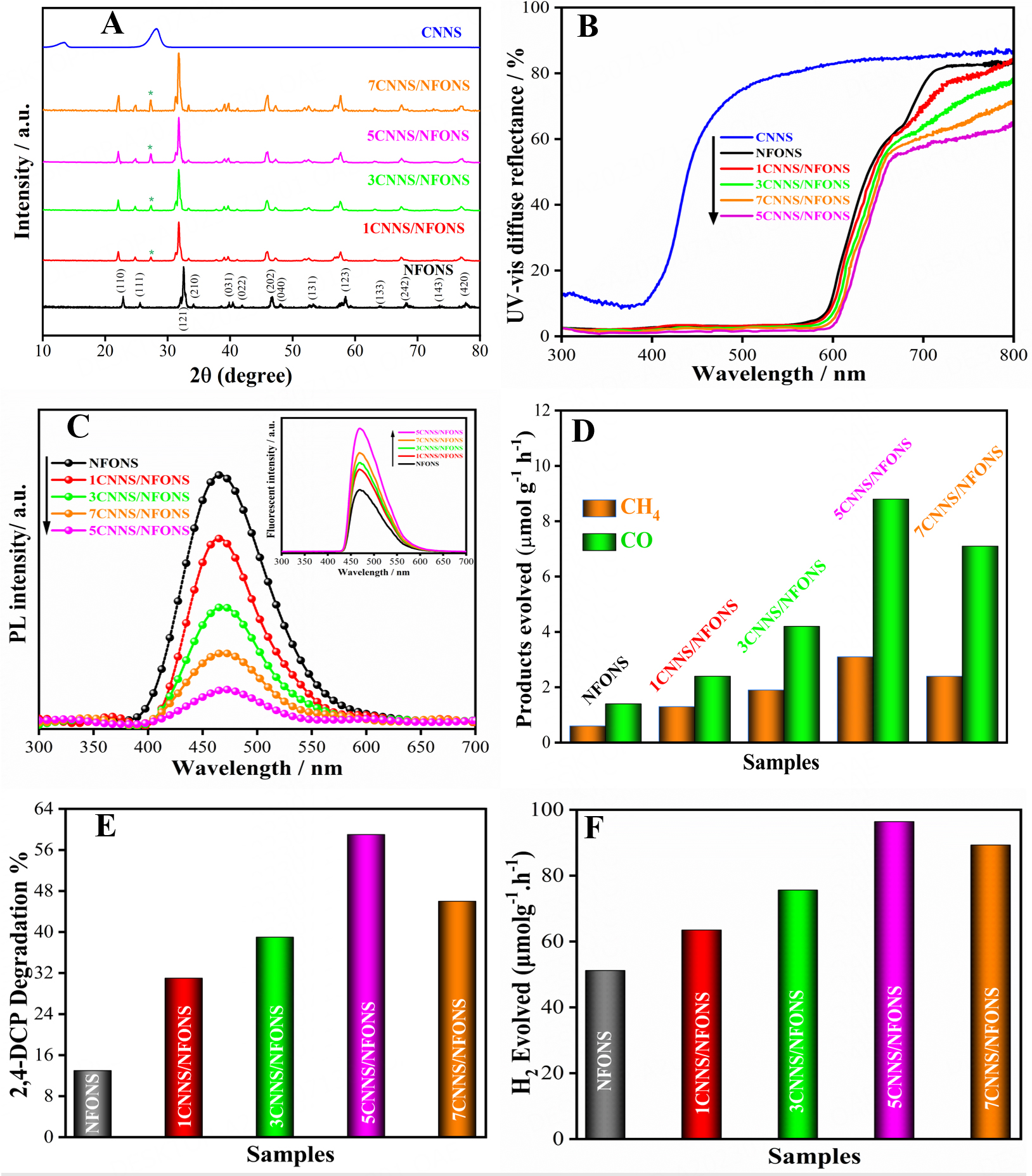
Figure 3. XRD patterns (A), UV-Vis diffuse reflectance spectra (B), PL emission spectra with inset FS spectra linked with •OH (C), Photocatalytic activities for CO2 conversion (D), 2,4-DCP degradation (E), and Hydrogen evolution (F) of NFONS and XCNNS/NFONS.
It can be observed from Figure 3D that NFONS have low photocatalytic activity for CO2 conversion into CH4 (0.45 µmol g-1h-1) and CO (1.30 µmol g-1h-1). However, photocatalytic performance improved markedly when coupled with different amounts of CNNS. As compared to other prepared samples, the 5CNNS/NFONS nanocomposite showed a 6.80-fold improvement in photocatalytic activity by producing CH4
Integration of Si-bridge into g-C3N4 Z-scheme heterojunction as an interfacial linker and electron transfer mediator
The interfacial mismatch between n-type g-C3N4/p-type NFONS was solved by introducing a (Si-O) bridge, which acts as an interfacial electronic channel and electronic bridge that promotes charge migration, serving both as a linker and a charge-transfer facilitator. In short, this approach resolves the lattice-mismatch issue and finally improves photocatalytic efficiency[35].
Aiming to investigate the composite system, various types of characterization were carried out. The XRD patterns displayed in Figure 4A and the UV-Vis spectra given in Figure 4B demonstrate that the incorporation of the Si-O bridge does not alter the crystallinity and the band edges, respectively. In addition, the lowest PL intensity [Figure 4C] and highest FS associated with the •OH generation
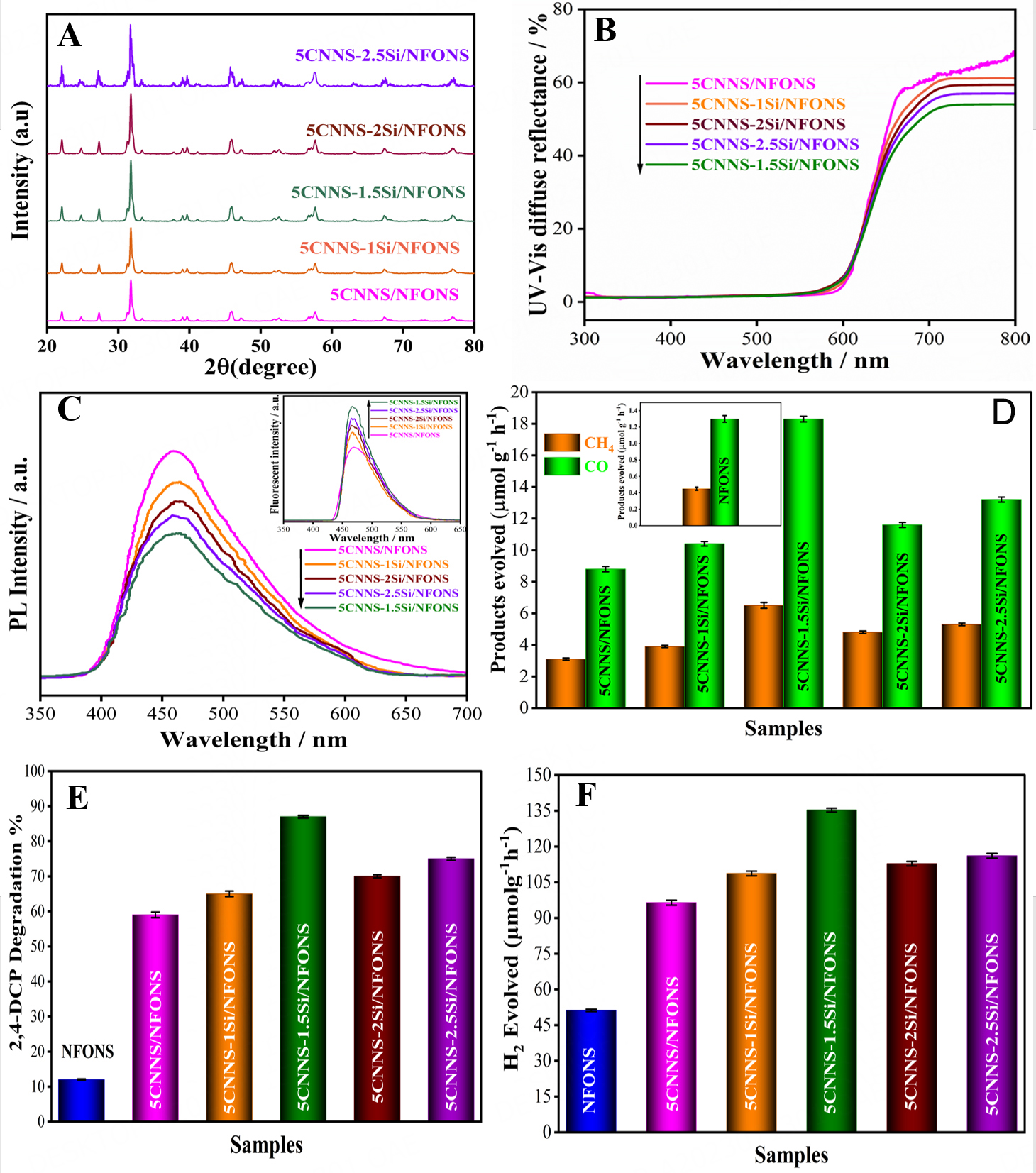
Figure 4. XRD patterns (A), UV-Vis diffuse reflectance spectra (B), PL emission spectra with FS inset spectra (C), and photocatalytic activities for CO2 conversion (D), 2,4-DCP degradation (E), and H2 evolution (F) of pristine NFONS and 5CNNS-YSi/NFONS. Error bars in (D-F) represent the standard deviation of four independent measurements (n = 4).
The reproducibility, stability, and recyclability of the photocatalytic performance were further verified through 4 independent measurements. The consistent CH4 production [Supplementary Figure 3A], CO production [Supplementary Figure 3B], 2,4-DCP degradation [Supplementary Figure 3C], and H2 evolution rates [Supplementary Figure 3D] were observed. To confirm reproducibility, four independent runs (n = 4) were conducted for all samples; the mean ± standard deviation values are given in Supplementary Table 2[37].
Catalyst stability strongly affects photocatalytic performance. With this aim, XRD patterns, photocatalytic activities, stability, and reusability were evaluated for 5CNNS-1.5Si/NFONS[38].
Based on the aforementioned findings, it has been confirmed that, among the prepared samples, the 5CNNS-1.5Si/NFONS is the most active and amount-optimized sample. Similarly, 5CNNS-1.5Si/NFONS shows enhanced charge separation, a larger surface area, a well-designed structure, and improved multifunctional photocatalytic activity. So, the morphology of this sample is further investigated. The TEM images are depicted in Figure 5A and B, showing that NFONS and CNNS exhibit a sheet-like morphology, and these closely assembled structures give an enlarged surface area and active sites for multifunctional applications. In addition, the high-resolution transmission electron microscopy (HRTEM)
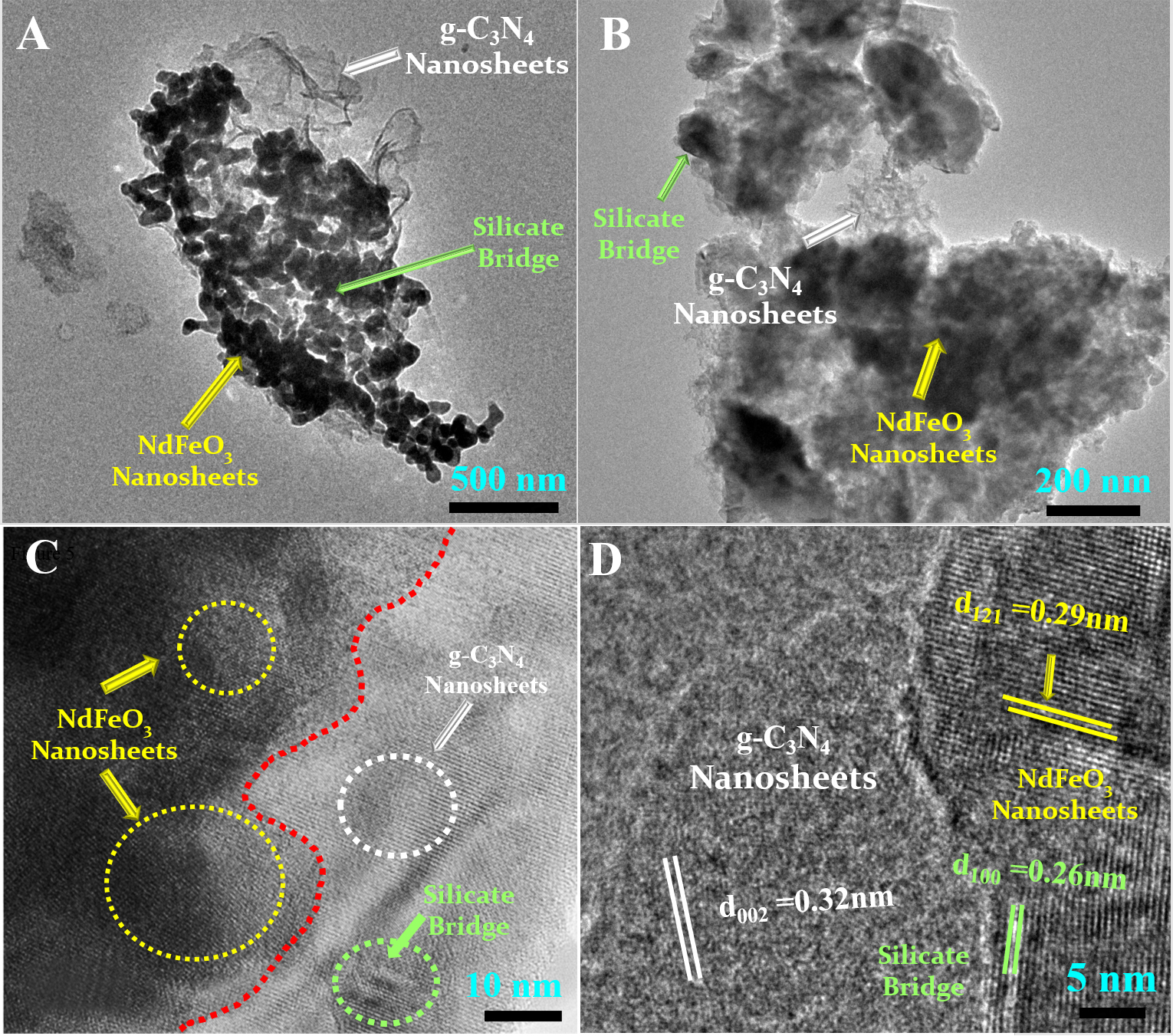
Figure 5. TEM images (A and B), HRTEM images (C and D) of the 5CNNS-1.5Si/NFONS nanocomposites.
IN-DEPTH ELUCIDATION OF THE MECHANISM
Here, we engineered a silicate-bridged g-C3N4/NdFeO3 Z-Scheme nanocomposite and employed it for photocatalytic CO2 conversion, 2,4-DCP degradation, and methanol-assisted H2 evolution. NFONP exhibit restricted photocatalytic applications mainly due to their considerable size and tendency for particle aggregation. Remarkably, this issue was addressed by synthesizing NFONS using PVP as a stabilizing ligand and morphological regulator[40]. Notably, the shift in morphology from nanoparticles to nanosheets markedly improved the overall efficiency of NdFeO3. Nonetheless, the visible light activity of the existing NFONS is still not satisfactory, mainly due to small surface area, low charge separation, and a positive CB. To address these issues, we modified the as-synthesized NFONS by coupling them with CNNS. Fruitfully, making such a Z-scheme heterojunction increased reactive sites, expanded the specific surface area, improved the surface-to-volume ratio, adjusted band gaps for photogenerated carrier transfer, provided more robust thermodynamic stabilization, and finally improved the multifunctional photocatalytic activity. The interfacial mismatch between CNNS and NFONS was addressed by introducing a (Si-O) bridge, which acts as an interfacial electronic channel that promotes charge migration and serves both as a linker and a charge-transfer facilitator. In short, this approach resolves the lattice-mismatch issue and finally improves photocatalytic efficiency[41]. The design strategy of the resultant Z-scheme is illustrated in Figure 6A. It can be observed that the conduction band (CB) and valence band (VB) potentials of CNNS are approximately -1.3 and +1.4 eV, respectively, whereas the CB and VB potentials of NFONS are approximately +0.27 and
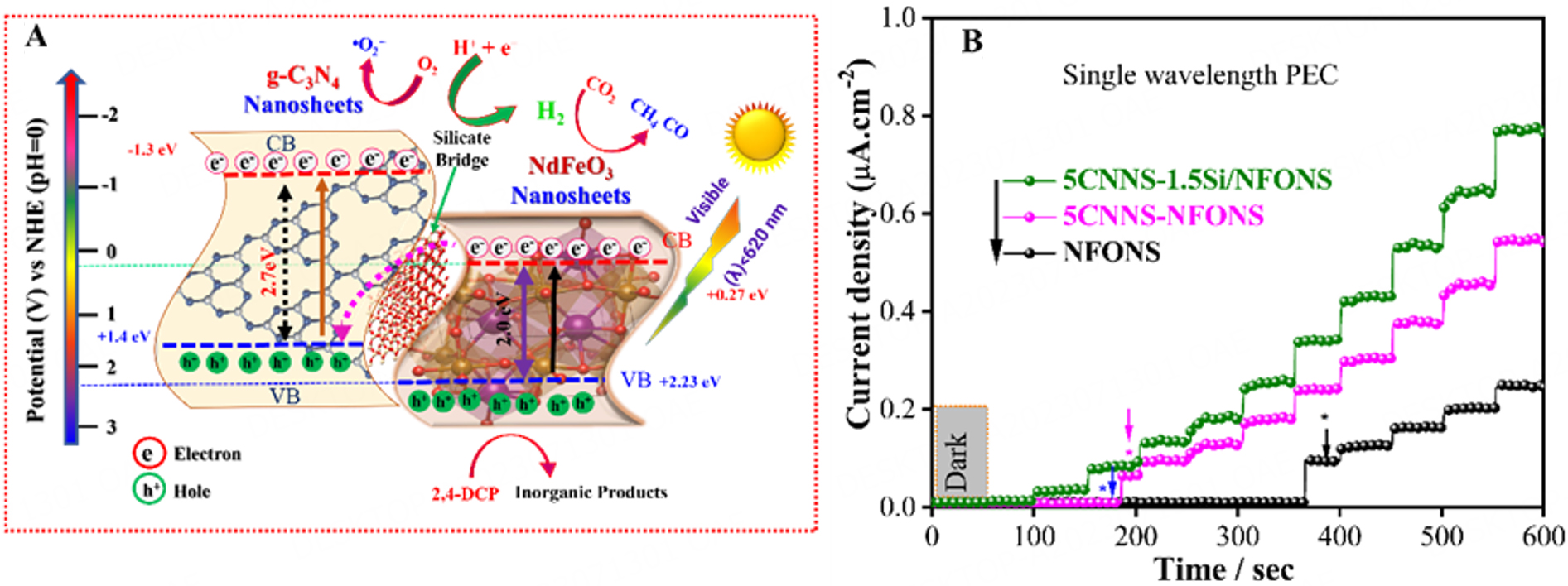
Figure 6. Schematic illustration for the establishment of Z-scheme (A) and single-wavelength photocurrent action spectra (B) for Si-bridge-mediated g-C3N4/NdFeO3 Z-scheme heterojunction.
A CO2 temperature-programmed desorption (CO2-TPD) analysis was performed to evaluate the CO2 capturing behavior of the prepared photocatalysts. The CO2-TPD profiles given in Figure 7A show two main desorption peaks at approximately 200 and 650 °C, corresponding to physisorption and chemisorption of CO2, respectively[45]. It can be observed that, compared with pristine NFONS, the 5CNNS/NFONS samples exhibit high CO2 adsorption/desorption intensity, and as expected, the 5CNNS-1.5Si/NFONS shows the strongest CO2 adsorption capacity. Remarkably, this enhanced capability facilitates CO2 capture and promotes organic-pollutant adsorption on their surfaces. Furthermore, XPS analysis was performed to determine the elemental composition and oxidation states of the prepared samples.
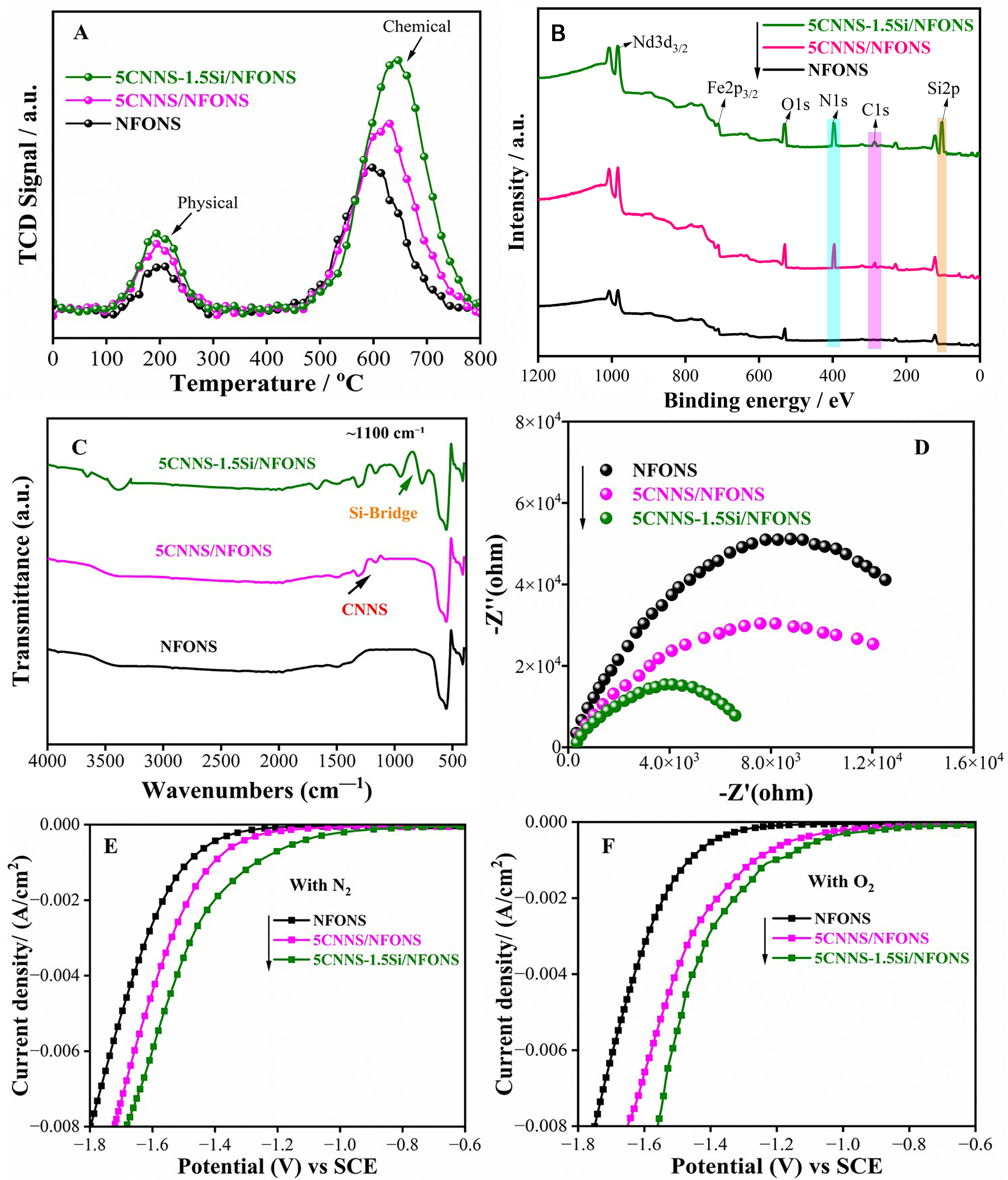
Figure 7. CO2-TPD (A), XPS survey spectra (B), FTIR patterns (C), Nyquist plots under light irradiation (D), electrochemical (EC) reduction curves in N2 (E) and O2 (F) of NFONS, 5CNNS/NFONS, and 5CNNS-1.5Si/NFONS nanocomposites.
The XPS survey Figure 7B and spectrum [Supplementary Figure 6A and B] confirmed the presence of Nd, Fe, O, C, N, and Si, confirming that the Si-bridge-mediated g-C3N4/NdFeO3 Z-scheme heterojunction was successfully prepared. In the pristine NFONS sample, the Nd 3d XPS spectrum showed two peaks at 982.97 and 1,002.02 eV, corresponding to the Nd 3d5/2 and Nd 3d3/2 energy levels, respectively, while the Fe 2p spectrum showed two peaks at 710.30 eV (Fe 2p3/2) and 723.20 eV (Fe 2p1/2), confirming that the Fe ions are in the +3 oxidation state. Upon formation of 5CNNS/NFONS, these peaks shifted slightly to the left. The O1s spectra also showed two strong peaks at around 529.5 and 531.5 eV. These peaks originate from the lattice oxygen and surface chemisorbed oxygen (OH), respectively.
Additionally, the N1s peak observed near 399.0 eV corresponds to sp2-hybridization of nitrogen that is linked to carbon (C-N=C). The C 1s peak at approximately 288.60 eV is associated with sp2-hybridized carbon atoms that are bonded to nitrogen in aromatic structures (N-C=N). In addition, the XPS spectrum of the pristine Si-O bridge clearly indicates the binding energy of Si 2p. It can be noticed that a gradual positive shift in the Nd 3d and Fe 2p binding energies was observed after incorporation of CNNS and the Si-O bridge into the main NFONS sample. Although differential charging effects may influence absolute binding-energy positions, the consistent relative shifts among the samples suggest changes in the local electronic environment and interfacial charge redistribution[46]. These electronic variations are consistent with interfacial interactions between CNNS, the Si-O bridge, and NdFeO3, which enhance charge separation and support the proposed Z-scheme charge-transfer pathway. So, these results validate the successful integration of CNNS and the Si-O bridge within the NFONS.
Moreover, the fourier-transform infrared spectroscopy (FTIR) spectra in Figure 7C show distinct peaks between 1,100, 1,500 and 3,600 cm-1, confirming the presence of the desired elements (Nd, Fe, O, N, Si, C) and functional groups[47]. Furthermore, the FTIR spectra of pristine g-C3N4 and the silicate bridge shown in Supplementary Figure 7B confirmed the successful synthesis of CNNS and the Si-O bridge. In short, these findings confirm that the silicate-bridged, incorporated, and g-C3N4-coupled NdFeO3 nanosheet-based Z-scheme heterojunction was successfully fabricated.
The Nyquist plots [Figure 7D] illustrate the electrochemical performance of pristine NFONS after adding CNNS and Si-O. As expected, the 5CNNS/NFONS and 5CNNS-1.5Si/NFONS show the highest response[42]. It is widely known that a smaller semicircle radius indicates lower interfacial charge-transfer resistance. Thus, the 5CNNS-1.5Si/NFONS is the most favorable sample for efficient separation of photogenerated electron-hole pairs. The electrochemical (EC) reduction curves conducted under N2 gas [Figure 7E] and O2 gas [Figure 7F] reveal that the photocurrent density of NFONS shows a notable increase after adding CNNS and Si-O[48]. From EC measurements, it is concluded that O2 acts as a sacrificial electron acceptor; the positive change in photocurrent observed under O2 reflects photogenerated electrons available for reduction reactions, directly supporting the CO2 reduction and H2 generation. The holes are available for the oxidative reaction and 2,4-DCP degradation.
Furthermore, the BET surface areas of as-prepared samples were analyzed as given in
In addition, the different pathways for photocatalytic CO2 conversion into different valuable products over 5CNNS-1.5Si/NFONS were calculated using DFT [Figure 8A]. The initial step involves the capturing of CO2 over 5CNNS-1.5Si/NFONS. In the next step, the CO2 molecule experiences activation through N—C=O—Ov bonding, thereby lowering the energy barrier for CO2 reduction[51]. The CO2* is reduced to CO*, part of which desorbs as CO(g) as a byproduct. The remaining CO* is protonated at the Fe sites of NdFeO3 to form COOH*, the only uphill step in the free-energy profile (ΔG = 0.70 eV) and therefore the potential-determining step, so the ΔG values describe the reaction thermodynamics [Figure 8B][52,53].
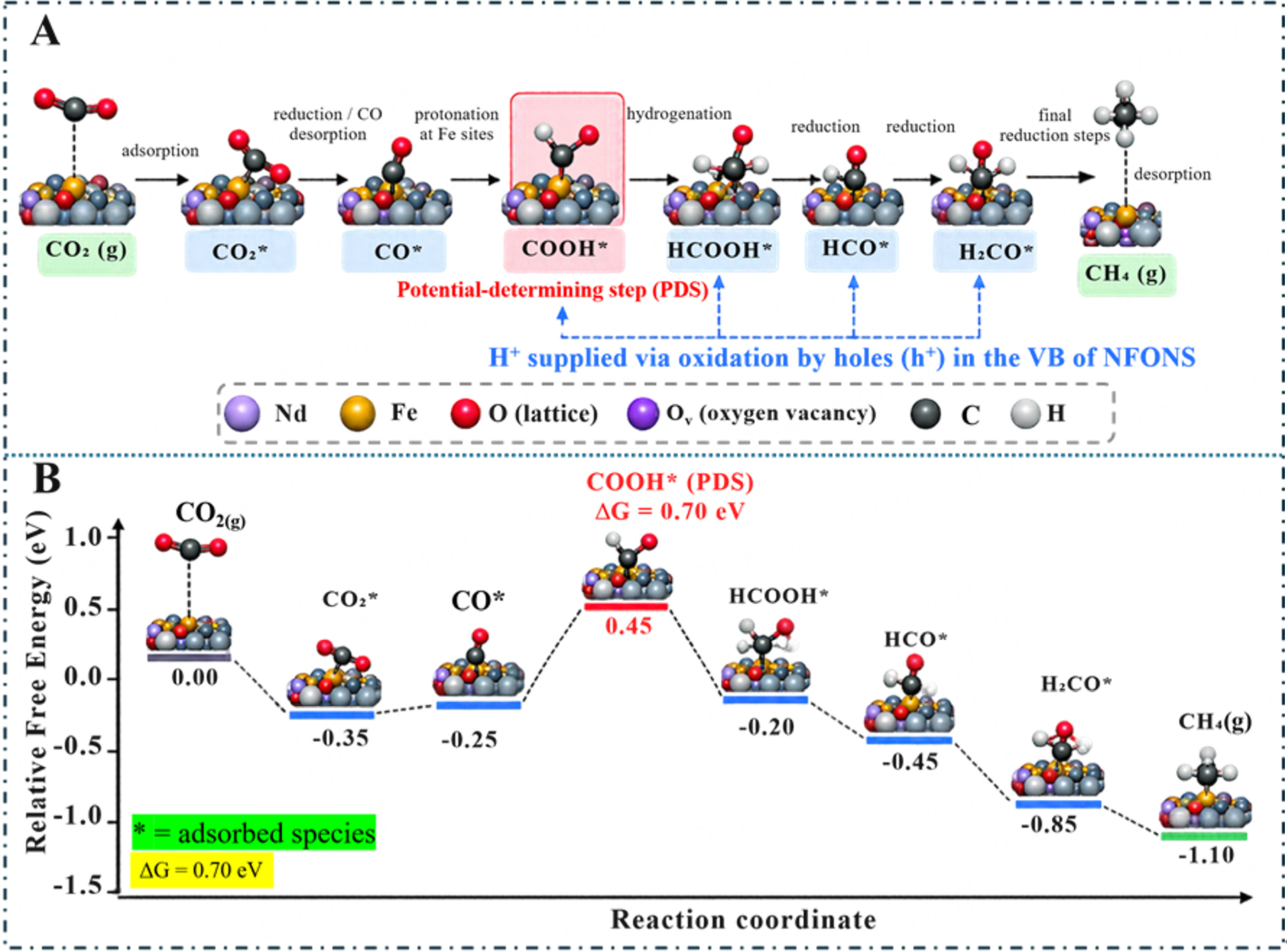
Figure 8. CO2 conversion and reaction mechanism pathways (A) and Relative free-energy profile (B) over 5CNNS-1.5Si/NFONS.
Subsequently, the COOH* intermediate is subjected to hydrogenation, resulting in the formation of HCOOH*, which is then further reduced to HCO*. The HCO* intermediate is subsequently transformed into H2CO*, an essential intermediate in the methane synthesis pathway. The final reduction steps generate CH4 from H2CO*, with CH4 detaching from the surface, facilitated by weak Fe-CH4 interactions. The necessary protons (H+) for the hydrogenation steps are mainly supplied through oxidation reactions driven by the holes retained in the VB of NFONS, which is consistent with the proposed Z-scheme charge-transfer pathway[54]. This pathway emphasizes the effective reduction of CO2 to CH4 and provides valuable insights that facilitate hydrogenation and influence product selectivity[55].
Furthermore, the 2,4-DCP degradation pathways are investigated over 5CNNS-1.5Si/NFONS [Figure 9]. It can be confirmed that 2,4-DCP degradation via the mineralization process involves the gradual breakdown of the aromatic compound into smaller molecules, ultimately resulting in the release of less hazardous inorganic minerals[56].
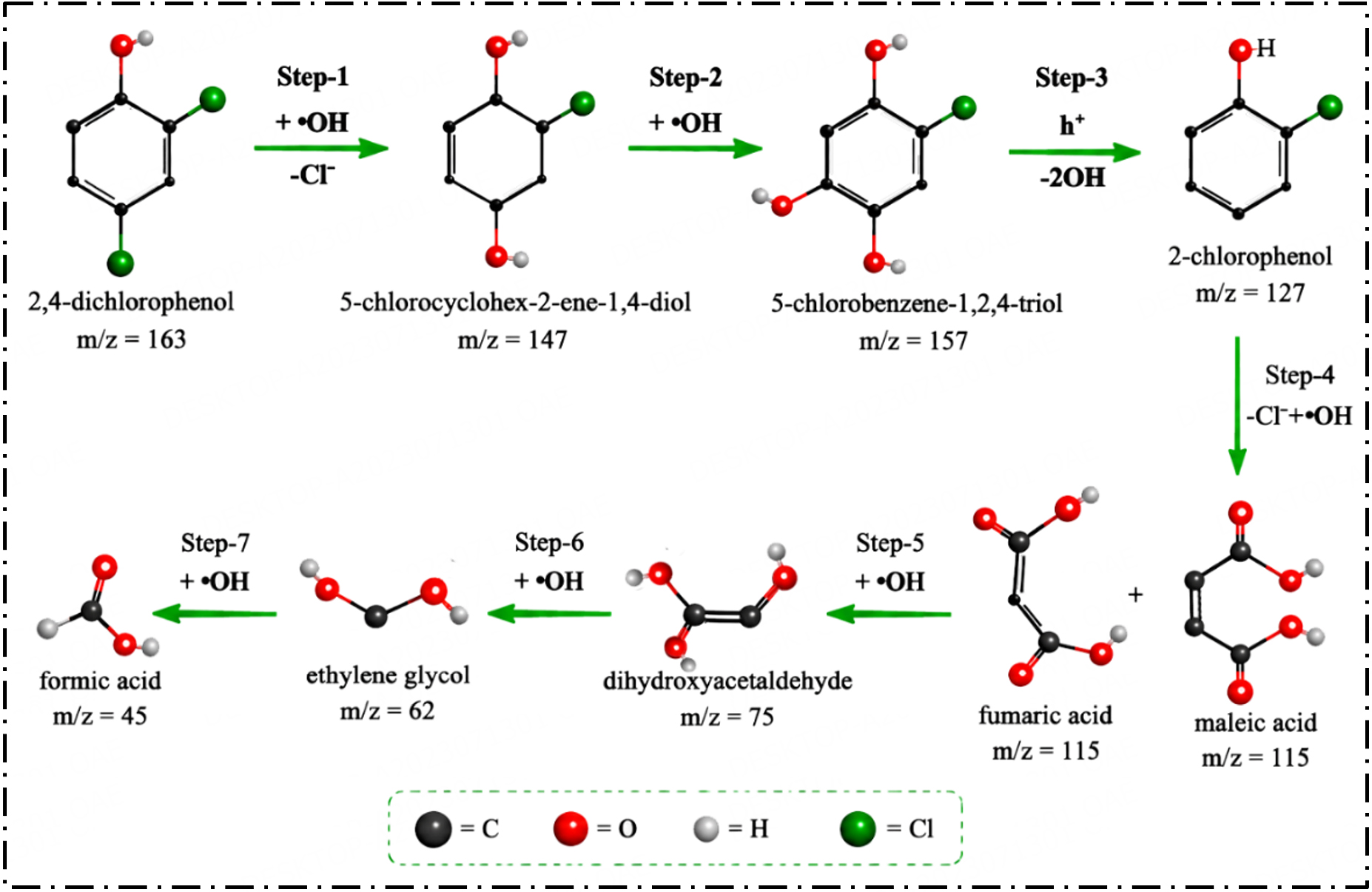
Figure 9. 2,4-DCP degradation process into inorganic minerals and mechanistic pathways over Si-bridge-mediated g-C3N4/NdFeO3 nanocatalyst.
To verify the aforementioned 2,4-DCP degradation process, free-radical trapping (scavenger) experiments were carried out to check the most active species responsible for 2,4-DCP degradation. Generally, EDTA-2Na, isopropyl alcohol (IPA), and BQ were used to quench h+, •OH, and •O2-, respectively, under optimized experimental parameters and conditions[57,58]. Supplementary Figure 9 shows that the photocatalytic activities of 5CNNS-1.5Si/NFONS (Optimized sample) for 2,4-DCP degradation were notably hindered by the presence of EDTA-2Na and BQ. Notably, it can be observed that 2,4-DCP degradation decreased from 87% (no scavenger) to 44% with EDTA-2Na and 59% with BQ, whereas IPA caused only a minor decrease to 83%, indicating that h+ and •O2- are the primary reactive species responsible for 2,4-DCP degradation.
CONCLUSION
In this research, we successfully developed a Si-bridge-mediated g-C3N4/NdFeO3 Z-scheme heterojunction and used it for multifunctional applications. Our prepared samples showed extraordinary performance in photocatalytic CO2 conversion, 2,4-DCP degradation, and hydrogen (H2) generation. Compared with NFONP and CNNP, the NFONS and CNNS, respectively, have larger surface areas, more developed morphologies, enhanced charge separation, and improved photocatalytic performance. Compared with pristine NFONS, the optimized 5CNNS-1.5Si/NFONS nanocomposites delivered a 14.17-fold improvement in CO2 conversion activities, a 7.25-fold increase for photocatalytic 2,4-DCP degradation, and a 2.64-fold increase in methanol-assisted H2 generation. Additionally, our samples showed good stability, highlighting their potential for practical applications. The computational methodologies, DFT calculations, scavenger experiments, and reaction pathways provide more explanation and insight into the photocatalytic process, morphology modification, and photoelectron modulation. Finally, our research findings will provide a gateway to the design of NdFeO3 and g-C3N4-based nanomaterials for their employment in environmental remediation and energy fuels production.
DECLARATIONS
Authors’ contributions
Writing - original draft, investigation, conceptualization, resources, supervision: Khan, I.; Zaman, S.
Validation, investigation, software, review & editing: Kumar, A.
Resources, supervision: Bahadur, A.
Investigation, data curation: Bibi, S.
Methodology, investigation: Zaman, M. H.; Mujahid, L.; Khan, A.
Methodology, software: Yasin, G.
Data analysis, review & editing: Khan, S.
Availability of data and materials
The data supporting the findings of this study are available within this Article and its Supplementary Materials. Further data are available from the corresponding authors upon request.
AI and AI-assisted tools statement
Not applicable.
Financial support and sponsorship
This work was financially supported by the School of Chemical Science and Engineering, Tongji University, Shanghai 200092, China; the International Collaborative Research Program (ICRP2023008); and the Internal Faculty/Staff Research Support Programs (IRSPC2024007), Wenzhou-Kean University, Zhejiang 325060, China.
Conflicts of interest
All authors declared that there are no conflicts of interest.
Ethical approval and consent to participate
Not applicable.
Consent to publish
Not applicable.
Copyright
© The Author(s) 2026.
Supplementary Materials
REFERENCES
1. Baghdadi, Y.; Daboczi, M.; Temerov, F.; Yang, M.; Cui, J.; Eslava, S. A g-C3N4/rGO/Cs3Bi2Br9 mediated Z-scheme heterojunction for enhanced photocatalytic CO2 reduction. J. Mater. Chem. A. 2024, 12, 16383-95.
2. Zhao, Z.; Li, P.; Liu, Y.; Song, N.; Cui, Y.; Zheng, Y. Insights into 2,4-dichlorophenol degradation by periodate activated with carbonized polyaniline-doped semi-coke. J. Environ. Chem. Eng. 2025, 13, 120111.
3. Iqbal, M. U.; Rana, S.; Zitnan, M.; et al. Noble metal-free zeolitic imidazolate framework-based composite for photocatalytic production of green hydrogen. Microstructures 2026, 6, 20260107.
4. Awogbemi, O.; Desai, D. A. Novel technologies for CO2 conversion to renewable fuels, chemicals, and value-added products. Discover. Nano. 2025, 20, 29.
5. Ghourichay, S. A.; Ricci, P. C. Advances in carbon based nanomaterials for photocatalytic environmental remediation and solar fuel production. Discov. Mater. 2026, 6, 228.
6. Li, X.; Wen, J.; Low, J.; Fang, Y.; Yu, J. Design and fabrication of semiconductor photocatalyst for photocatalytic reduction of CO2 to solar fuel. Sci. China. Mater. 2014, 57, 70-100.
7. Zhao, Y.; Zhang, J.; Ma, F.; et al. Computational exploration of two-dimensional vacancy-free boridene sheet and its derivatives: high stabilities and the promise for hydrogen evolution reaction. Microstructures 2024, 4, 2024032.
8. Meng, L.; Qu, Y.; Jing, L. Recent advances in BiOBr-based photocatalysts for environmental remediation. Chin. Chem. Lett. 2021, 32, 3265-76.
9. Akpasi, S. O.; Smarte Anekwe, I. M.; Tetteh, E. K.; Amune, U. O.; Mustapha, S. I.; Kiambi, S. L. Hydrogen as a clean energy carrier: advancements, challenges, and its role in a sustainable energy future. Clean. Energy. 2025, 9, 52-88.
10. Li, X.; Zhou, H.; Huang, L.; et al. Detection of formaldehyde sensitive properties of Sm3+ doped NdFeO3. J. Alloys. Compd. 2025, 1010, 176933.
11. Shoukat, R.; Hussain, S.; Ata, S.; et al. Lattice oxygen-mediated ABO3-type NdFeO3 perovskite fabricated over multi-walled CNTs for the O2 evolution reaction and photo-induced degradation of Victoria blue B. RSC. Adv. 2026, 16, 58346-59.
12. Yadav, P.; Pandey, A.; Khan, B.; et al. Detailed investigation on structural, optical, dielectric and magneto-dielectric properties with enhanced magneto-impedance characteristic of NdFeO3 nanoparticles. Mater. Chem. Phys. 2023, 309, 128424.
13. Fu, C.; Li, H.; Jiang, J.; et al. Building ultrathin nanosheet CeVO4/WO3·H2O Z-scheme heterojunction for boosting photocatalytic CO2 reduction. Chem. Eng. J. 2025, 519, 165194.
14. Khan, I.; Luo, M.; Guo, L.; et al. Synthesis of phosphate-bridged g-C3N4/LaFeO3 nanosheets Z-scheme nanocomposites as efficient visible photocatalysts for CO2 reduction and malachite green degradation. Appl. Catal. A. Gen. 2022, 629, 118418.
15. Zaman, S.; Khan, I.; Zhang, F.; et al. Synthesis of mediator free hollow BiFeO3 spheres/porous g-C3N4 Z-scheme photocatalysts for CO2 conversion and Alizarin red S degradation. Mater. Sci. Semicond. Process. 2023, 162, 107534.
16. Zhao, W.; She, T.; Zhang, J.; et al. A novel Z-scheme CeO2/g-C3N4 heterojunction photocatalyst for degradation of bisphenol A and hydrogen evolution and insight of the photocatalysis mechanism. J. Mater. Sci. Technol. 2021, 85, 18-29.
17. Huang, R.; Wu, J.; Zhang, M.; Liu, B.; Zheng, Z.; Luo, D. Strategies to enhance photocatalytic activity of graphite carbon nitride-based photocatalysts. Mater. Des. 2021, 210, 110040.
18. Gao, Y.; Sun, L.; Bian, J.; Zhang, Z.; Li, Z.; Jing, L. Accelerated charge transfer of g-C3N4/BiVO4 Z-scheme 2D heterojunctions by controllably introducing phosphate bridges and Ag nanocluster co-catalysts for selective CO2 photoreduction to CO. Appl. Surf. Sci. 2023, 610, 155360.
19. Acharya, S.; Kandi, D.; Parida, K. CdS QD decorated LaFeO3 nanosheets for photocatalytic application under visible light irradiation. ChemistrySelect 2020, 5, 6153-61.
20. Wang, L.; Wu, J. A review of recent progress in silver silicate-based photocatalysts for organic pollutant degradation. Inorg. Chem. Commun. 2021, 129, 108619.
21. Kherief, Y.; Omari, M.; Makhloufi, S. Synthesis and catalytic properties of Ni-doped NdFeO3. Inorg. Chim. Acta. 2024, 566, 122028.
22. Yao, X.; Zhang, W.; Huang, J.; et al. Enhanced photocatalytic nitrogen fixation of Ag/B-doped g-C3N4 nanosheets by one-step in-situ decomposition-thermal polymerization method. Appl. Catal. A. Gen. 2020, 601, 117647.
23. Wu, J.; Xiong, L.; Hu, Y.; et al. Organic half-metal derived erythroid-like BiVO4/hm-C4N3 Z-scheme photocatalyst: reduction sites upgrading and rate-determining step modulation for overall CO2 and H2O conversion. Appl. Catal. B. Environ. 2021, 295, 120277.
24. Hosakote Shankara, A.; Samuel Prabagar, J.; Tenzin, T.; Yadav, S.; Anil Kumar, K. M.; Shivaraju, H. P. Facile synthesis of NdFeO3 perovskite for photocatalytic degradation of organic dye and antibiotic. Mater. Today. Proc. 2023, 75, 15-23.
25. Liu, E.; Chen, J.; Ma, Y.; et al. Fabrication of 2D SnS2/g-C3N4 heterojunction with enhanced H2 evolution during photocatalytic water splitting. J. Colloid. Interface. Sci. 2018, 524, 313-24.
26. Nguyen, T. A.; Pham, V.; Pham, T. L.; et al. Simple synthesis of NdFeO3 nanoparticles by the co-precipitation method based on a study of thermal behaviors of Fe (III) and Nd (III) hydroxides. Crystals 2020, 10, 219.
27. Ma, J.; Wei, Z.; Li, L.; Ma, L.; Li, C.; Huang, S. Synthesis and photoelectrochemical properties of visible-light response g-C3N4@CdS heterojunctions photocatalyst. Desalin. Water. Treat. 2021, 231, 287-96.
28. Pei, J.; Li, H.; Yu, D.; Zhang, D. g-C3N4-based heterojunction for enhanced photocatalytic performance: a review of fabrications, applications, and perspectives. Catalysts 2024, 14, 825.
29. Liu, L.; Chen, F.; Wu, J.; Li, W.; Chen, J.; Yu, H. Fine tuning of phosphorus active sites on g-C3N4 nanosheets for enhanced photocatalytic decontamination. J. Mater. Chem. A. 2021, 9, 10933-44.
30. Tong, S.; Liu, Z.; Lin, Y.; Yang, C. Highly enhanced photocatalytic performances of composites consisting of silver phosphate and N-doped carbon nanomesh for oxytetracycline degradation. Int. J. Environ. Res. Public. Health. 2022, 19, 14865.
31. Guo, J.; Ma, S.; Ma, N.; et al. Hydrothermal synthesis of NdFeO3 nanoparticles and their high gas-sensitive properties. Ceram. Int. 2024, 50, 43654-64.
32. Alrashidi, K. A.; Manzoor, I.; Abid, A. G.; et al. Synergistic electrochemical performance of NdFeO3/rGO composite for enhanced oxygen and hydrogen evolution reactions. J. Electroanal. Chem. 2025, 976, 118807.
33. Zhang, S.; Qu, Y.; Zhang, D.; et al. Rational design and biological application of hybrid fluorophores. Chem. A. Eur. J. 2024, 30, e202303208.
34. Wang, Y.; Wang, L.; Wu, Z. Fabrication of phosphorus-doped g-C3N4/SnS nanocomposite photocatalysts for degradation of Rhodamine B under light emitting diode irradiation. J. Mater. Sci. Mater. Electron. 2024, 35, 2131.
35. Xiao, M.; Luo, B.; Wang, S.; Wang, L. Solar energy conversion on g-C3N4 photocatalyst: light harvesting, charge separation, and surface kinetics. J. Energy. Chem. 2018, 27, 1111-23.
36. Wu, G.; Wang, Q.; Ren, Q.; Mo, Z.; Xu, H. Molecular structure engineering of graphitic carbon nitride for photocatalytic hydrogen evolution: recent advances and perspectives. Small 2025, e2503954.
37. Ma, N.; Quan, X.; Zhang, Y.; Chen, S.; Zhao, H. Integration of separation and photocatalysis using an inorganic membrane modified with Si-doped TiO2 for water purification. J. Membr. Sci. 2009, 335, 58-67.
38. Niu, Y.; Hu, F.; Xu, H.; et al. Exploration for high performance g-C3N4 photocatalyst from different precursors. Mater. Today. Commun. 2023, 34, 105040.
39. Zhao, J.; Ji, M.; Chen, H.; et al. Interfacial chemical bond modulated Bi19S27Br3/g-C3N4 Z-scheme heterojunction for enhanced photocatalytic CO2 conversion. Appl. Catal. B. Environ. Energy. 2022, 307, 121162.
40. Hu, Q.; Yue, B.; Su, W.; et al. Syntheses, characterization, magnetic, and electrochemical properties of perovskite-type NdFeO3 and NdCoO3 nanofibers. J. Am. Ceram. Soc. 2022, 105, 6732-43.
41. Hu, K.; Li, Z.; Chen, S.; et al. Synthesis of silicate-bridged heterojunctional SnO2/BiVO4 nanoplates as efficient photocatalysts to convert CO2 and degrade 2,4-dichlorophenol. Part. Part. Syst. Charact. 2017, 35, 1700320.
42. Benyoussef, M.; Nassereddine, Y.; Kotbi, A.; et al. Au-decorated NdFeO3/g-C3N4 type II heterojunction photoanodes for enhanced hydrogen evolution: Integrated computational and experimental insights. J. Power. Sources. 2026, 663, 238855.
43. Khan, A.; Sadiq, S.; Khan, I.; et al. Preparation of visible-light active MOFs-perovskites (ZIF-67/LaFeO3) nanocatalysts for exceptional CO2 conversion, organic pollutants and antibiotics degradation. Heliyon 2024, 10, e27378.
44. Nishijima, Y.; Ueno, K.; Yokota, Y.; Murakoshi, K.; Misawa, H. Plasmon-assisted photocurrent generation from visible to near-infrared wavelength using a Au-nanorods/TiO2 electrode. J. Phys. Chem. Lett. 2010, 1, 2031-6.
45. Yang, Z.; Yang, X.; Ding, X.; Li, P. CoO/Co3O4 heterostructures with intimate contact promote photocatalytic CO2 reduction. RSC. Adv. 2026, 16, 22559-63.
46. Liu, C.; Li, C.; Fu, X.; Raziq, F.; Qu, Y.; Jing, L. Synthesis of silicate-bridged ZnO/g-C3N4 nanocomposites as efficient photocatalysts and its mechanism. RSC. Adv. 2015, 5, 37275-80.
47. Hao, Q.; Niu, X.; Nie, C.; et al. A highly efficient g-C3N4/SiO2 heterojunction: the role of SiO2 in the enhancement of visible light photocatalytic activity. Phys. Chem. Chem. Phys. 2016, 18, 31410-8.
48. Asghar, H.; Khan, I.; Saeed, M.; Wu, P.; Khan, A. Synthesis of g-C3N4/SmFeO3 nanosheets Z-scheme based nanocomposites as efficient visible light photocatalysts for CO2 reduction and Congo red degradation. J. Mater. Res. 2023, 38, 2986-97.
49. Sun, Z.; Fischer, J. M. T. A.; Li, Q.; et al. Enhanced CO2 photocatalytic reduction on alkali-decorated graphitic carbon nitride. Appl. Catal. B. Environ. 2017, 216, 146-55.
50. Nisar, M.; Khan, N.; Qadir, M. I.; Shah, Z. Recent advances in TiO2-based photocatalysts for efficient water splitting to hydrogen. Nanomaterials 2025, 15, 984.
51. Khan, I.; Yasin, G.; Kumar, A.; Wang, C.; Bahadur, A. CO2 conversion into energy rich fuels over Nascent COF decorated-lead free halide perovskites hybrid nano catalysts: experimental and computational investigation. Energy. Environ. Mater. 2026, e70410.
52. Kildgaard, J.; Hansen, H.; Vegge, T. DFT+U study of CO2 reduction and CO oxidation on a reconstructed CeO2-x(110) facet. Mater. Today. Adv. 2020, 8, 100111.
53. Zhang, H.; Liu, S.; Zhou, X.; et al. Enhanced selectivity of photocatalytic CO2 reduction to formate via tailoring the metal site. ACS. Catal. 2025, 15, 3000-7.
54. Chang, H.; Khan, I.; Yuan, A.; et al. Polyarylimide-based COF/MOF nanoparticle hybrids for CO2 conversion, hydrogen generation, and organic pollutant degradation. ACS. Appl. Nano. Mater. 2024, 7, 10451-65.
55. Wei, D.; Du, Q.; Petrov, Y. V.; Wang, Q.; Cheng, S.; Wang, Y. Improving osseointegration and antibacterial ability of Nb-doped micro arc oxidized coating with rod-like hydroxyapatite crystals on titanium surface. Microstructures 2026, 6, 20260119.
56. Singh Shagolsem, B.; Mohondas Singh, N. An environmentally friendly photocatalyst for the breakdown of RhB, MB, 2,4-DCP, and TCAA: reusable Fe3O4/Ag doped g-C3N4. J. Mol. Liq. 2024, 413, 125913.
57. Iqbal, W.; Yu, L.; Ahmad, M.; Shirsat, S. D.; Habimana, O.; Zhong, Z. Enhanced visible-light Cr(VI) reduction over boron-doped mesoporous g-C3N4 nanorods. Chem. Eng. J. Adv. 2026, 27, 101301.
Cite This Article
 Open Access
How to Cite
Khan, I.; Zaman, S.; Bahadur, A.; Kumar, A.; Bibi, S.; Zaman, M. H.; Mujahid, L.; Yasin, G.; Khan, A.; Khan, S. Engineering Si-bridge mediated g-C3N4/NdFeO3 Z-scheme heterojunction for multifunctional catalytic applications: CO2 conversion, organic pollutant degradation and H2 production. Microstructures 2026, 6, 20260141. https://dx.doi.org/10.20517/microstructures.2026.128
Download Citation
If you have the appropriate software installed, you can download article citation data to the citation manager of your choice. Simply select your manager software from the list below and click on download.
Export Citation File
Type of Import
Tips on Downloading Citation
Citation Manager File Format
Type of Import
Direct Import: When the Direct Import option is selected (the default state), a dialogue box will give you the option to Save or Open the downloaded citation data. Choosing Open will either launch your citation manager or give you a choice of applications with which to use the metadata. The Save option saves the file locally for later use.
Indirect Import: When the Indirect Import option is selected, the metadata is displayed and may be copied and pasted as needed.
About This Article
Copyright

Data & Comments
Data
0











Comments
Comments must be written in English. Spam, offensive content, impersonation, and private information will not be permitted. If any comment is reported and identified as inappropriate content by OAE staff, the comment will be removed without notice. If you have any queries or need any help, please contact us at [email protected].