


fig2
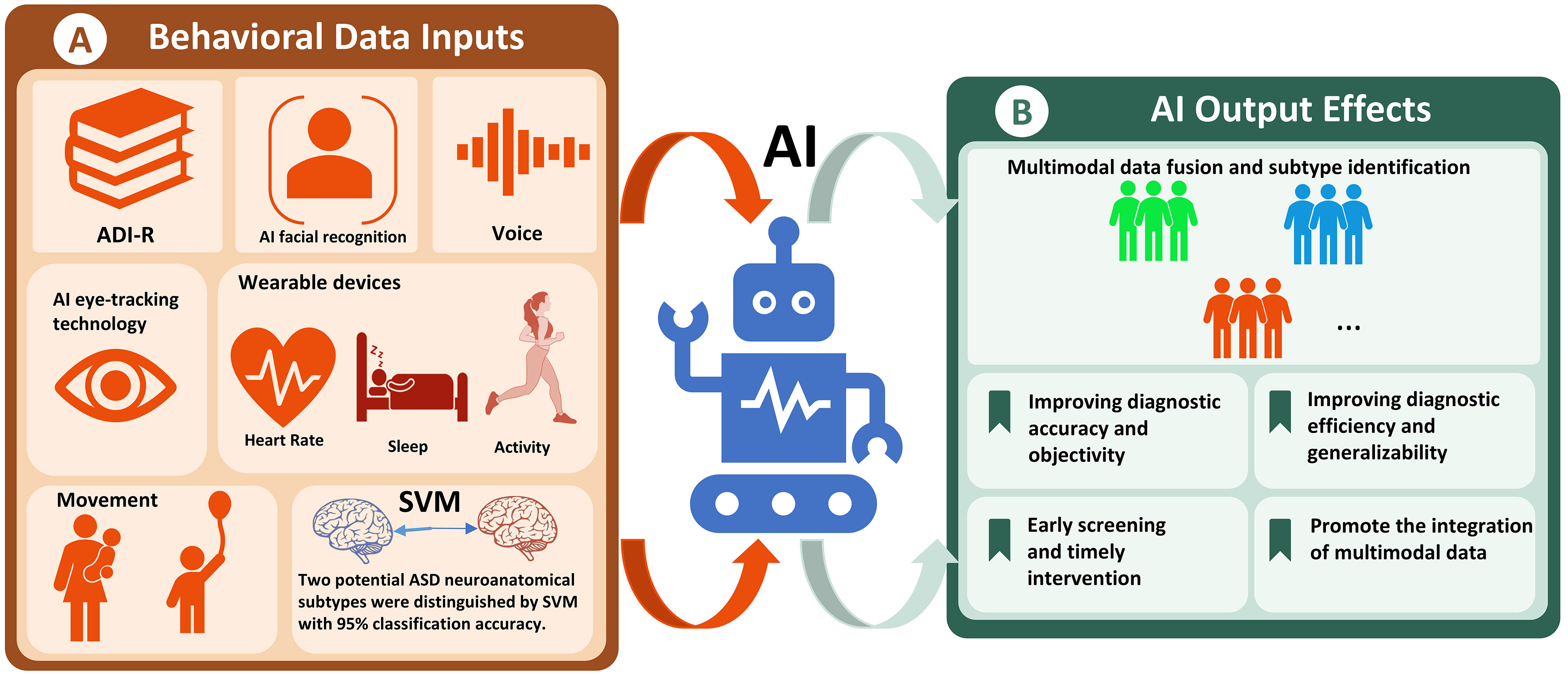
Figure 2. Advantages and technical framework of AI in ASD phenotyping. (A) illustrates the various behavioral input data for AI-assisted ASD diagnosis, including ADI-R, AI facial recognition, voice analysis, wearable devices, AI eye-tracking technology, and physiological/behavioral data such as heart rate, sleep, and activity; (B) summarizes the core values of AI-assisted diagnosis, which include multimodal data fusion and subtype identification, improved diagnostic accuracy and objectivity, improved diagnostic efficiency and scalability, early screening and timely intervention, and privacy protection and non-intrusiveness. Icons in this figure were created using BioGDP (https://BioGDP.com)[30] and the built-in library in Microsoft PowerPoint. AI: Artificial intelligence; ASD: autism spectrum disorder; SVM: support vector machine; ADI-R: autism diagnostic interview-revised.