

fig2
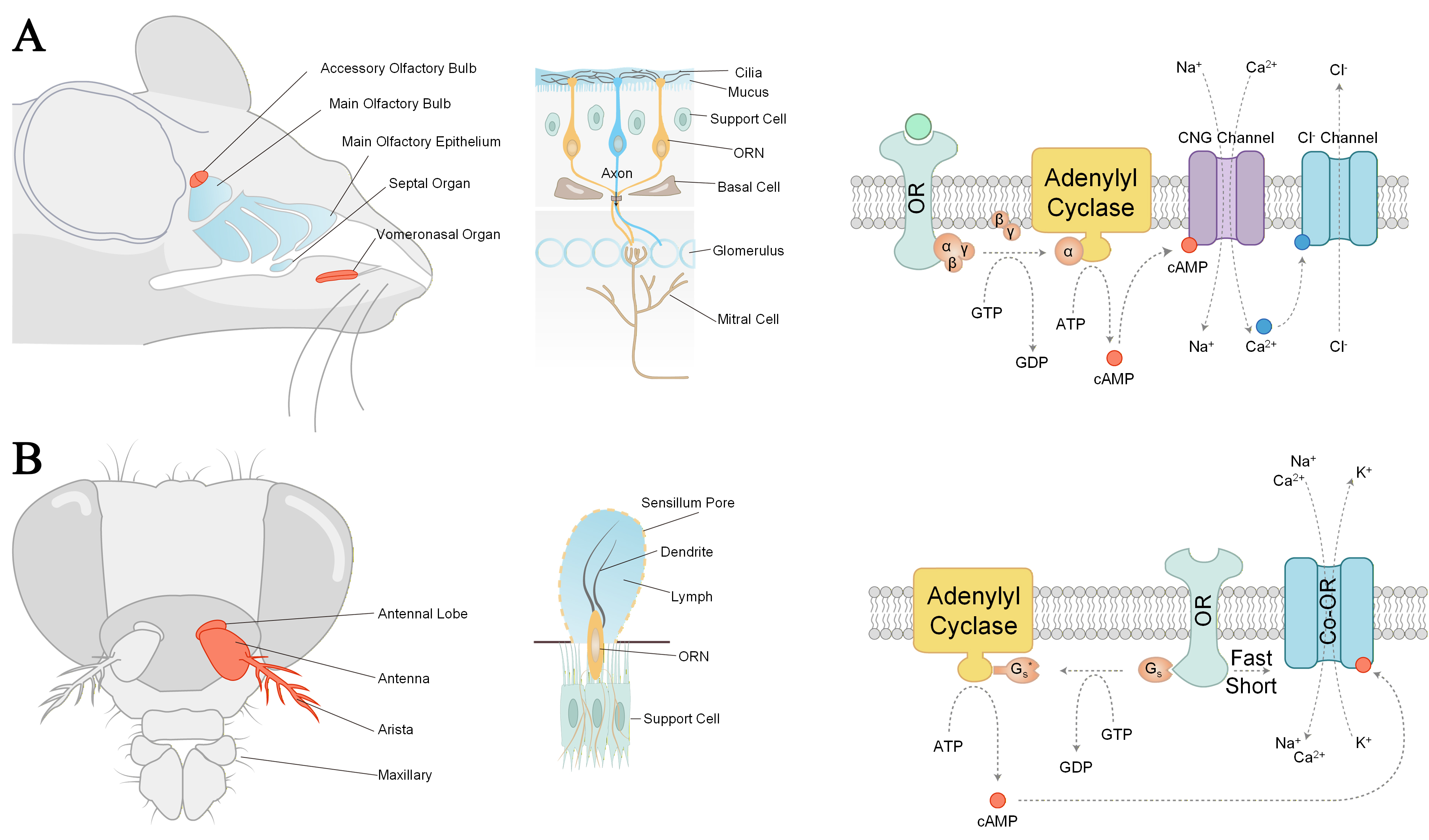
Figure 2. Different olfactory receptor structures and signaling pathways in vertebrates and insects. (A) The vertebrate nasal cavity (left) contains several olfactory subsystems: the main olfactory epithelium (MOE), the SO, the VNO, the MOB and the AOB. ORNs in the MOE (middle) have cilia that extend into the mucus. Signal transduction in mammalian ORNs (right)[13,20]; (B) In insects, olfaction occurs in the antenna and the maxillary palp which are covered with the sensilla (left). Insect ORNs share morphological similarities with vertebrate ORNs (middle). Ionotropic mechanisms for olfaction in insects (right)[13,20]. ORN: Olfactory receptor neuron; OR: olfactory receptor; cAMP: cyclic adenosine monophosphate; GTP: guanosine triphosphate; GDP: guanosine diphosphate; SO: septal organ; VNO: vomeronasal organ; MOB: main olfactory bulb; AOB: accessory olfactory bulb.

