

fig6
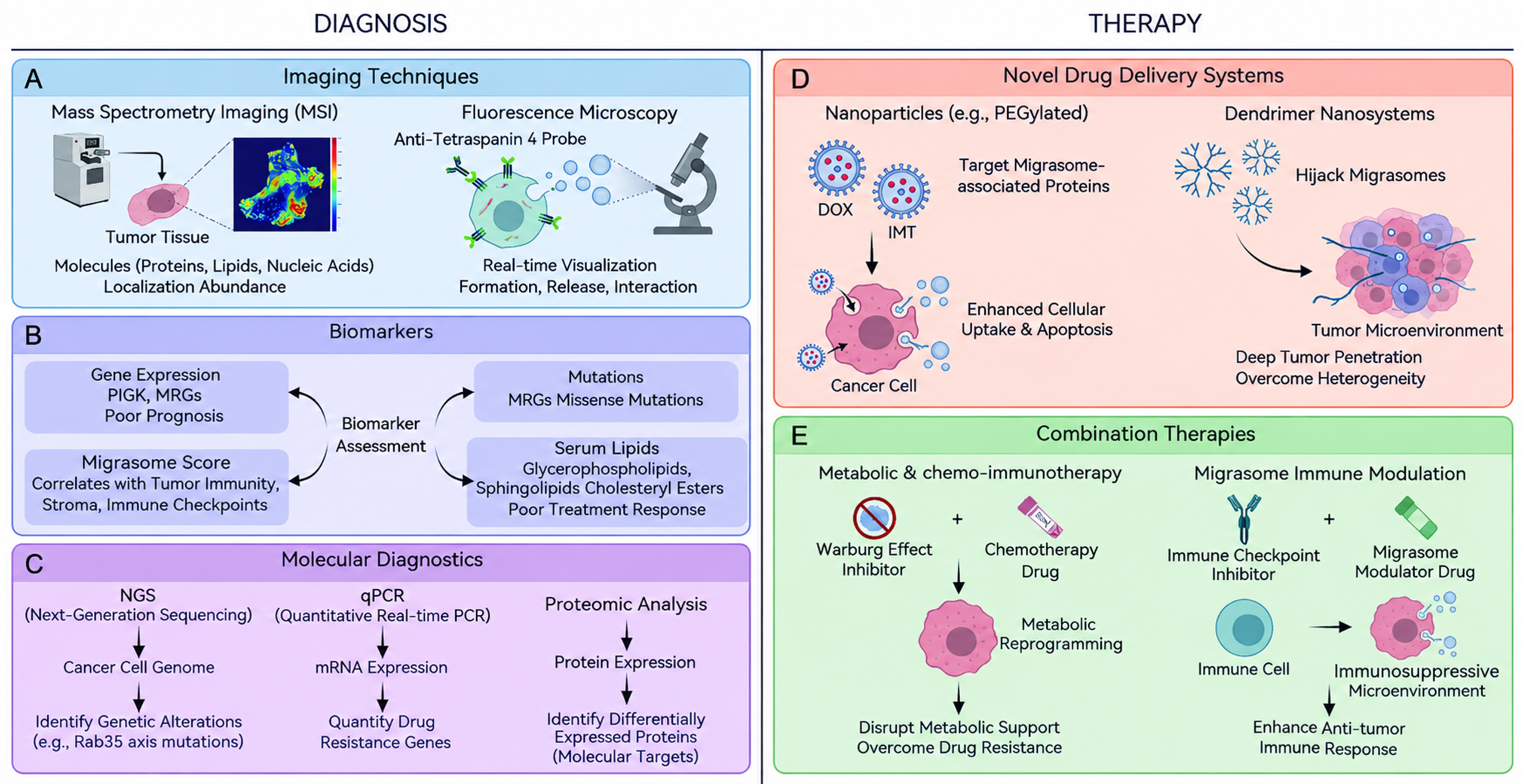
Figure 6. Clinical application of migrasomes in cancers (A-E). By integrating advanced imaging, molecular profiling, and targeted treatment strategies, migrasomes show substantial potential in cancer diagnosis and therapy. (A) Mass spectrometry imaging and fluorescence microscopy can be used to visualize migrasomes and assess their spatial distribution in tumors; (B) Migrasome-associated biomarkers, including MRG expression levels, missense mutations in MRGs, composite migrasome scores, and serum lipid signatures, may provide prognostic and predictive information; (C) Molecular diagnostic approaches such as next-generation sequencing, quantitative real-time PCR, and proteomic profiling enable the characterization of migrasome-associated drug resistance mechanisms; (D and E) Therapeutically, migrasome-targeted or migrasome-informed nanoparticle drug-delivery systems offer promising options for overcoming cancer drug resistance and improving treatment efficacy. DOX: Doxorubicin; IMT: imatinib; MRGs: migrasome-related genes; mRNA: messenger RNA; MSI: mass spectrometry imaging; NGS: next-generation sequencing; PIGK: phosphatidylinositol glycan, class K; qPCR: quantitative real-time PCR; Rab35: Ras-related GTP-binding protein 35.