
fig6
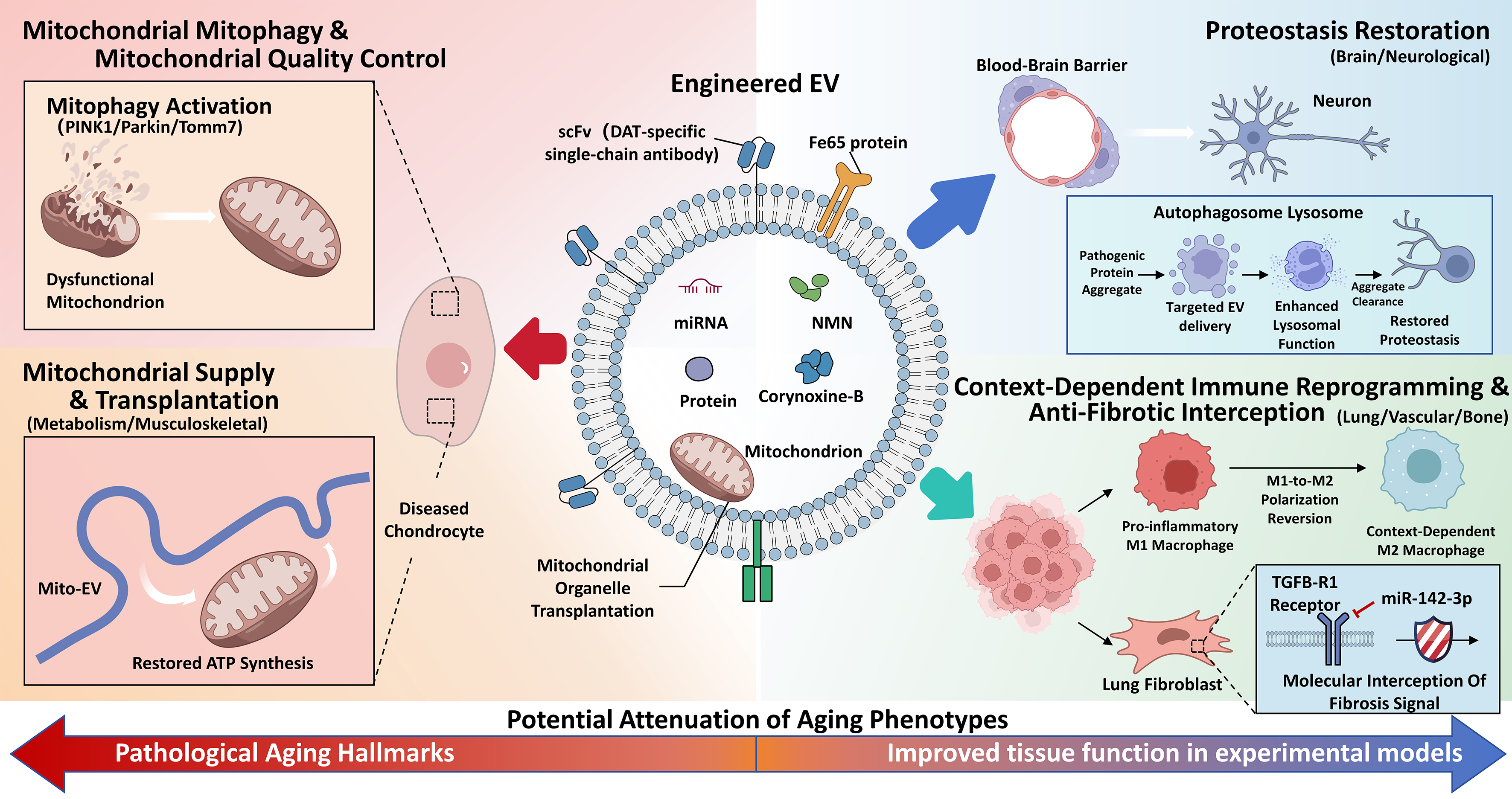
Figure 6. Representative EV-based strategies targeting interconnected aging mechanisms. This figure summarizes representative engineered and bioactive EV-based therapeutic strategies investigated in distinct preclinical studies. EV-based interventions may enhance TOMM7/PINK1/Parkin-associated mitophagy[140], facilitate mitochondrial transfer to chondrocytes[141], or deliver cargo to neurons to modulate autophagic and lysosomal pathways involved in protein clearance[132,133]. Other EV strategies affect context-dependent macrophage polarization and miR-142-3p/TGFβ-R1-associated fibrotic signaling[126,128]. Importantly, the M1-to-M2 transition depicted in the figure represents an experimental phenotypic shift and does not imply a uniformly anti-fibrotic or protective effect; M2 macrophages can exert either reparative or pro-fibrotic functions depending on the tissue microenvironment. The central cargo display is a composite schematic illustrating distinct products and studies; it does not depict a validated single EV product containing all illustrated cargoes. These examples do not demonstrate systemic rejuvenation in humans. EV: Extracellular vesicle; mito-EV: mitochondria-containing EV; miR: microRNA; scFv: single-chain variable fragment; DAT: dopamine transporter; APP: amyloid precursor protein; Aβ: amyloid-beta; Fe65: amyloid beta A4 precursor protein-binding family A member 1; Corynoxine-B: an autophagy inducer; NMN: nicotinamide mononucleotide; ATP: adenosine triphosphate; TOMM7: translocase of outer mitochondrial membrane 7; PINK1: PTEN-induced kinase 1; Parkin: PRKN E3 ubiquitin ligase; TGFβ-R1: transforming growth factor beta receptor 1; M1/M2: macrophage activation phenotypes.