
fig3
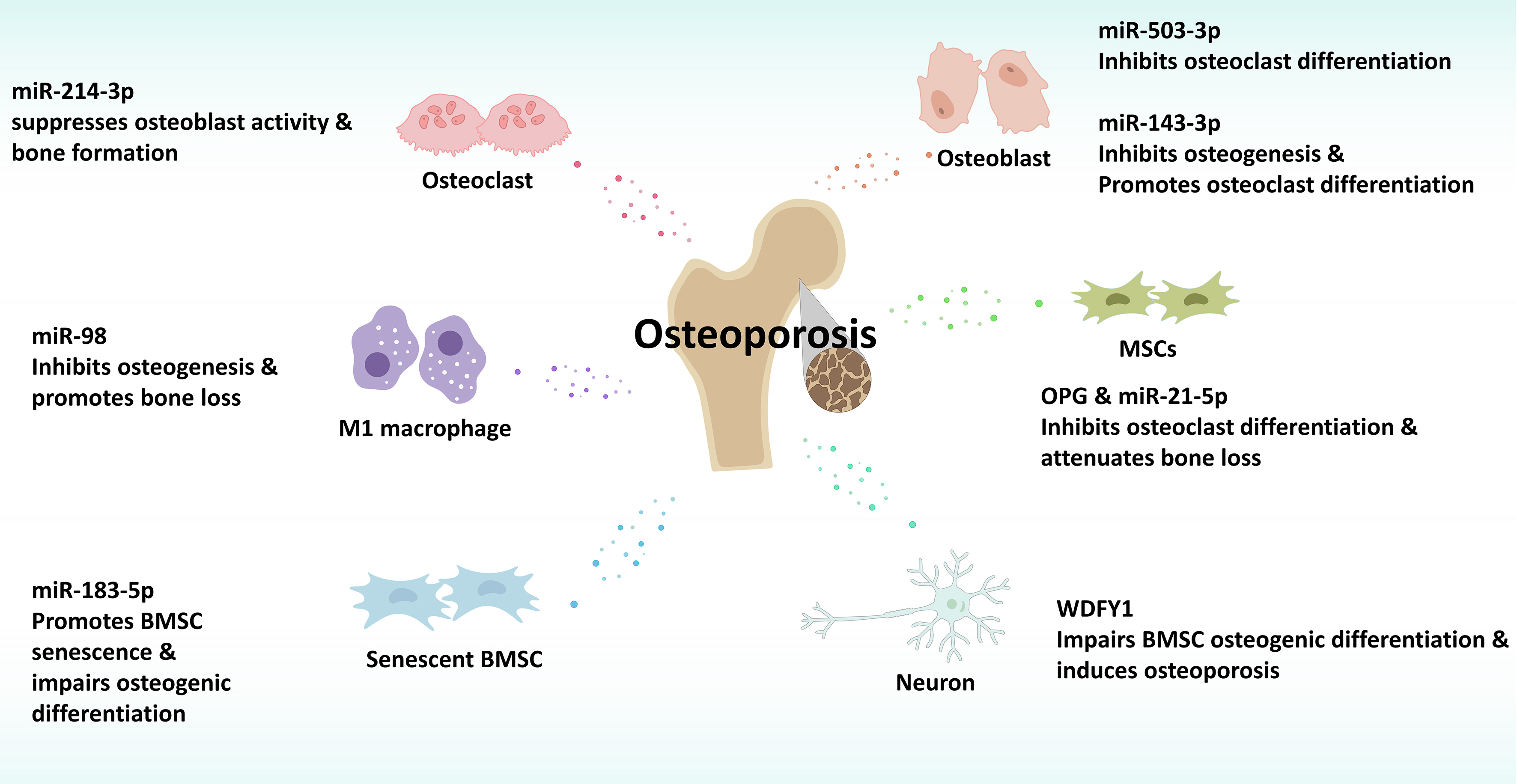
Figure 3. Source- and cargo-dependent regulation of bone remodeling by EVs. EVs influence bone formation and resorption through distinct signaling routes. Osteoclast-derived miR-214-3p and mature osteoblast-derived miR-143-3p can inhibit osteoblast activity or favor osteoclastogenesis, whereas osteoblast EV-associated miR-503-3p inhibits osteoclast differentiation[88,89,93]. M1 macrophage EV-associated miR-98 and aged bone-marrow EV-associated miR-183-5p are linked to impaired osteogenesis and bone loss or cellular senescence[94,95]. Neuronal WDFY1-bearing EVs contribute to brain-bone signaling[96], while adipose stem cell-derived EVs containing OPG and miR-21-5p reduce osteoclast differentiation in experimental models[90]. EV: Extracellular vesicle; miR: microRNA; MSC: mesenchymal stem/stromal cell; BMSC: bone marrow mesenchymal stromal cell; WDFY1: WD repeat and FYVE domain-containing protein 1; OPG: osteoprotegerin.