

fig1
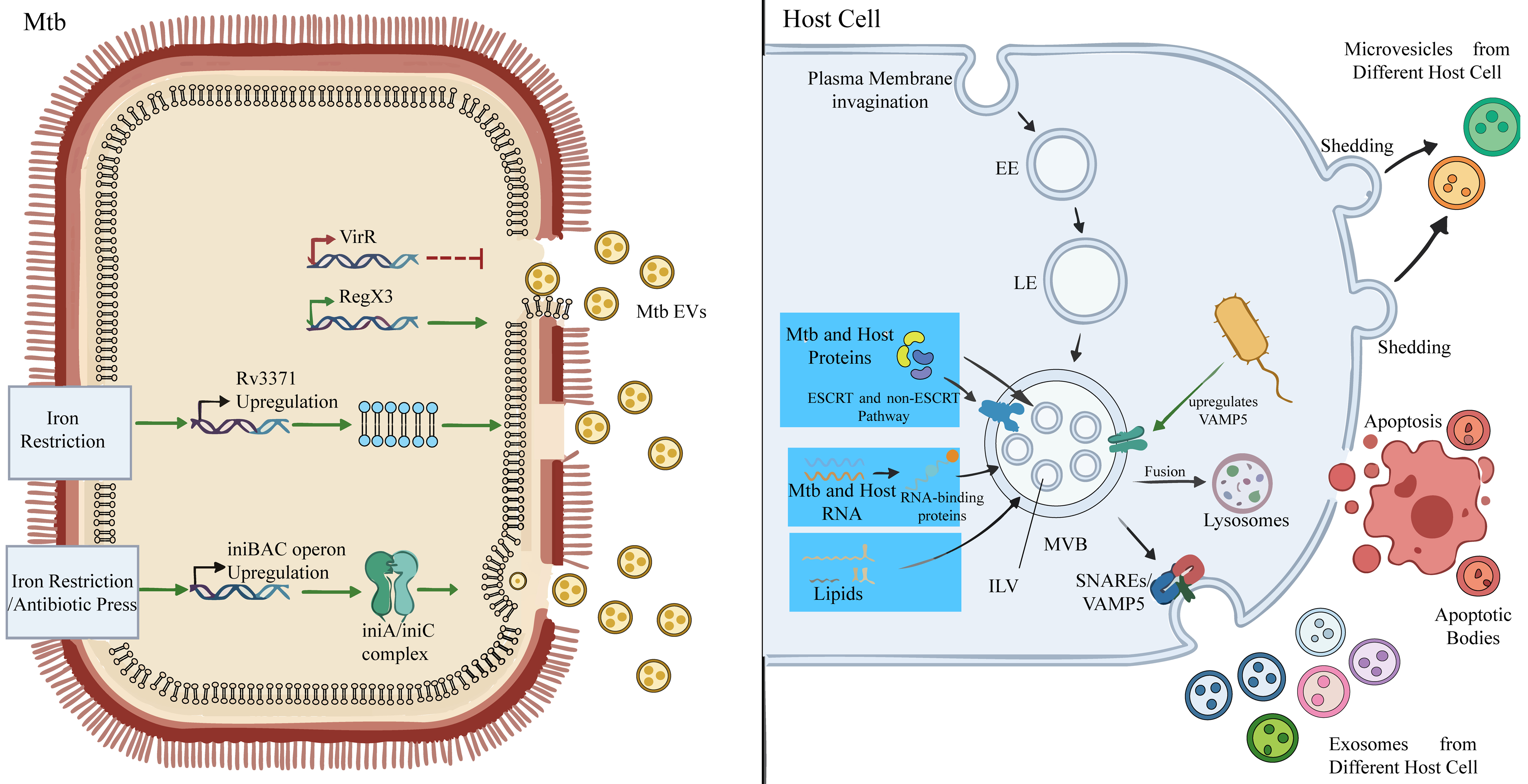
Figure 1. Biogenesis and regulation of EVs from Mycobacterium tuberculosis and infected host cells. On the left side, the biogenesis and release of Mtb EVs are governed by a sophisticated regulatory network. Key regulatory factors include VirR and RegX3: VirR restricts excessive Mtb EVs release by maintaining cell wall integrity, whereas activation of the RegX3 pathway promotes Mtb EVs production. Furthermore, under nutritional stresses imposed by the host, such as iron limitation, Mtb actively upregulates the secretion of Mtb EVs via pathways including Rv3371 and the iniBAC operon (IniA/IniC complex), as a survival strategy to cope with environmental constraints. Ultimately, Mtb EVs carrying diverse bioactive components, including lipids, proteins, and nucleic acids, are released into the extracellular milieu. On the right side, within infected host cells, EE mature into LE and further develop into MVB. ILVs are formed by inward budding of the MVB membrane, a process that relies on both ESCRT-dependent and ESCRT-independent mechanisms for the sorting and loading of host- and Mtb-derived proteins, RNAs, lipids, and other molecules. The fate of MVB determines exosome release: a subset of MVBs fuses with lysosomes for cargo degradation, while another subset fuses with the plasma membrane under the regulation of Rab GTPases and SNARE proteins (e.g., VAMP5), thereby releasing ILVs as exosomes into the extracellular space. In addition, host cells directly release microvesicles through plasma membrane budding and generate apoptotic bodies upon the induction of apoptosis. These distinct classes of HC EVs act as intercellular communication carriers during Mycobacterium tuberculosis-host interactions, participating in critical processes including immune modulation, bacterial survival, and pathogen dissemination. Mtb: Mycobacterium tuberculosis; EVs: extracellular vesicles; Mtb EVs: Mycobacterium tuberculosis-derived extracellular vesicles; HC EVs: host cell-derived extracellular vesicles; EE: early endosomes; LE: late endosomes; MVB: multivesicular bodies; ILV: intraluminal vesicles; ESCRT: endosomal sorting complexes required for transport; VirR: vesiculogenesis and immune response regulator; RNA: ribonucleic acid; SNARE: soluble N-ethylmaleimide-sensitive factor attachment protein receptor; VAMP5: vesicle-associated membrane protein 5.