


fig6
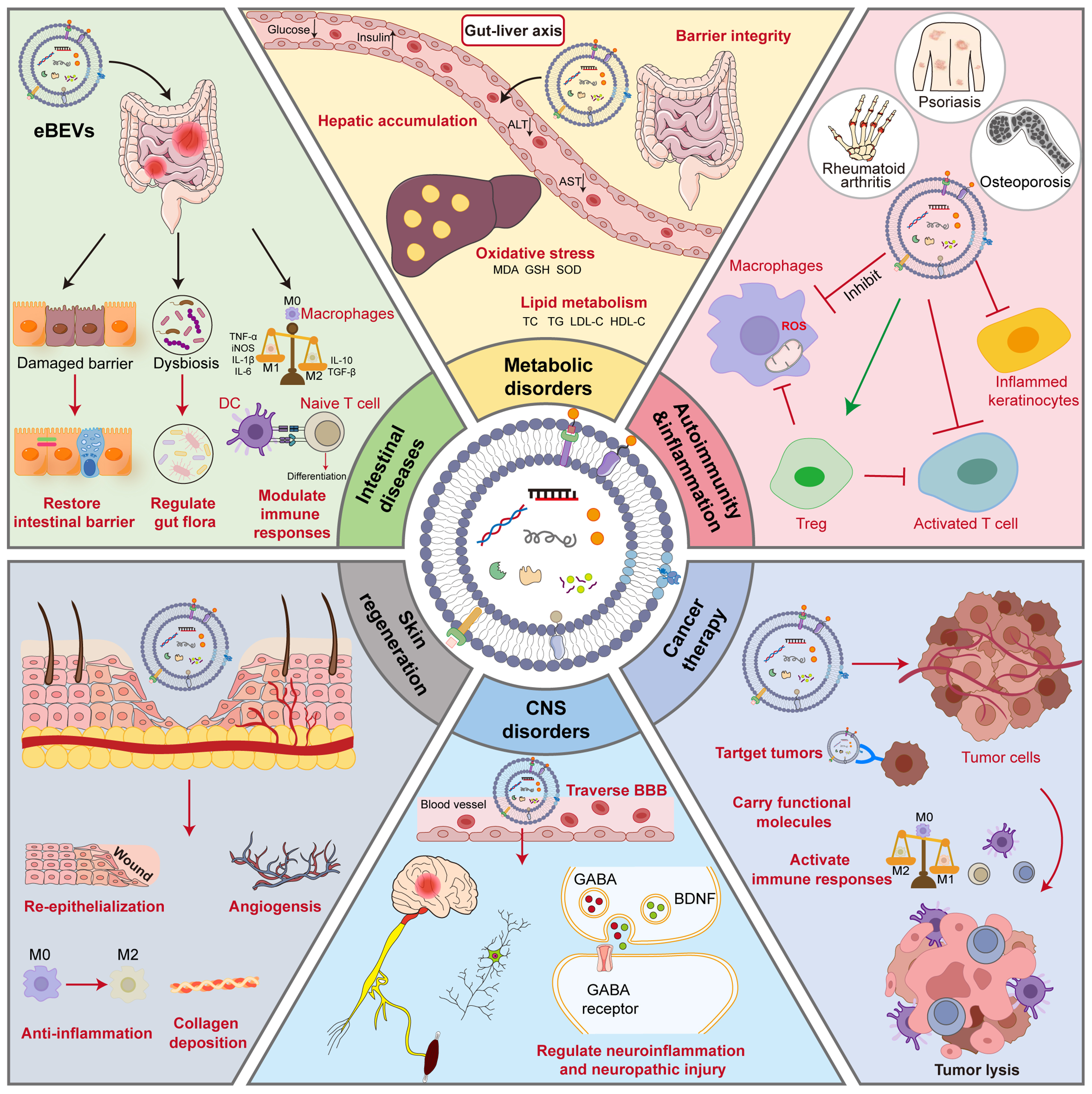
Figure 6. Application of eBEVs in treating various diseases. eBEVs could participate in disease regulation through multiple pathways and targets, covering aspects such as intestinal barrier repair, immune regulation, metabolic intervention, neuroprotection, and anti-tumor activity. Firstly, eBEVs can act on damaged intestinal barriers by restoring their integrity and regulating the balance of the microbiota. In metabolic disorders, eBEVs participate in regulating oxidative stress indicators (such as MDA, GSH, SOD) and lipid metabolism-related indicators (TC, TG, LDL-C, HDL-C), thereby intervening in metabolic disorders. In autoimmune diseases such as psoriasis, rheumatoid arthritis, and osteoporosis, eBEVs demonstrate regulatory potential. eBEVs can regulate the differentiation of naive T cells, affect immune responses and inflammasome activity, promote the function of Treg, and regulate the transformation of macrophages from M1 type to M2 type, exerting anti-inflammatory effects. In tumor treatment, eBEVs can carry functional molecules, activate immune responses, and directly promote tumor cell lysis, demonstrating targeted therapeutic potential. For central nervous system diseases, eBEVs can cross the blood-brain barrier and regulate GABA, BDNF, and related receptor pathways, thereby alleviating neuroinflammation and nerve damage. eBEVs can also promote skin regeneration by promoting re-epithelialization, vascular regeneration, and collagen deposition. This figure reflects the diversity and synergy of eBEVs as multifunctional nanocarrier, highlighting the integrated mechanism in barrier repair, immune remodeling, metabolic regulation, neuroprotection, and tumor intervention. eBEVs: Engineered extracellular vesicles; BEVs: bioengineered extracellular vesicles; ALT: alanine aminotransferase; AST: aspartate aminotransferase; MDA: malondialdehyde; GSH: glutathione; SOD: superoxide dismutase; TC: total cholesterol; TG: triglycerides; LDL-C: low-density lipoprotein cholesterol; HDL-C: high-density lipoprotein cholesterol; ROS: reactive oxygen species; TNF-α: tumor necrosis factor-α; iNOS: inducible nitric oxide synthase; IL-1β: interleukin-1β; IL-6: interleukin-6; TGF-β: transforming growth factor-β; DC: dendritic cell; Treg: regulatory T cell; BBB: blood-brain barrier; CNS: central nervous system; GABA: γ-aminobutyric acid; BDNF: brain-derived neurotrophic factor.