


fig3
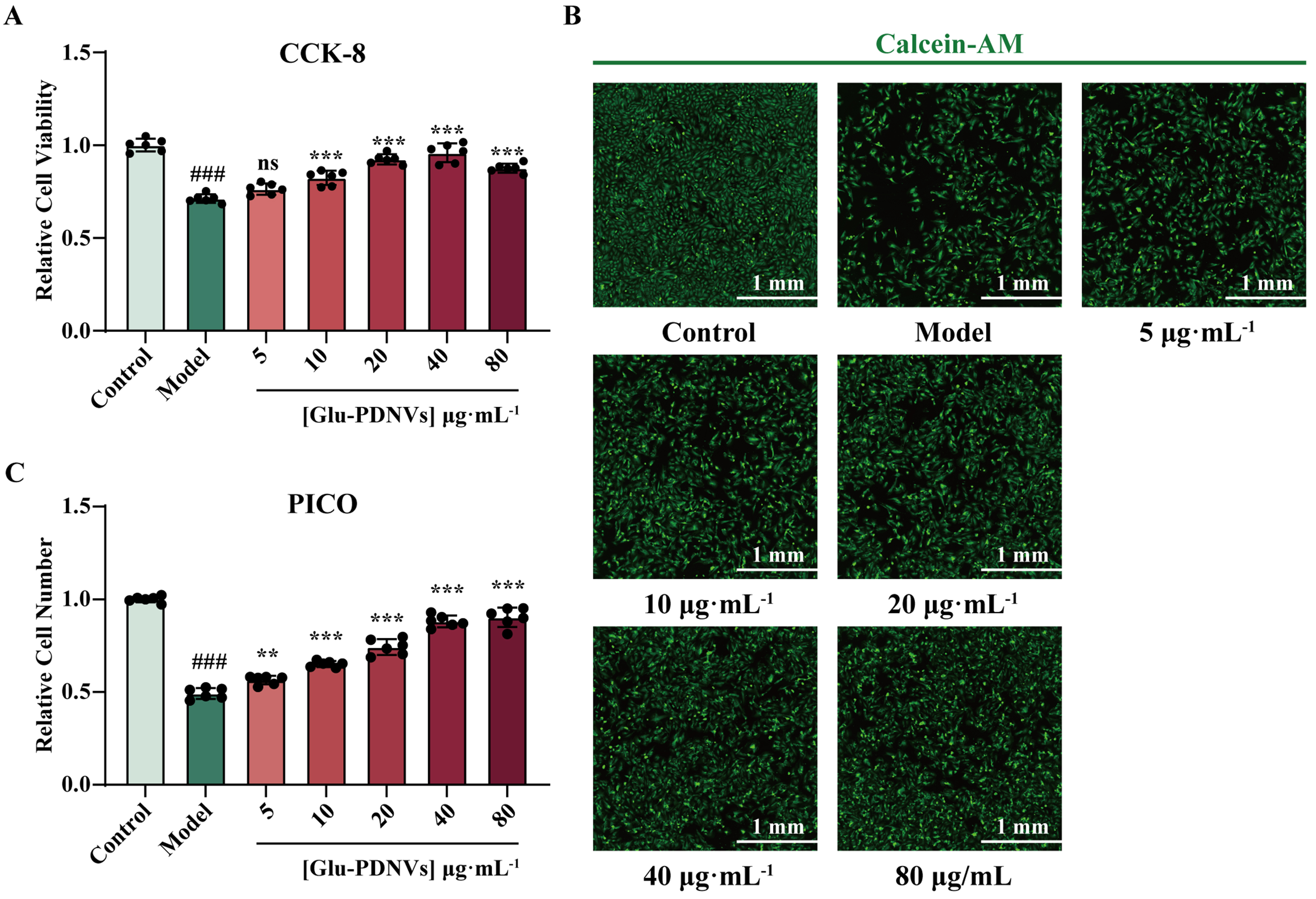
Figure 3. The potent cytoprotective properties of Glu-PDNVs on H9c2 cells against H2O2-induced injury. (A) Relative viability of H9c2 cells after Glu-PDNVs treatment. n = 6; (B) Calcein-AM (green)-labeled H9c2 cells after Glu-PDNVs treatment (Scale bar = 1 mm); (C) Relative number of H9c2 cells from (B). n = 6. Data are presented as mean ± SD and analyzed by one-way ANOVA (###P < 0.001 vs. control; **P < 0.01, ***P < 0.001 vs. model). PDNVs: Plant-derived nanovesicles; Glu-PDNVs: Rehmannia glutinosa-derived nanovesicles; H2O2: hydrogen peroxide; CCK-8: cell counting kit-8; Calcein-AM: calcein acetoxymethyl ester; PICO: ImageXpress Pico; ANOVA: analysis of variance; SD: standard deviation; mm: millimeter; µmol: micromole; µg: microgram; mL: milliliter; L: liter.