

fig1
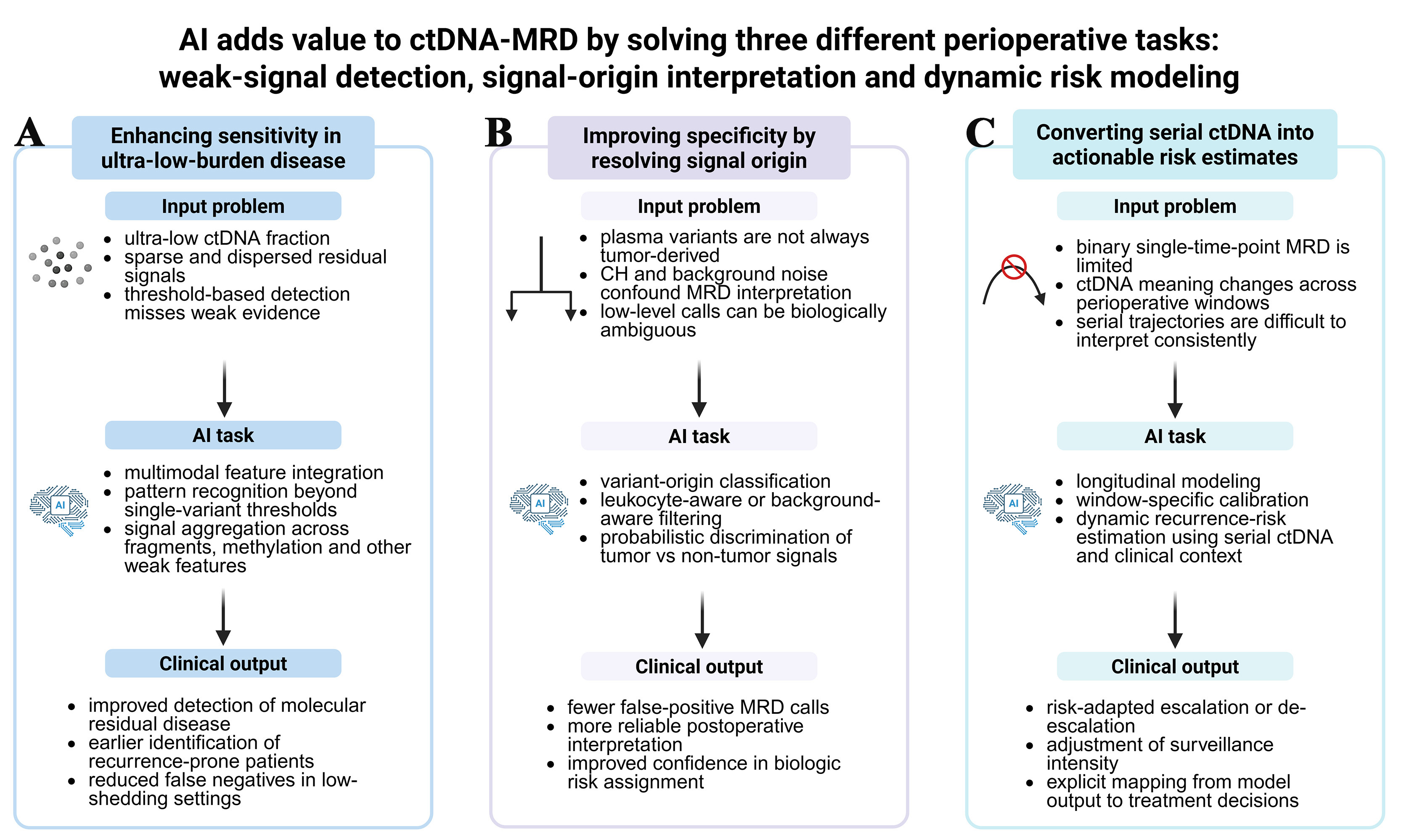
Figure 1. Three principal ways in which AI/ML can improve ctDNA-based MRD assessment in perioperative NSCLC. (A) illustrates the use of AI for weak signal integration to improve sensitivity in ultra-low-burden disease; (B) shows how AI can improve specificity by distinguishing tumor-derived signals from clonal hematopoiesis and other background noise; (C) summarizes longitudinal and window-aware modeling strategies that translate serial ctDNA measurements into dynamic recurrence-risk estimates and clinically actionable management categories. Created in BioRender. Chen, Y. (2026) https://BioRender.com/it4i2ml. NSCLC: Non-small cell lung cancer; ctDNA: circulating tumor DNA; MRD: minimal residual disease; AI: artificial intelligence; ML: machine learning; CH: clonal hematopoiesis.