
fig3
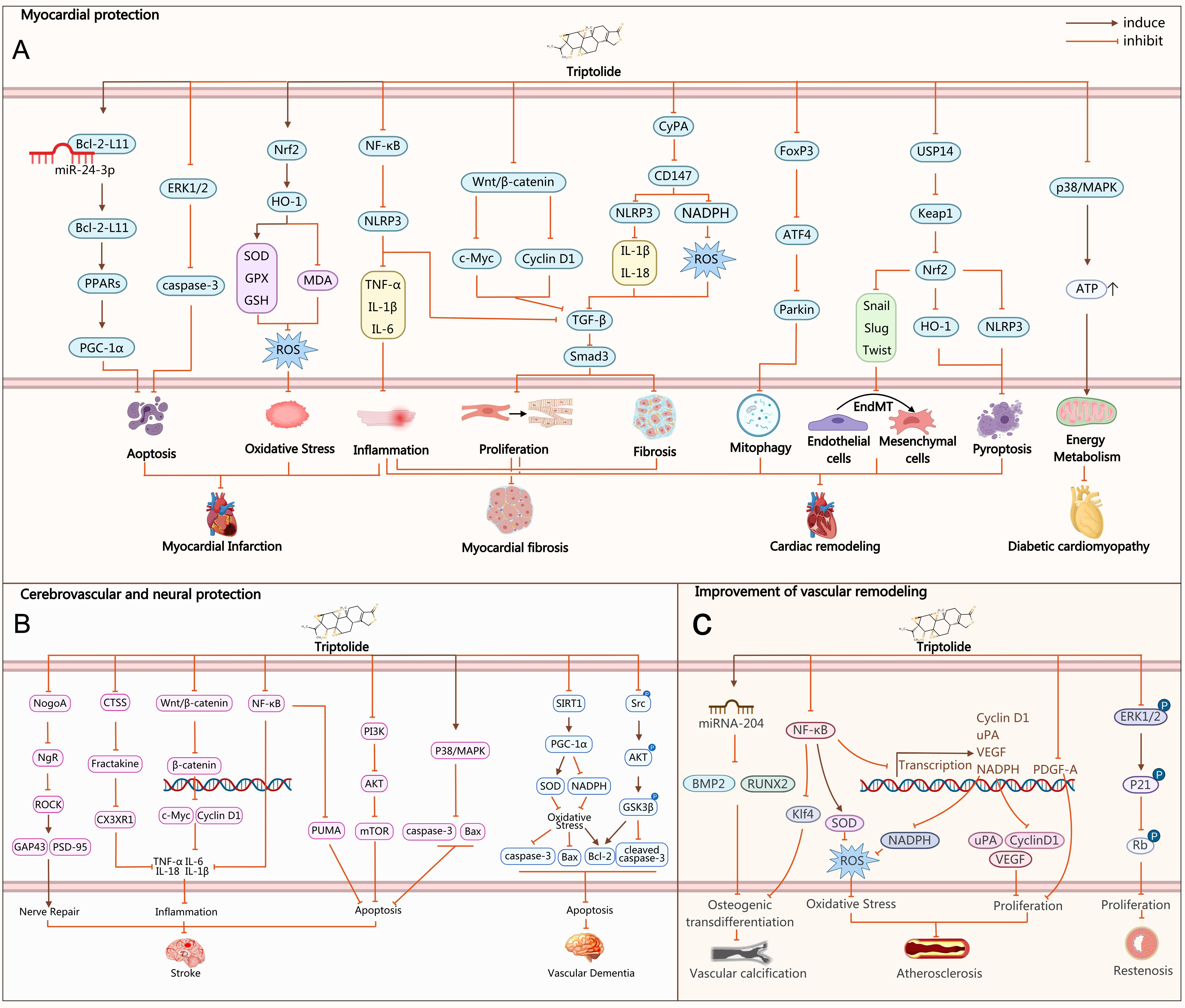
Figure 3. Multi-target mechanisms of TP in myocardial, cerebrovascular, and vascular pathologies. (A) Myocardial protection. TP elicits cardioprotection through multiple mechanisms, including anti-oxidation (Nrf2/HO-1 pathway, SOD/GSH upregulation), anti-apoptosis (Bcl-2/Bax regulation, caspase-3 inhibition), anti-inflammation (NF-κB/NLRP3 suppression, macrophage M2 polarization), anti-fibrosis (TGF-β/Smad and Wnt/β-catenin inhibition), and improvement of myocardial energy metabolism (PPARs/PGC1α activation). These integrated actions contribute to therapeutic benefits in myocardial infarction, ischemia/reperfusion injury, myocardial fibrosis, pathological cardiac remodeling, and diabetic cardiomyopathy. (B) Cerebrovascular and neural protection. In the cerebrovascular system, TP provides neuroprotection via anti-inflammatory (TLR4/NF-κB inhibition, microglial M2 polarization), anti-apoptotic (Bcl-2/Bax regulation), and pro-repair (NogoA/NgR/ ROCK inhibition, PSD-95/GAP43 upregulation) mechanisms. These effects support its therapeutic utility in ischemic stroke and vascular dementia. (C) Improvement of vascular remodeling. TP mitigates vascular calcification by inhibiting osteogenic transdifferentiation (BMP2/RUNX2 suppression via miRNA-204 upregulation), alleviates atherosclerosis through suppression of oxidative stress, inflammation, and pathological angiogenesis (NF-κB, VEGF, uPA inhibition) and ameliorates vascular restenosis by restraining excessive VSMCs proliferation (ERK1/2 inhibition and p21-mediated cell cycle arrest). (Created with MedPeer (https://www.medpeer.cn/), ID: 50bc1wltb6eaxen111791808861).