
fig2
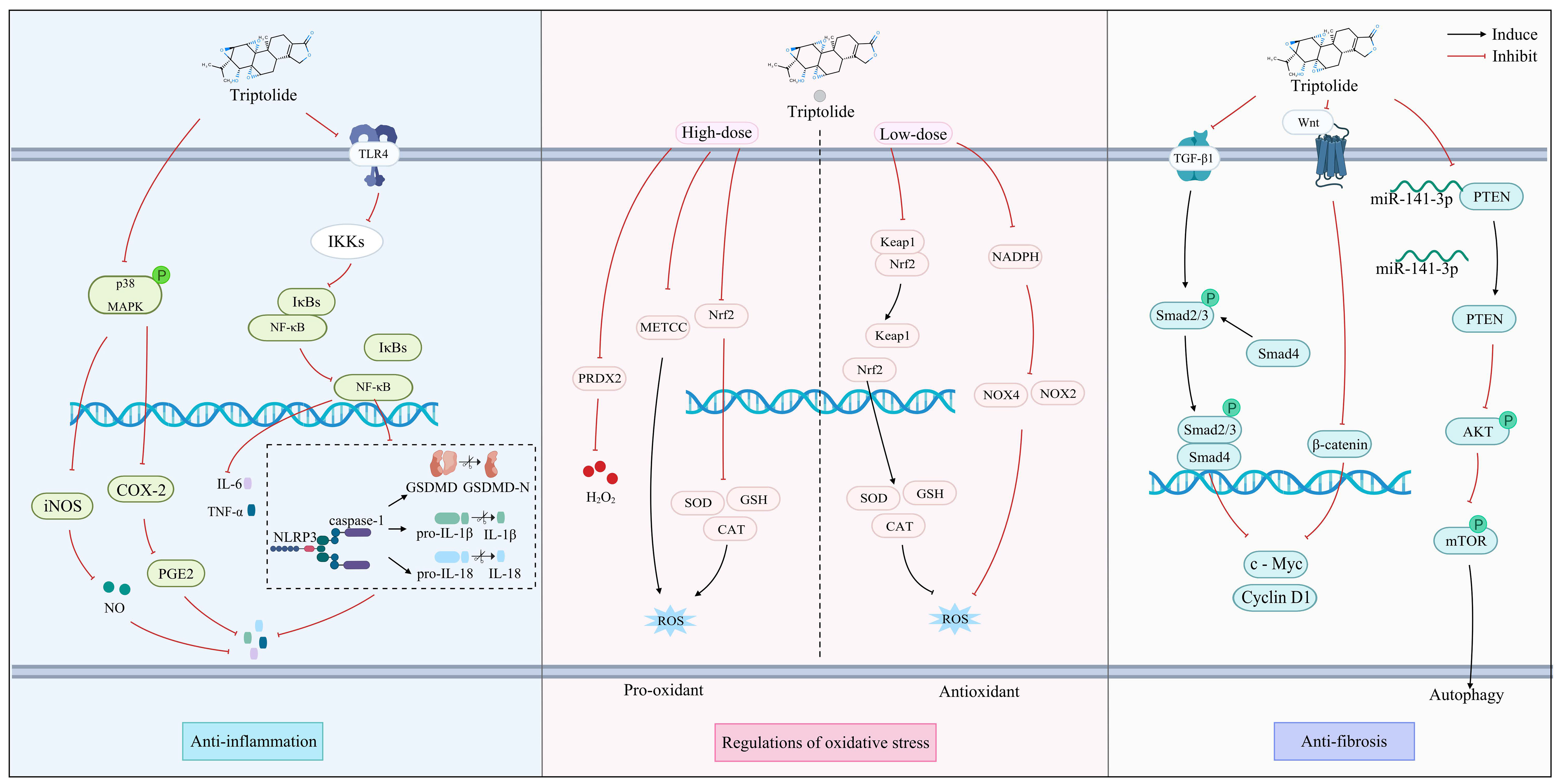
Figure 2. Signaling pathways mediating the core pharmacological effects of TP. The schematic delineates the major molecular cascades through which TP exerts its pleiotropic actions. Anti-inflammatory effects (A) TP suppresses the release of pro-inflammatory mediators primarily by inhibiting the TLR4/NF-κB pathway, blocking NLRP3 inflammasome activation, and attenuating p38 MAPK signaling. Regulation of oxidant stress (B) TP reduces oxidative stress by promoting Nrf2 nuclear translocation via disruption of the Keap1-Nrf2 interaction, leading to upregulation of antioxidant enzymes (SOD, CAT, GSH), while downregulating pro-oxidant factors (NOX2, NOX4). At high-doses, TP disrupts cellular redox balance by inhibiting antioxidant defenses (e.g., targeting PRDX2 and suppressing Nrf2) while promoting mitochondrial ROS accumulation (e.g., via METCC dysfunction). Anti-fibrotic effects (C) TP attenuates fibrosis through multiple axes, including inhibition of the TGF-β/Smad2/3 signaling pathway, modulation of autophagy via the miR-141-3p/PTEN/AKT/mTOR axis, and interference with the Wnt/β-catenin/c-Myc/ Cyclin D1 cascade. These integrated actions synergistically suppress fibroblast activation, extracellular matrix deposition, and myofibroblast transdifferentiation. (Created with MedPeer (https://www.medpeer.cn/), ID: 24c5byr4ak886eabd01791809203).