

fig2
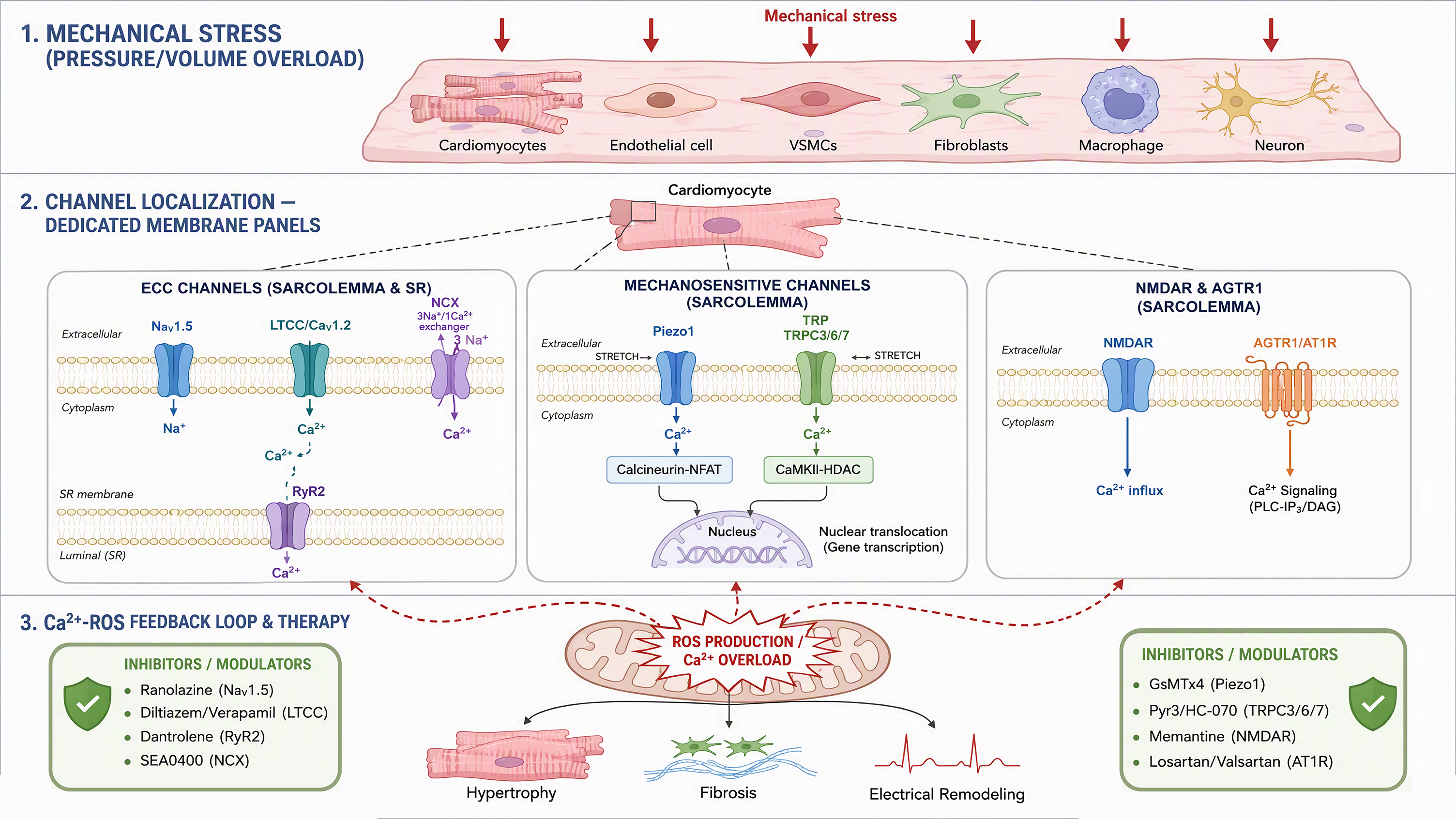
Figure 2. Cell-type-specific ion channel mechanisms of mechanical stress-induced cardiac remodeling. Pressure and volume overload generate mechanical stress that activates distinct ion-channel repertoires in cardiomyocytes, endothelial cells, vascular smooth muscle cells, cardiac fibroblasts, and perivascular sensory neurons and macrophages. Channel-mediated Ca2+/Na+ influx engages downstream signaling (calcineurin/NFAT, CaMKII/HDAC/MEF2, EDH-dependent vasodilation, myogenic tone, TGF-β/Smad-dependent fibrogenesis, sympathetic afferent activation, and innate immune activation). Mitochondrial Ca2+ overload generates ROS, which feedback to enhance channel activity through CaMKII oxidation, RyR2 oxidation, TRP S-nitrosylation, TRPC3-Nox2 coupling, and Na+-dependent mitochondrial ROS, forming self-reinforcing loops that drive hypertrophy, fibrosis, electrical remodeling, and vascular/neuro-immune dysfunction; candidate channel-directed therapeutic strategies are indicated at the bottom. The figure was created with Matplotlib (Python) and Adobe Illustrator.