

fig4
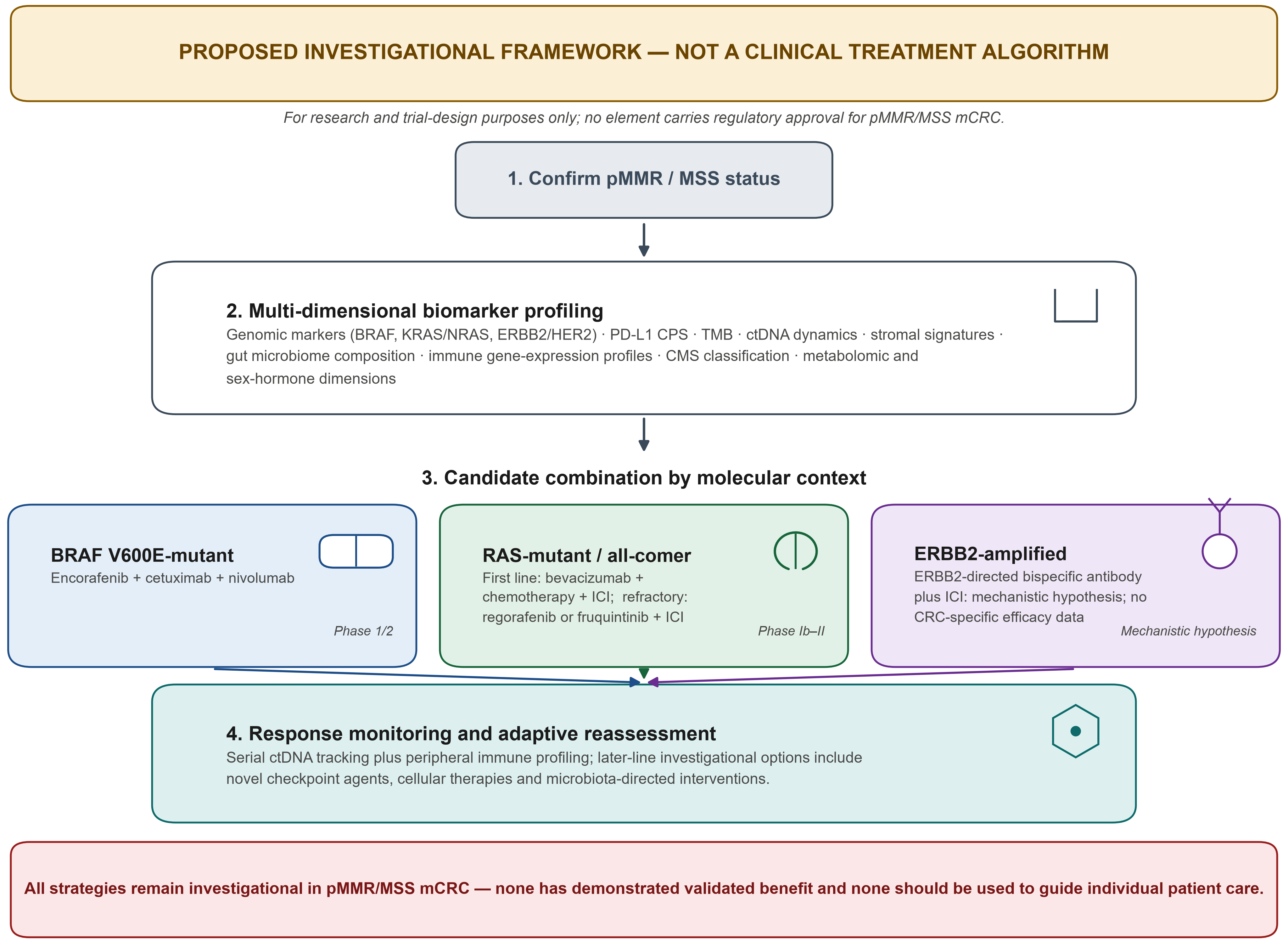
Figure 4. Investigational framework - NOT a clinical treatment algorithm Proposed investigational framework for biomarker-guided combination selection in pMMR/MSS mCRC, presented for research and trial-design purposes only; this figure is not a treatment algorithm and must not be used to guide individual clinical decisions. Following confirmation of pMMR/MSS status, biomarker profiling integrates genomic markers (BRAF, KRAS/NRAS, ERBB2/HER2), PD-L1 CPS, TMB, ctDNA dynamics, stromal signatures, gut microbiome composition, and immune gene expression profiles. Candidate combination selection by molecular subtype: BRAF V600E-mutant disease, encorafenib-cetuximab-nivolumab (phase 1/2 evidence); RAS-mutant or all-comer disease, bevacizumab-chemotherapy-ICI in the first-line setting (phase 2) or regorafenib/fruquintinib-ICI combinations in refractory disease (phase Ib-II); ERBB2-amplified disease, ERBB2-directed bispecific antibody plus ICI: mechanistic hypothesis; no CRC-specific efficacy data. Later-line investigational options include novel checkpoint agents (anti-LAG-3, anti-TIGIT, STING agonists), cellular therapies (neoantigen vaccines, CAR-T, CISH-knockout TILs), and microbiota-directed interventions (FMT, probiotics, dietary modulation). Treatment response is monitored by serial ctDNA tracking and peripheral immune profiling, shown for research use only; ctDNA-guided treatment change is not a validated decision rule. All listed strategies remain investigational in pMMR/MSS mCRC as of this submission; none has regulatory approval for this indication and none should be construed as standard of care.