



fig1
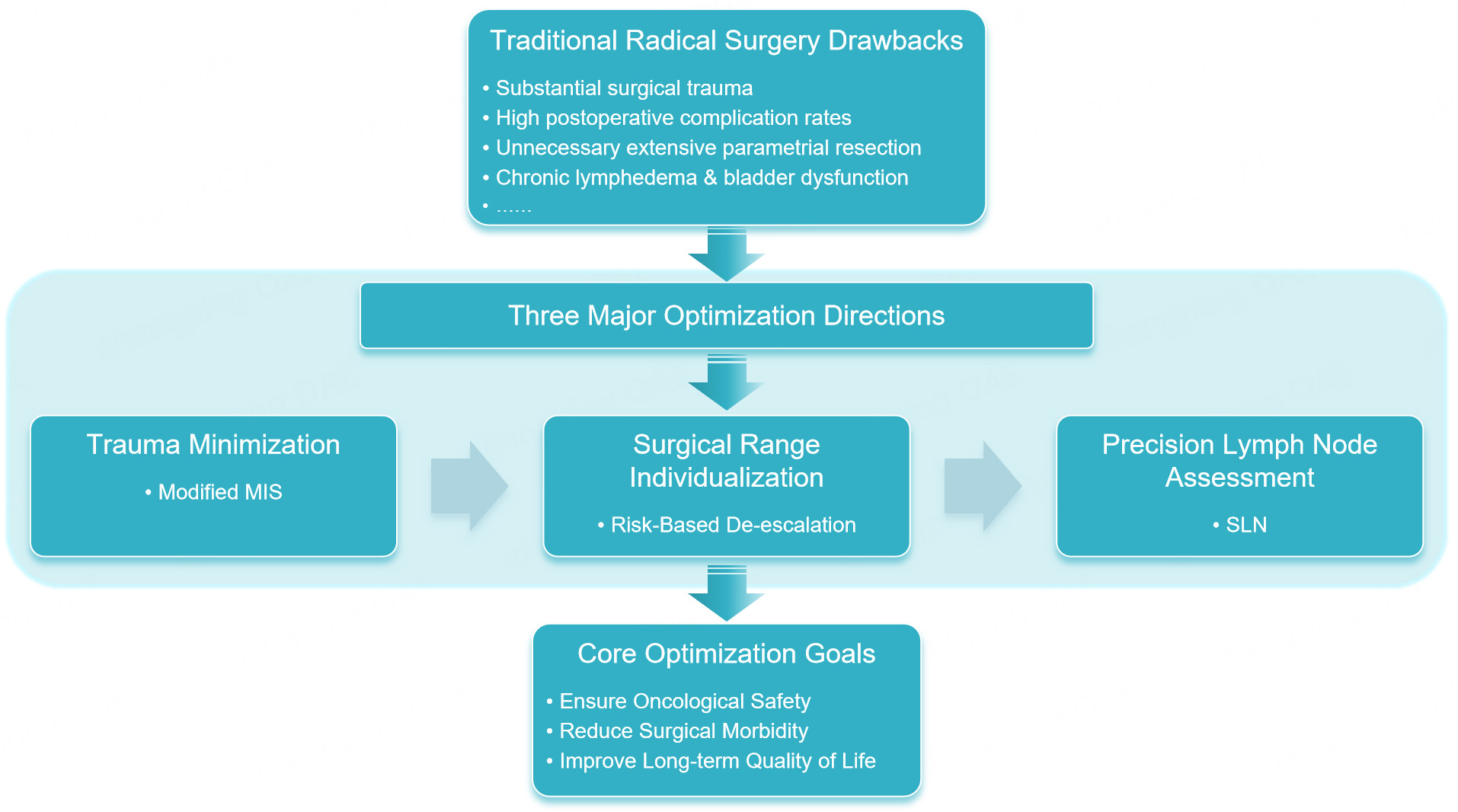
Figure 1. Overview of the integrated optimization framework for early cervical cancer surgery. Conventional radical surgery is hampered by substantial surgical trauma, excessive tissue resection, and lymphadenectomy-related adverse events. Three major optimization strategies have been developed, including modified minimally invasive surgery for trauma reduction, risk-based surgical de-escalation for an individualized resection range, and sentinel lymph node biopsy for precise nodal evaluation. The shared core objectives of all the optimized techniques are guaranteed oncological safety, reduced surgical morbidity, and improved long-term quality of life. MIS: Minimally invasive surgery; SLN: sentinel lymph node.