
Roundtable

Contents

Moderator

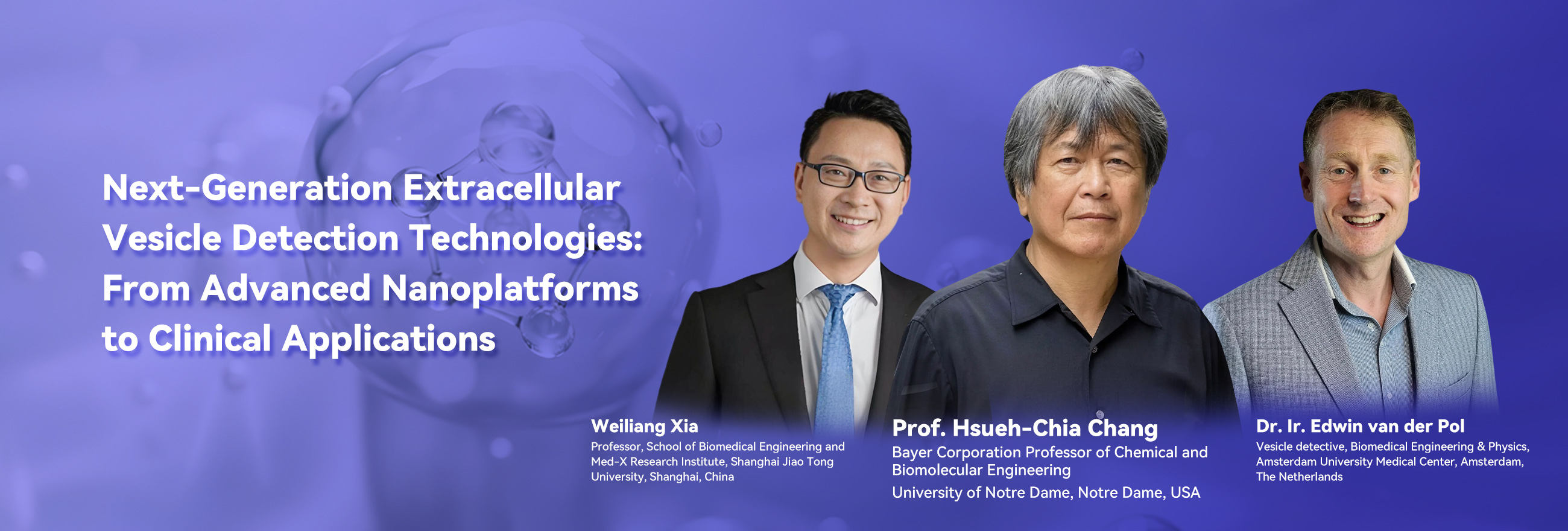
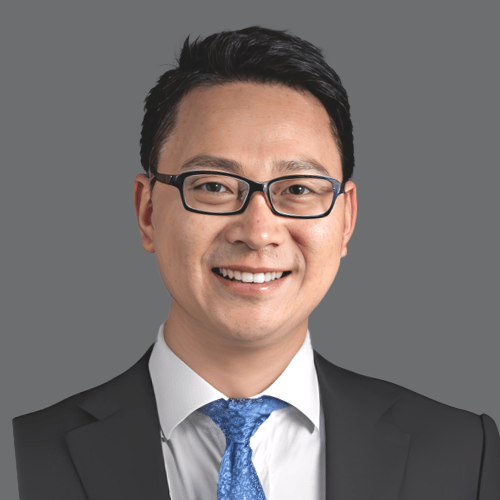
Weiliang Xia

Professor, School of Biomedical Engineering and Med-X Research Institute, Shanghai Jiao Tong University, Shanghai, China
Weiliang Xia, Ph.D., is tenured full professor at School of Biomedical Engineering and Associate Dean of Zhiyuan College (an Honors College) at Shanghai Jiao Tong University. He obtained his doctoral degree from the University of Hong Kong with predoctoral training at the Rockefeller University from 2003 to 2006, followed by a postdoctoral training at UCSF from 2007 to 2008. The research interest of his group includes mechanisms of cancer progression, treatment resistance and theranostic target identification, exosome biology and application, roles of FGF/FGFR signaling and sirtuins in cancer progression and tissue repair. Dr. Xia has published more than 130 research papers, with an H-index of 50. He is Executive Editor (China) for Extracellular Vesicles and Circulating Nucleic Acids (EVCNA).  He has been awarded the Rising Star Prize by Shanghai Science and Technology Commission, Tang Lixin Young Faculty Award of SJTU, and Chinese Medical Science & Technology Award in 2021.

Speaker(s)

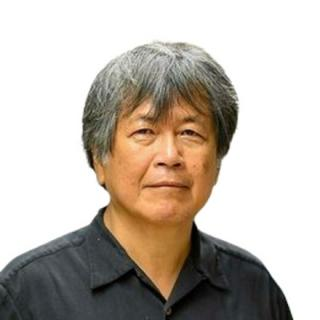
Prof. Hsueh-Chia Chang

Bayer Corporation Professor of Chemical and Biomolecular Engineering
University of Notre Dame, Notre Dame, USA
Topic: High-Throughput EV Purification and Pretreatment-Free Multiomic EV Diagnostics
Key Highlights of His Presentation: A high-throughput automated EV purification platform and several new nanocarrier (EV, lipoprotein, supermere) diagnostic technologies for untreated plasma samples will be presented. The purification platform, commercialized by Aopia Bio, is based on a biofouling-resistant ultrafiltration membrane. The new diagnostic technologies enhance detection specificity/affinity by multi-valent binding and charge/size gating. One isolates tumor EVs with two colocalized surface markers and profiles their RNA cargoes to characterize the tumor heterogeneity. Another uses Immuno-Janus particle agglutination for rapid therapy management.  

Professor Hsueh-Chia Chang is the Bayer Professor of Chemical and Biomolecular Engineering at the University of Notre Dame. He has been at Notre Dame since 1987 and has served as the department chair and the director of the Center for Microfluidics and Nanofluidics. His research is in the area of micro/nanofluidics and diagnostics, particularly integrated devices for the isolation and characterization of exosomes and other nanocarriers. His research has resulted in 20 patented technologies, eight of them have been licensed by four startups: Cubed Laboratories, AgenDx, ImpeDx and Aopia Biosciences. Products developed from these IPs include CRDTM Botrytis Detection kit by CubedLabs and NanoExTM exosome purification technology by Aopia Bio. Professor Chang served as the Chief Scientific Advisor of FCubed LLC (predecessor of CubedLabs) for 4 years. He co-founded Aopia Bio in 2019 and currently serves as its interim CTO and Board member. Professor Chang has published more than 300 papers and has a Google h-index of 80. He is the co-author of a seminal book in microfluidics: "Electrokinetically Driven Microfluidics and Nanofluidics" by Cambridge University Press in 2009. Professor Chang founded a new journal, Biomicrofluidics of the American Institute of Physics, in 2006 and served for 12 years as its Chief Editor. More than half of the 80 PhD and post-doc students from his laboratory have embarked on academic careers as tenure-track professors in all engineering and science disciplines over 5 continents (15 in the US), including Duke, Imperial, Johns Hopkins etc. They include a chancellor, a Provost, three Department Chairs, four endowed chairs and five NSF Career Awardees. Industrial alumni from his group hold manager/director positions at Merck, Gilead, Alcon, Genentech, Sanofi and other major biotech and world-leading phamaceutical companies. Professor Chang is a fellow of APS, NAI,  AIMBE and AIChE. His microfluidics work has been recognized by the Frenkiel Award from APS, the Lifetime Achievement Award from AES and the 1st Source Bank Commercialization Award. He has also won the Notre Dame Provost Research Achievement Award and was recognized at half time during the 2024 game against Stanford.

Dr. Ir. Edwin van der Pol

Vesicle detective, Biomedical Engineering & Physics, Amsterdam University Medical Center, Amsterdam, The Netherlands
Topic: Detection of extracellular vesicle size and concentration: why to avoid nanoparticle tracking analysis and standardize flow cytometry
Key Highlights of His Presentation: Nanoparticle tracking analysis (NTA) is the most widely used technique for measuring the concentration and size distribution of extracellular vesicles (EVs). However, among single-particle detection techniques, NTA has the lowest accuracy for concentration measurements, the poorest sizing resolution, and lacks a well-defined detection limit. In contrast, standardized flow cytometry enables accurate concentration measurements, superior sizing resolution, and a well-defined detection limit. This webinar will explain why standardized flow cytometry is a more quantitative and reliable alternative for EV sizing and concentration determination.
Edwin van der Pol is an Assistant Professor at Amsterdam University Medical Center, where he leads the Amsterdam Vesicle Center. His research focuses on developing standardized methods for the detection, characterization and isolation of EVs to improve disease diagnostics and precision medicine. Edwin has authored 87 scientific publications and is internationally recognized for his contributions to EV flow cytometry standardization and quantitative optical measurement techniques. He is the scientific leader of the €7 million Secret-omics project, a multidisciplinary consortium developing next-generation blood tests based on tumor-derived EVs by integrating advanced photonic, mass spectrometric, genomic, and AI-driven analyses.
Extracellular Vesicles and Circulating Nucleic Acids
ISSN 2767-6641 (Online)
Follow Us

Portico

All published articles are preserved here permanently:

https://www.portico.org/publishers/oae/

Portico

All published articles are preserved here permanently:

https://www.portico.org/publishers/oae/