



An Insightful Conversation with Prof. Roozbeh Ghaffari: Translating Wearable Microfluidic Biosensors into Real-World Healthcare
On January 22, 2026, the Editorial Office of Soft Science conducted an online interview with Prof. Roozbeh Ghaffari, Associate Editor of the journal and a faculty member in the Department of Biomedical Engineering at Northwestern University, Evanston, IL, USA.
During the interview, Prof. Ghaffari highlighted his team's pioneering work in wearable bioelectronics and microfluidic systems, particularly through his role as Co-founder and Chief Executive Officer (CEO) of Epicore Biosystems (Cambridge, MA, USA). A recent paper published in Proceedings of the National Academy of Sciences of the United States of America (PNAS) reported the development of a soft, skin-interfaced wearable microfluidic patch capable of remote biochemical analysis of sweat. This technology holds particular promise for individuals with cystic fibrosis (CF). The wearable patch enables continuous, non-invasive monitoring of sweat chloride levels, a key biomarker used in CF diagnosis and management. By providing real-time physiological data outside of clinical settings, the system shifts disease monitoring from isolated, clinic-based measurements toward frequent, longitudinal assessment, offering the potential for more personalized and responsive care.
Looking to the future, Prof. Ghaffari identified emerging sweat biomarkers, such as cortisol, as promising targets for wearable sensing. At the same time, he emphasized that significant engineering and regulatory challenges must be addressed before such technologies can achieve widespread adoption in both clinical and consumer health applications.
Watch the full interview with Prof. Roozbeh Ghaffari:
Interview Questions:
Q1. Your recent PNAS paper explores remote analysis of sweat biomarkers using a wearable microfluidic patch. Could you describe the key scientific advances behind this work, and how it extends the capabilities of current bioelectronics and wearable diagnostics?
Q2. Much of your academic work bridges soft materials, bioelectronics, and microfluidic systems. How do you envision this convergence shaping the future of health monitoring beyond today's fitness or performance tracking?
Q3. As Co-founder and CEO of Epicore Biosystems, how do you balance scientific rigor with the demands of commercial product development? What have been the greatest challenges in translating novel bioelectronic technologies from the lab to the market?
Q4. Wearable health technologies are rapidly expanding, with applications across sports performance, personalized healthcare, and industrial safety. How does Epicore Biosystems adapt its strategies across these diverse application domains, and where do you foresee the most meaningful real-world impact in the next 5 years?
Q5. Looking ahead, which emerging biomarkers or sensing modalities excite you most, and what scientific or regulatory hurdles must be overcome to enable their widespread clinical and consumer use?
About the Interviewee:
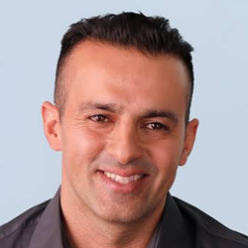
Prof. Roozbeh Ghaffari
Department of Biomedical Engineering, Northwestern University, Evanston, IL, USA
Research Interests
Soft materials; Conformal bioelectronics; Advanced microfluidic systems; Microelectromechanical systems; Wearable biosensing systems; Minimally invasive devices; Auditory neuroscience; Cochlear mechanics
Editor: Mirra Du
Language Editor: Catherine Yang
Production Editor: Ting Xu
Respectfully Submitted by the Editorial Office of Soft Science