


fig3
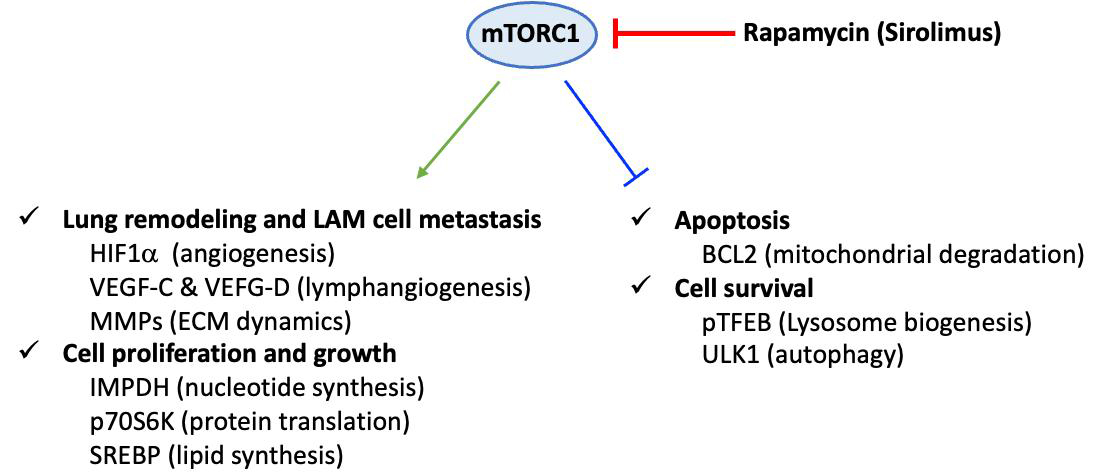
Figure 3. Dysregulation of mammalian target of rapamycin (mTOR) C1 signaling in LAM pathogenesis. Constitutive activation of the Raptor-containing mTOR leads to dysregulated mTOR signaling pathways in LAM cells. Consequently, cell proliferation, cell growth, and lung remodeling, as well as apoptosis and cell survival, are altered. This scheme corresponds to a non-exhaustive summary, emphasizing some key proteins that are specifically linked to mTOR-dependent underexpression or overexpression in LAM cells. Representative upregulated molecules: HIF-1α (hypoxia-inducible factor 1α), VEGF (vascular endothelial growth factor)-C and VEGF-D, MMP (matrix metalloproteinase), IMPDH (inosine 5’-monophosphate dehydrogenase), p70S6K (70 kDa ribosomal protein S6 kinase), SREBP (sterol regulatory element-binding protein) and downregulated molecules: BCL2 (B cell lymphoma 2), pTFEB (phosphorylated form of transcription factor EB), ULK1 (unc-51-like autophagy activating kinase 1). LAM: Lymphangioleiomyomatosis; ECM: extracellular matrix.