
Emerging pharmacological treatment options for MASLD/MASH
 0
0 Graphical Abstract
Abstract
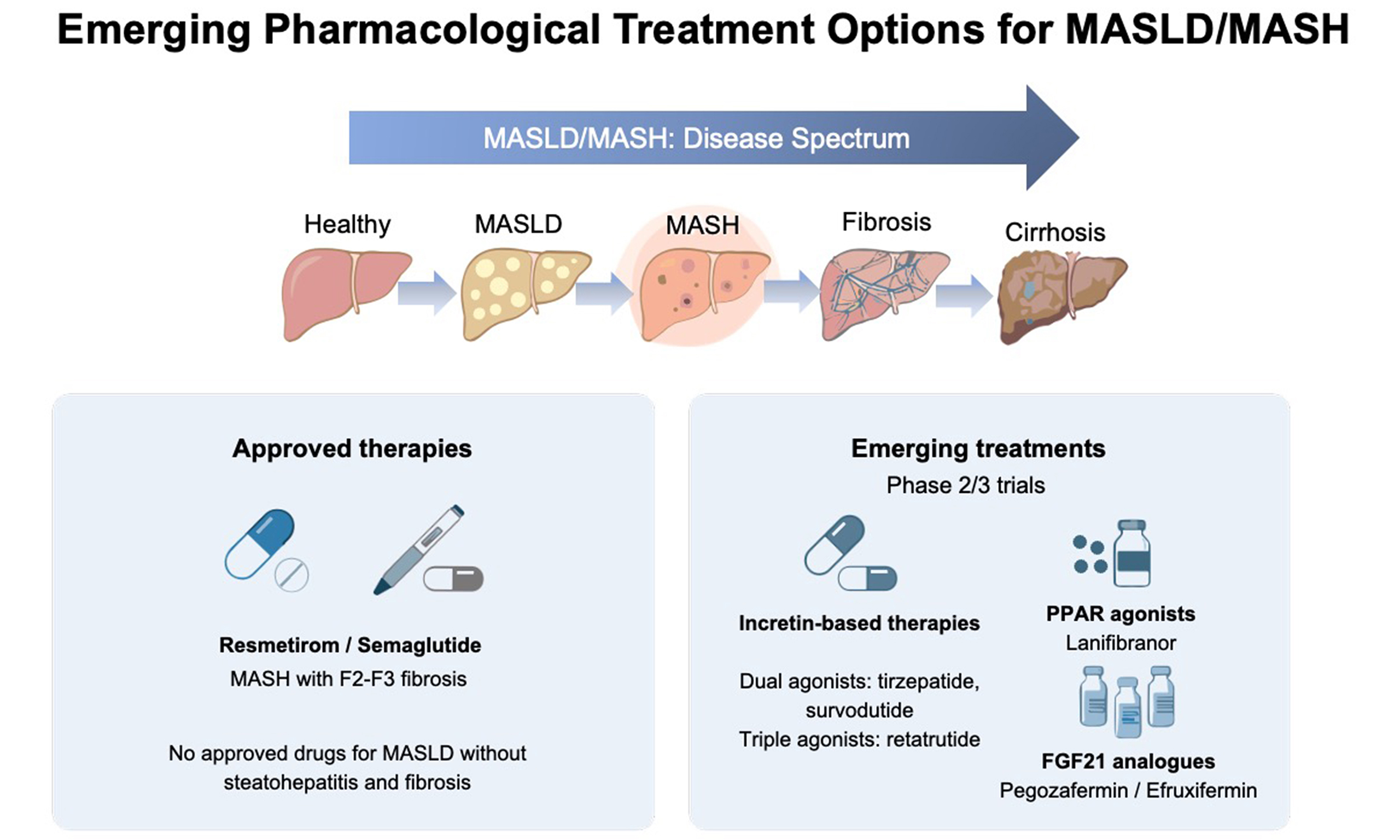
The prevalence of metabolic dysfunction-associated steatotic liver disease (MASLD) has risen substantially over recent decades, affecting an estimated 38% of the global population. It has become a leading cause of liver disease, with the potential to progress to steatohepatitis (MASH), fibrosis, and ultimately cirrhosis. Management should be multidisciplinary and primarily focused on the treatment of metabolic comorbidities. Historically, pharmacological treatment options for this condition were limited. However, in recent years, based on trials demonstrating improvement in steatohepatitis and regression of fibrosis, novel therapies, including resmetirom and semaglutide, have been approved in patients with MASH and fibrosis (stages F2-F3). Despite these advances, there are still no specific pharmacological treatments available for MASLD in the absence of steatohepatitis or in patients with cirrhosis. Additionally, other agents, including dual or triple incretin receptor agonists, peroxisome proliferator-activated receptor (PPAR) agonists, and fibroblast growth factor 21 (FGF21) analogues, are being evaluated in clinical trials, showing promising results. Over the coming years, new therapeutic strategies, including precise patient stratification, individualized care, combination therapies, treatment switching, and noninvasive treatment response monitoring, are expected to slow disease progression and improve overall prognosis.
Keywords


 Download PDF
INTRODUCTION
Over the past decades, a chronic liver disease characterized by hepatic lipid accumulation, primarily observed in patients with metabolic syndrome, has been increasingly recognized. This condition encompasses a spectrum of disease that, in some cases, may be accompanied by hepatic inflammation and advance to fibrosis, cirrhosis, or hepatocellular carcinoma. This condition was initially termed nonalcoholic fatty liver disease (NAFLD) in the 1980s to describe lipid accumulation unrelated to alcohol consumption. In 2020, an expert group proposed replacing the term NAFLD with metabolic dysfunction-associated fatty liver disease (MAFLD), to emphasize the presence of underlying abnormalities; however, this nomenclature was not formally adopted by the American Association for the Study of Liver Diseases (AASLD) or the European Association for the Study of the Liver (EASL). In 2023, a multisociety Delphi consensus led by major international liver associations introduced the term metabolic dysfunction-associated steatotic liver disease (MASLD)[1], a more inclusive and less stigmatizing term. When hepatic inflammation is present, the condition is considered more severe and is termed metabolic dysfunction-associated steatohepatitis (MASH).
Currently, MASLD is a leading cause of chronic liver disease, with a progressively increasing prevalence, affecting 38% of the general population[2], 65% of individuals living with type 2 diabetes[3], and 74%-90% of those with obesity[4]. The complex pathogenesis makes its management challenging, with limited drug therapies until recent years[5]. This review focuses on the development and approval of pharmacological therapies for MASLD/MASH.
PHARMACOLOGICAL TREATMENT FOR MASLD/MASH
The main goal in treating MASLD is to prevent hepatic and extrahepatic complications through early intervention by a multidisciplinary team. The primary approach to treatment is lifestyle modification and the management of cardiometabolic risk factors, particularly focusing on weight loss through an appropriate diet, usually a Mediterranean diet, and regular physical activity, consisting of 150-300 min of moderate or 75-150 min of vigorous exercise per week[6]. A sustained weight loss of 5% is required to reduce hepatic steatosis, whereas losses of 7%-10% are needed to improve steatohepatitis, and reductions of more than 10% are needed to improve liver fibrosis[6,7]. Additionally, alcohol consumption should be restricted, as it doubles the probability of liver-related complications[8].
However, sustained adherence to lifestyle interventions is often difficult, and pharmacological treatment options have historically been limited. In the early phases of the disease, before the development of MASH and fibrosis, pharmacological therapy is guided by comorbidities, including obesity, type 2 diabetes, dyslipidemia, and hypertension, as no disease-specific agents are currently available. In contrast, novel therapeutic approaches have emerged for patients with MASH and fibrosis, with two agents now approved. This review discusses these and other emerging therapies in detail [Figure 1 and Table 1].
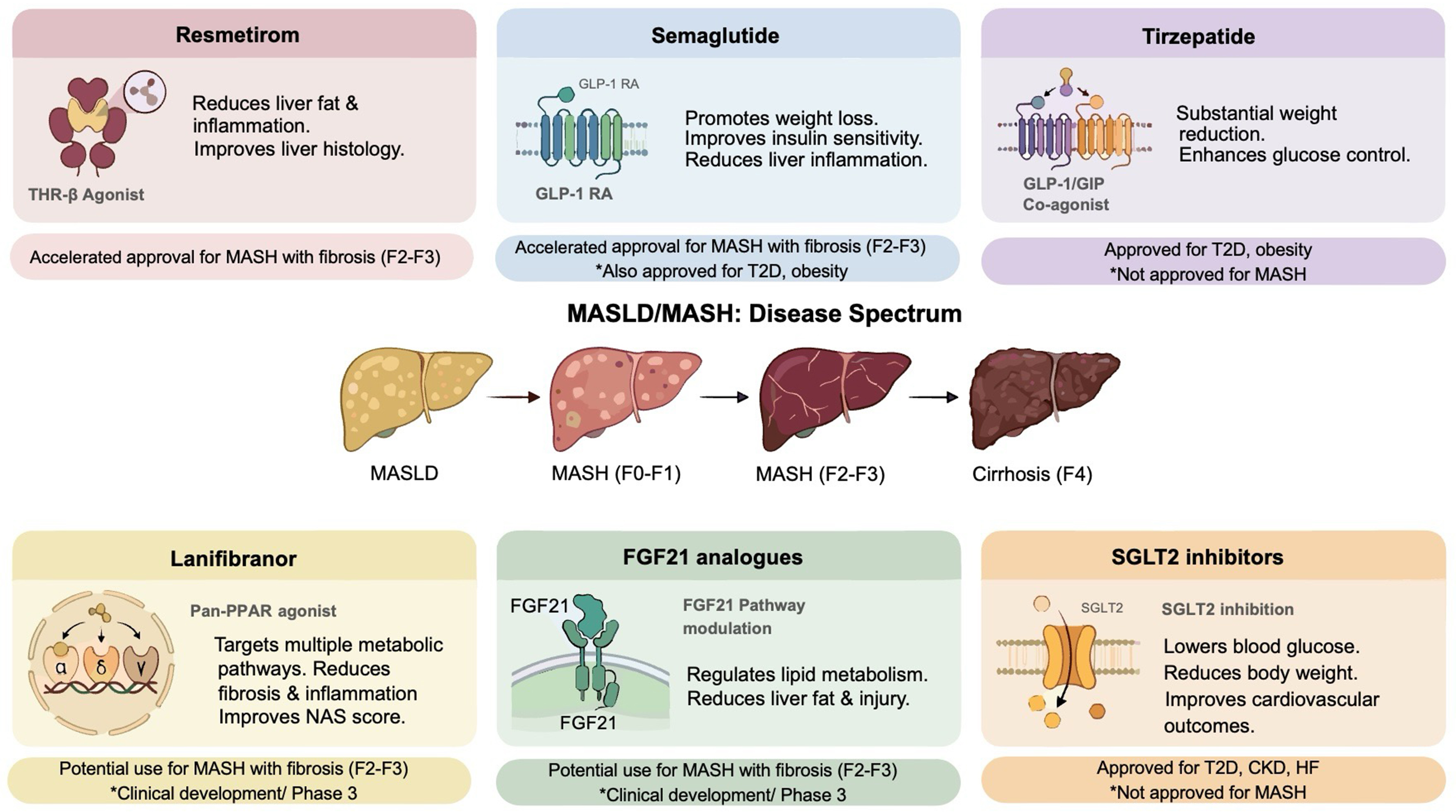
Figure 1. Approved and Emerging Pharmacological Therapies for MASLD/MASH. Resmetirom and semaglutide are approved for MASH with F2-F3 fibrosis, whereas tirzepatide is approved for T2D and obesity but not for MASH. Other therapies shown remain under clinical development or are used off-label for MASLD/MASH. Disease stages represent a conceptual spectrum and do not imply inevitable progression. MASLD: metabolic dysfunction-associated steatotic liver disease; MASH: metabolic dysfunction-associated steatohepatitis; T2D: type 2 diabetes; CKD: chronic kidney disease; HF: heart failure; THR-β: thyroid hormone receptor β; GLP-1: glucagon-like peptide-1; GIP: glucose-dependent insulinotropic polypeptide; PPAR: peroxisome proliferator-activated receptor; FGF21: fibroblast growth factor 21; SGLT2: sodium-glucose cotransporter 2; NAS: NAFLD activity score.
Practical framework for pharmacological treatment of MASLD/MASH according to disease stage and clinical phenotype
| Clinical scenario | Predominant phenotype | Main therapeutic goal | Therapeutic positioning | Key supporting evidence | Highest evidence endpoint |
| MASLD without MASH or significant fibrosis | Obesity and/or T2D | Weight loss and cardiometabolic risk reduction | Treat obesity, T2D, and other metabolic comorbidities according to their established indications; no MASH-specific pharmacotherapy | - | Metabolic/imaging outcomes |
| MASH with fibrosis (F2-F3) | Liver-dominant phenotype/significant fibrosis | MASH resolution and fibrosis improvement | Resmetirom | MAESTRO-NASH[12] | Histological: MASH resolution without worsening of fibrosis; fibrosis improvement without worsening of MASH |
| Metabolic-dominant phenotype | MASH resolution, fibrosis improvement, weight loss and metabolic control | Semaglutide | ESSENCE[15] | Histological: MASH resolution without worsening of fibrosis; fibrosis improvement without worsening of MASH | |
| Advanced fibrosis/compensated cirrhosis (F4) | Advanced liver disease | Prevent progression and liver-related complications | No currently approved MASH-directed pharmacotherapy; consider specialist management and clinical trials | Phase II FGF21 analogue studies[29]; combination therapy studies[45] | No established clinical-outcome benefit |
Resmetirom
Hepatic thyroid hormone receptor beta (THR-β) plays an important role in lipid homeostasis, including the regulation of lipoprotein, triglyceride, and cholesterol metabolism[9,10]. Resmetirom, a selective THR-β agonist, became the first drug in March 2024 to receive accelerated approval from the Food and Drug Administration (FDA) for adults with MASH and fibrosis (stages F2-F3). Dosing is weight-based, with 80 mg administered once daily in individuals weighing < 100 kg and 100 mg once daily in those ≥ 100 kg[11].
This approval was based on the results of the MAESTRO-NASH trial, which included patients with MASH and fibrosis stage F1-F3, and compared resmetirom (80 and 100 mg) with placebo over 52 weeks. Resmetirom was superior in achieving MASH resolution without worsening of fibrosis, with response rates of 25.9% and 29.9% with the 80 and 100 mg doses, compared with 9.7% in the control group. It also demonstrated a benefit in improving fibrosis, with rates of 24.2%, 25.9%, and 14.2%, respectively[12]. This drug has an acceptable safety profile, with most adverse events being mild and self-limited[13]. Additional trials are ongoing to evaluate its efficacy and safety, including NCT04951219 and NCT05500222.
Glucagon-like peptide-1 (GLP-1) receptor agonists
Incretin-based therapies have become an important therapeutic strategy for MASLD/MASH in recent years, given their ability to improve hepatic outcomes while also providing metabolic, cardiovascular, and renal benefits.
In August 2025, semaglutide received FDA accelerated approval for noncirrhotic MASH with moderate-to-advanced fibrosis (F2-F3)[14]. The ESSENCE trial, which included 800 patients with MASH and fibrosis (stages F2-F3), demonstrated that treatment with subcutaneous semaglutide 2.4 mg given once weekly over a 72-week period was superior to placebo in achieving histological resolution of MASH without worsening of fibrosis, with rates of 62.9% and 34.3%, respectively, and improvement in at least one stage of fibrosis without worsening of MASH, with rates of 36.8% vs. 22.4%[15]. Additionally, among secondary outcomes, 32.7% of patients achieved both, compared with 16.1% in the placebo group[15]. The ongoing phase of the ESSENCE trial is evaluating the effects on liver-related outcomes over a 240-week period. The treatment is generally well tolerated, with most adverse events being gastrointestinal, which are generally mild. Candidates for this therapy include patients with MASH and fibrosis stages F2-F3, who may be identified using noninvasive tests (NITs), given that liver biopsy is invasive and often unnecessary; however, it is not approved for patients with cirrhosis[16].
Therapeutic positioning of resmetirom and semaglutide
From a therapeutic positioning perspective, resmetirom and semaglutide represent complementary approaches for patients with noncirrhotic MASH and F2-F3 fibrosis. Resmetirom is a liver-directed THR-β agonist that acts primarily by improving hepatic lipid metabolism and also favorably affects the atherogenic lipid profile[12]. In contrast, semaglutide is a systemic GLP-1 receptor agonist that promotes substantial weight loss and improves glycemic and cardiometabolic control[15]. Both agents have demonstrated MASH resolution and fibrosis improvement in placebo-controlled phase 3 trials[12,15]; however, no head-to-head trial has directly compared their efficacy or safety. Therefore, cross-trial differences in response rates should be interpreted cautiously. In clinical practice, resmetirom may be particularly relevant when significant fibrosis and dyslipidemia predominate, whereas semaglutide may be especially attractive in patients with obesity, type 2 diabetes, or a high cardiometabolic burden. Treatment selection should also consider route of administration, adverse-effect profile, contraindications, patient preference, and access.
Dual incretin-based agonists
Other incretin-based therapies, such as tirzepatide [GLP-1/glucose-dependent insulinotropic polypeptide (GIP) agonist] or survodutide (GLP-1/glucagon agonist), have shown preliminary data supporting metabolic improvement but currently lack FDA approval for liver-specific indications.
The SYNERGY-NASH trial enrolled 190 patients with biopsy-confirmed MASH and moderate-to-advanced fibrosis. Participants received subcutaneous tirzepatide once weekly at doses of 5, 10, or 15 mg, or placebo for 52 weeks. Tirzepatide was superior to placebo at all studied doses in achieving MASH resolution without worsening of fibrosis; response rates were 44%, 56%, and 62% in the 5, 10, and 15 mg groups, respectively, compared with 10% in the control group. Improvement in fibrosis without worsening of MASH was observed in 55%, 51%, and 51% of patients receiving 5, 10, and 15 mg, compared with 30% in the control group[17]. Patients receiving tirzepatide achieved a mean weight reduction of approximately 15%. Most adverse events were gastrointestinal and generally mild to moderate. Despite promising results, the FDA has approved this drug only for diabetes and obesity, but not for MASH, as more trials are needed to evaluate its safety and efficacy for this disease.
Other agents, such as survodutide and pemvidutide, have been investigated in patients with MASH. In a trial including 293 adults with MASH and liver fibrosis (F1-F3), subcutaneous survodutide at 2.4, 4.8, and 6.0 mg doses was compared with placebo. All doses were more effective than placebo in improving MASH, with response rates of 47% at 2.4 mg, 62% at 4.8 mg, and 43% at 6 mg, vs. 14% in the control group. Fibrosis improved by at least one stage in 34%, 36%, and 34% of patients, respectively, vs. 18% in the placebo group. A reduction of at least 30% in liver fat was observed in 63% of individuals receiving 2.4 mg, 67% receiving 4.8 mg, and 57% receiving 6.0 mg, vs. 14% in the control group[18]. However, adverse events were more frequent and led to treatment discontinuation in approximately 20% of patients.
In the phase 2b IMPACT trial, once-weekly subcutaneous pemvidutide at doses of 1.2 and 1.8 mg was evaluated in subjects with MASH and liver fibrosis F2-F3. At week 24, pemvidutide was superior to placebo in achieving MASH resolution without worsening of fibrosis; however, no statistically significant improvement in fibrosis was observed. Follow-up through week 48 is ongoing to determine its potential long-term antifibrotic effects. Pemvidutide demonstrated a favorable safety and tolerability profile, with treatment discontinuation reported in only 1% of patients[19].
Phase 3 trials are required to generate more comprehensive data on efficacy and safety.
Triple incretin-based agonists (GLP-1/GIP/glucagon agonists)
Triple agonist agents are being studied as potential therapies for MASLD and MASH, particularly retatrutide and efocipegtrutide. In a recent trial that included 98 patients with MASLD, subcutaneous retatrutide administered once weekly for 48 weeks reduced liver fat content. Mean relative change from baseline in liver fat at 24 weeks was -42.9% with 1 mg, -57% with 4 mg, -81.4% with 8 mg, and -82.4% with 12 mg, compared with +0.3% in the placebo group. In addition, normalization of liver fat content was observed in 27% of patients receiving 1 mg, 52% with 4 mg, 79% with 8 mg, and 86% with 12 mg, compared with 0% in the control group[20]. Adverse events were more common at higher doses (8 and 12 mg). More studies are necessary to determine efficacy and safety; however, it appears to be a promising therapeutic option.
A phase 2 clinical trial (NCT04505436) is ongoing to evaluate the safety and efficacy of efocipegtrutide over 12 months in subjects with MASH.
Peroxisome proliferator-activated receptor agonists
Peroxisome proliferator-activated receptors (PPARs; α, β/δ, and γ) are a group of nuclear receptors that modulate key inflammatory and fibrogenic pathways, as well as lipid and glucose metabolism, all of which determine MASLD and MASH progression[21]. Some PPARγ and pan-PPAR agonists benefit liver steatosis and fibrosis.
Pioglitazone (PPARγ agonist) improves hepatic steatosis. A meta-analysis of five clinical trials including patients with MASH demonstrated that pioglitazone, at doses of 30 to 45 mg daily, was related to MASH resolution [odds ratio (OR) 3.22, 95% confidence interval (CI) 2.17-4.79] and fibrosis improvement (OR 1.66, 95%CI: 1.12-2.47), irrespective of the presence of type 2 diabetes[22]. However, in the absence of large-scale trials, current international guidelines do not recommend pioglitazone as a MASH-targeted therapy, although it may be considered as a treatment option in selected patients.
Another agent in this class is lanifibranor (pan-PPAR agonist). In the NATIVE trial, which included patients with MASH, lanifibranor was administered at doses of 800 mg or 1,200 mg daily and compared with placebo. Patients receiving 1,200 mg achieved higher rates of MASH resolution (49% vs. 22%) and fibrosis improvement (48% vs. 29%) than those receiving placebo[23]. Liver enzyme levels, lipids, and inflammatory biomarkers improved in the lanifibranor groups. Most adverse events were self-limited, with a dropout rate of less than 5%, which was consistent across the trial groups. The NCT04849728 trial is currently evaluating its efficacy and safety in MASH with fibrosis stages F2-F3 over 72 weeks of treatment.
Sodium-glucose cotransporter 2 (SGLT2) inhibitors
SGLT2 inhibitors are linked to reductions in adverse liver-related events[24]. A recent study including adults with MASH demonstrated that dapagliflozin 10 mg once daily for 48 weeks was superior to placebo in achieving resolution of MASH, with rates of 23% vs. 8% in the control group [risk ratio (RR) 2.91; 95%CI: 1.22-6.97], as well as in reducing fibrosis, observed in 45% in the intervention group compared with 20% in the placebo (RR 2.25; 95%CI: 1.35-3.75; P = 0.001)[25]. However, these agents are not approved for liver-directed therapy and are currently used off-label for MASLD/MASH. Given their established indications for the treatment of type 2 diabetes, chronic kidney disease, and heart failure, they are unlikely to undergo dedicated phase 3 clinical trials specifically for MASLD/MASH. Nevertheless, their use may be considered in patients with MASLD when indicated for other comorbid conditions.
Fibroblast growth factor 21 (FGF21) analogues
FGF21 is a key hormone involved in regulating and maintaining lipid and glucose metabolism. Several FGF21 analogues, such as pegozafermin and efruxifermin, are under investigation for the treatment of MASH, including in patients with compensated cirrhosis, with promising outcomes[26].
In a study of subcutaneous pegozafermin administered for 24 weeks in 219 patients with MASH and fibrosis (F2 or F3), resolution of MASH was observed in 37% of patients receiving 15 mg weekly, 23% with 30 mg weekly, and 26% with 44 mg every two weeks, vs. 2% in the control group. Additionally, improvement in fibrosis was reported in 22%, 26%, and 27% of patients receiving 15 mg, 30 mg, and 44 mg, respectively, compared with 7% in the placebo group[27].
The HARMONY trial included 128 subjects with MASH and fibrosis stages F2-F3, who were randomized to receive subcutaneous efruxifermin at doses of 28 mg or 50 mg weekly, or placebo. At week 24, improvement in fibrosis was observed in 39% of patients receiving 28 mg (RR 2.3; 95%CI: 1.1-4.8) and 41% of those receiving 50 mg (RR 2.2; 95%CI: 1.0-5.0), compared with 20% in the control group[28].
More recently, the SYMMETRY trial evaluated treatment with efruxifermin 50 mg weekly in patients with MASH-related compensated cirrhosis (biopsy-confirmed stage F4 fibrosis). At week 36, 19% of patients receiving efruxifermin showed at least a 1-stage improvement in fibrosis compared with 13% receiving placebo, although this difference did not reach statistical significance. However, as a secondary outcome assessed at week 96, fibrosis improvement was observed in 29% of patients treated with efruxifermin vs. 11% of those receiving placebo, representing a greater numerical difference[29]. These findings suggest that fibrosis regression may be a more prolonged process in patients with F4 fibrosis or compensated cirrhosis, likely reflecting the more advanced architectural distortion of the liver, as cirrhosis represents a distinct stage of the disease in which fibrosis reversal is inherently more difficult than in earlier stages. Therefore, the antifibrotic efficacy observed in patients with F2-F3 fibrosis should not be directly extrapolated to those with more advanced disease, highlighting the need for long-term clinical trials specifically designed for this population.
Other trials of efruxifermin (NCT06215716) and pegozafermin (NCT06318169) in patients with MASH are currently in progress to provide more evidence on safety and efficacy.
Other possible therapies
For many years, vitamin E has been widely used as a possible treatment for MASH, as supplementation has demonstrated antioxidant effects and histological improvement, particularly in patients without diabetes or cirrhosis. In a multicenter, randomized controlled trial, treatment with 800 IU of natural vitamin E (RRR-α-tocopherol) for 96 weeks reduced steatosis and hepatic inflammation, with no improvement in fibrosis[30]. Although no antifibrotic benefit has been established, international guidelines provide a conditional recommendation, based on low-quality evidence, that vitamin E may be considered for selected patients with MASH without diabetes. However, high-dose vitamin E has been associated with potential risks, including hemorrhagic stroke, cardiovascular events, and prostate cancer[31].
Statins have also been evaluated in patients with MASLD/MASH, with observational studies suggesting reductions in liver-related events and fibrosis progression[32]. However, no consistent benefits in fibrosis regression have been demonstrated, and their efficacy in patients with MASH and fibrosis remains uncertain because no controlled trials have evaluated histological outcomes. For this reason, statins are not considered a targeted therapy for MASLD/MASH, and their use is recommended in patients with associated comorbidities, such as dyslipidemia or cardiovascular disease[33,34].
Additional agents are in preclinical development, including fatty acid synthase inhibitors targeting de novo lipogenesis and profibrogenic pathways; diacylglycerol acyltransferase 2 (DGAT2) antisense inhibitor, which lowers hepatic and circulating triglyceride levels by downregulating lipogenic gene expression; and transglutaminase 2 inhibitors, which may prevent cell death, inflammation, and autophagosome maturation[35-37].
The currently approved and emerging pharmacological therapies for MASLD/MASH are summarized in Table 2[38-41].
Current and emerging pharmacological therapies for MASLD/MASH
| Drug | Class | Dose | Main adverse events | Current status |
| Resmetirom[12] | THR-β agonist | 80-100 mg daily | Nausea, diarrhea | MASH with F2-F3 fibrosis (FDA: accelerated approval) |
| Semaglutide[16] | GLP-1 agonist | 2.4 mg weekly | Gastrointestinal symptoms | MASH with F2-F3 fibrosis (FDA: accelerated approval) |
| Tirzepatide[17] | Dual incretin agonist | 5-15 mg weekly | Gastrointestinal symptoms | Approved for T2D/obesity; investigational for MASH |
| Survodutide[18] | Dual incretin agonist | 2.4-6 mg weekly | Gastrointestinal symptoms | Phase 3 clinical development |
| Retatrutide[20] | Triple incretin agonist | 1-12 mg weekly | Gastrointestinal symptoms | Phase 2 clinical development |
| Pioglitazone[22] | PPAR agonist | 30-45 mg daily | Weight gain, edema | Approved for T2D; off-label in MASH |
| Lanifibranor[23] | PPAR agonist | 800-1,200 mg daily | Mild gastrointestinal symptoms | Phase 3 clinical development |
| Dapagliflozin[25] | SGLT2 inhibitor | 10 mg daily | Genitourinary infections | Approved for T2D/CKD/HF; investigational for MASH |
| Pegozafermin[27] | FGF21 analogue | 15-30 mg weekly or 44 mg every 2 weeks | Gastrointestinal symptoms, injection-site reactions | Clinical development (Phase 3) |
| Efruxifermin[28,29] | FGF21 analogue | 28-50 mg weekly | Gastrointestinal symptoms | Clinical development (Phase 3) |
Combination therapies and future directions
The recent expansion of the therapeutic landscape has highlighted an important limitation of single-agent approaches. Because MASLD/MASH results from the interaction of metabolic, inflammatory and fibrogenic pathways, simultaneous modulation of multiple targets has emerged as a promising therapeutic strategy that may provide greater clinical benefit than isolated interventions; however, this remains under clinical evaluation[41].
Although evidence regarding histological liver outcomes remains limited, the combination of pioglitazone and GLP-1 receptor agonists has gained interest because of its favorable effects on insulin resistance, body weight, hepatic steatosis, and overall cardiometabolic risk[42].
From a mechanistic standpoint, this approach is particularly attractive, as pioglitazone favorably modulates glucose and lipid homeostasis and has been shown to induce resolution of steatohepatitis, with fibrosis improvement reported in some clinical trials, while GLP-1 receptor agonists promote weight loss and improve systemic metabolic control. Furthermore, combination therapy with pioglitazone and GLP-1 receptor agonists has been reported to be safe and effective for glycemic management while also reducing hepatic steatosis, suggesting a potential additive benefit in individuals with MASLD, although evidence demonstrating superior histological outcomes compared with monotherapy remains limited[42].
Comparative analyses across contemporary clinical trials suggest that therapies targeting distinct biological pathways may provide complementary benefits. Among currently available approaches, FGF21 analogues (e.g., pegozafermin), incretin-based therapies (e.g., survodutide and tirzepatide), and THR-β agonists (e.g., resmetirom), consistently rank among the most effective interventions for achieving histological improvement[43].
Notably, combination regimens such as cilofexor plus firsocostat ranked among the most effective interventions for fibrosis improvement, with this combination achieving a high surface under the cumulative ranking curve (SUCRA) ranking (71.38), second only to pegozafermin for fibrosis regression without worsening of MASH[43]. These findings suggest that multi-target approaches may offer complementary therapeutic effects and that modulation of systemic metabolism may be particularly impactful; however, they should be interpreted cautiously until confirmed in randomized clinical trials. Moreover, the heterogeneity in mechanisms and treatment responses observed across agents supports further investigation of combination strategies, as single-pathway interventions may be insufficient to fully address the complex pathophysiology of MASH[43].
Early clinical trial data further reinforce this concept. A phase 2 trial evaluating semaglutide alone or in combination with the farnesoid X receptor agonist cilofexor and/or the acetyl-CoA carboxylase inhibitor firsocostat in patients with nonalcoholic steatohepatitis (NASH) and F2-F3 fibrosis demonstrated that combination regimens were well tolerated and associated with greater reductions in hepatic steatosis, improvements in liver biochemistry, and favorable changes in noninvasive fibrosis markers compared with semaglutide monotherapy, despite similar weight loss across groups[44]. These findings suggest that the hepatic benefits of combination therapy are not solely driven by weight reduction but rather by complementary mechanisms targeting metabolic dysfunction, bile acid signaling, and de novo lipogenesis. Similarly, the phase 2b ATLAS trial in 392 patients with advanced fibrosis or compensated cirrhosis (F3-F4) showed that although the primary endpoint of fibrosis improvement without worsening of NASH was not met, the combination of cilofexor and firsocostat demonstrated a numerical trend toward greater fibrosis improvement compared with monotherapy (21% vs. 12%), along with significant improvements in NASH activity and exploratory antifibrotic signals based on machine learning-assisted histologic assessment and noninvasive markers[45]. Together, these studies suggest that combination strategies may yield broader biological effects than monotherapy, even without statistically significant primary endpoints. However, most available data derive from phase 2 studies, and no combination regimen has yet demonstrated sufficient evidence to support routine clinical use.
Additional combination regimens are also under active investigation. A phase 2 study evaluating ervogastat (a DGAT2 inhibitor) in combination with clesacostat (an acetyl-CoA carboxylase inhibitor) met a composite primary endpoint at 48 weeks, including MASH resolution without worsening of fibrosis and/or improvement in fibrosis without worsening of MASH. However, while the combination improved MASH resolution compared with placebo, it did not demonstrate superiority for fibrosis improvement alone, underscoring the ongoing challenge of achieving consistent antifibrotic efficacy[46].
Despite these promising data, current clinical guidelines remain cautious. Global consensus recommendations emphasize individualized treatment selection based on fibrosis stage and cardiometabolic profile, recommending agents such as resmetirom or semaglutide as first-line options in selected patients, while not endorsing upfront combination therapy due to the lack of robust evidence. Instead, a sequential approach - adding therapies in cases of suboptimal response - is considered reasonable[47]. Similarly, the 2024 AASLD Practice Guidance highlights the efficacy of resmetirom based on the MAESTRO-NASH trial but underscores that a substantial proportion of patients do not achieve histologic response and that evidence is insufficient to guide concomitant therapies[48]. Overall, these considerations support a tailored therapeutic approach that incorporates stage, cardiometabolic profile, treatment response, approved indications, and the potential role of sequential or combination therapies[46].
PATIENT SELECTION AND TREATMENT ELIGIBILITY
As therapeutic options continue to expand, appropriate patient selection is becoming increasingly important. Current frameworks recommend initial risk stratification using NITs, with Fibrosis-4 index (FIB-4) as a first-line assessment followed by secondary evaluation with vibration-controlled transient elastography (VCTE) or other imaging-based methods in patients with indeterminate or elevated risk[47]. This sequential approach facilitates the identification of patients with fibrosis who are more likely to benefit from pharmacological intervention and specialist referral[47].
Treatment eligibility should integrate fibrosis severity with the predominant clinical phenotype and cardiometabolic risk profile. Patients with MASH and moderate-to-advanced fibrosis (F2-F3) currently represent the main population for MASH-directed pharmacological therapy[47,48], whereas individuals with type 2 diabetes, obesity, or multiple cardiometabolic risk factors constitute high-risk populations that warrant closer assessment because of their increased risk of disease progression[47]. Treatment selection should subsequently be individualized according to fibrosis stage, metabolic comorbidities, therapeutic goals, approved indications, and patient-specific factors. Liver biopsy may remain useful when NITs are inconclusive or diagnostic uncertainty persists, but it should not be systematically required for treatment initiation[47].
Importantly, this paradigm reinforces that MASLD is a multisystem disease requiring therapies that address both hepatic and extrahepatic manifestations. Incretin-based therapies, particularly semaglutide at 2.4 mg weekly, and other metabolism-targeting agents are especially promising in this regard, given their dual impact on liver disease and cardiometabolic outcomes. Collectively, these findings provide a conceptual framework for the continued evaluation of combination therapies in MASLD/MASH. The implementation of combination regimens in routine clinical practice awaits confirmation from phase 3 trials demonstrating clinically meaningful histological and long-term benefits.
Lessons from unsuccessful drug development
Several pharmacological agents have been evaluated for the treatment of MASLD/MASH; however, their use is not recommended because of either lack of efficacy or safety concerns. Among the most extensively studied agents that failed to demonstrate significant histological improvement are metformin, dipeptidyl peptidase-4 (DPP-4) inhibitors, omega-3 fatty acids, and elafibranor[49]. Among therapies discontinued because of safety concerns, obeticholic acid is a notable example. In the REGENERATE trial, obeticholic acid demonstrated fibrosis improvement without worsening of MASH[50]; however, its development was ultimately discontinued because of concerns regarding drug-induced liver injury, as well as its association with significant pruritus and increased low-density lipoprotein cholesterol levels.
Despite years of research, only two agents have been approved for the treatment of MASLD/MASH, underscoring the complex and multifactorial pathophysiology of the disease. The failure of several investigational agents has provided important lessons for the field, highlighting the limitations of targeting a single pathogenic pathway, the need for clinically meaningful endpoints beyond biochemical improvement, the importance of balancing efficacy with safety, and the value of improved patient stratification. Collectively, these insights support the continued development of novel antifibrotic therapies while emphasizing the importance of simultaneously addressing the metabolic comorbidities that drive disease progression.
TREATMENT RESPONSE MONITORING
Treatment response in patients with MASLD/MASH requires structured follow-up, primarily using NITs.
Clinical assessment, physical examination, and measurement of aminotransferases are recommended at 3, 6, and 12 months following treatment initiation. VCTE may be performed at 6 months to assess early response, although formal evaluation to determine whether treatment modification is required is generally performed after 12 months[51]. For semaglutide, proposed response criteria at 72 weeks include a ≥ 30% reduction in liver stiffness measurement (LSM) by VCTE, a ≥ 20% reduction in magnetic resonance elastography (MRE)-derived LSM, and a reduction in alanine aminotransferase (ALT) of ≥ 17 U/L or ≥ 20% from baseline, all of which have been associated with a favorable therapeutic response. However, validated criteria defining treatment futility or identifying patients who require treatment modification with semaglutide are not yet available, and the role of NITs in treatment monitoring remains an active area of research[16].
In patients with an inadequate response, evidence to guide switching to another pharmacological agent or treatment intensification remains limited, as randomized clinical trials addressing this question are lacking. Although combination therapies may represent a promising alternative, they remain under investigation. Considering the current evidence, treatment decisions should be individualized according to fibrosis stage, metabolic phenotype, and associated comorbidities.
CONCLUSION
The management of MASLD/MASH is undergoing a paradigm shift, transitioning from a predominantly lifestyle-based approach to an era of targeted pharmacologic therapy. While lifestyle modification and optimization of cardiometabolic risk factors remain the cornerstone of treatment, the recent accelerated approval of resmetirom and semaglutide for patients with MASH and fibrosis represents a major milestone, providing the first disease-specific therapeutic options with demonstrated histological benefit.
Nevertheless, important gaps remain. A substantial proportion of patients do not achieve a meaningful histological response with currently available agents, and there are still no approved therapies for individuals without steatohepatitis or for those with cirrhosis. These limitations underscore the need for more effective and broadly applicable treatment strategies. In this context, an expanding body of evidence shows that the complex, multisystem nature of MASLD driven by intertwined metabolic, inflammatory, and fibrogenic pathways may not be adequately addressed by single-agent therapies alone.
Emerging data from clinical trials and comparative analyses support the concept that combination therapies targeting complementary mechanisms may enhance therapeutic efficacy and provide broader disease modification. However, robust evidence to guide optimal use, sequencing, and long-term safety remains lacking. Future research should focus on identifying patient-specific treatment strategies based on disease stage, metabolic profile, and risk of progression, moving toward a more personalized and mechanism-based approach.
Ultimately, the future of MASLD treatment lies in integrating systemic and liver-directed therapies within a multidisciplinary framework. As our understanding of disease biology continues to evolve and new agents emerge, combination strategies are likely to play a key role in improving clinical outcomes, slowing disease progression, and reducing the global burden of this increasingly prevalent condition.
DECLARATIONS
Authors’ contributions
Conceptualised the review: Soto-Campillo J, García-Rodríguez M, Chávez-Tapia NC
Contributed to the study design: Soto-Campillo J, García-Rodríguez M, Chávez-Tapia NC
Performed the literature search: Soto-Campillo J, García-Rodríguez M
Contributed to the interpretation of the data: Soto-Campillo J, García-Rodríguez M, Chávez-Tapia NC
Drafted the manuscript: Soto-Campillo J, García-Rodríguez M
Critically revised the manuscript for important intellectual content: Chávez-Tapia NC
All authors approved the final version of the manuscript and agreed to be accountable for all aspects of the work.
Availability of data and materials
Not applicable.
AI and AI-assisted tools statement
During the preparation of this manuscript, the AI tool FigureLabs (Plus subscription, released 2026-05-14) was used solely to create graphic elements, including figure drafts and visual design elements, based on input prompts containing content descriptions and specifications for schematic designs. The tool did not influence the study design, data collection, analysis, interpretation, or the scientific content of the work. All authors take full responsibility for the accuracy, integrity, and final content of the manuscript.
Financial support and sponsorship
None.
Conflicts of interest
Chávez-Tapia NC declares professional relationships with MSD, Novo Nordisk, Roche, and Medix. The other authors declare that there are no conflicts of interest.
Ethical approval and consent to participate
Not applicable.
Consent for publication
Not applicable.
Copyright
© The Author(s) 2026.
REFERENCES
1. Rinella ME, Lazarus JV, Ratziu V, et al. ; NAFLD Nomenclature consensus group. A multisociety Delphi consensus statement on new fatty liver disease nomenclature. Ann Hepatol. 2024;29:101133.
2. Wong VW, Ekstedt M, Wong GL, Hagström H. Changing epidemiology, global trends and implications for outcomes of NAFLD. J Hepatol. 2023;79:842-52.
3. En Li Cho E, Ang CZ, Quek J, et al. Global prevalence of non-alcoholic fatty liver disease in type 2 diabetes mellitus: an updated systematic review and meta-analysis. Gut. 2023;72:2138-48.
4. Grocic M, Nguyen M, Sanyal AJ. Current trends in the epidemiology of obesity and the association between obesity and metabolic liver disease (MASLD/MASH). Diabetes Obes Metab. 2026;28:3-18.
5. Eslam M, Sarin SK, Wong VW, et al. The Asian Pacific Association for the Study of the Liver clinical practice guidelines for the diagnosis and management of metabolic associated fatty liver disease. Hepatol Int. 2020;14:889-919.
6. Kanwal F, Shubrook JH, Adams LA, et al. Clinical Care Pathway for the Risk Stratification and Management of Patients With Nonalcoholic Fatty Liver Disease. Gastroenterology. 2021;161:1657-69.
7. European Association for the Study of the Liver (EASL), European Association for the Study of Diabetes (EASD), European Association for the Study of Obesity (EASO). EASL-EASD-EASO Clinical Practice Guidelines on the management of metabolic dysfunction-associated steatotic liver disease (MASLD). J Hepatol. 2024;81:492-542.
8. Åberg F, Puukka P, Salomaa V, et al. Risks of light and moderate alcohol use in fatty liver disease: follow-up of population cohorts. Hepatology. 2020;71:835-48.
9. Sinha RA, Bruinstroop E, Singh BK, Yen PM. Nonalcoholic fatty liver disease and hypercholesterolemia: roles of thyroid hormones, metabolites, and agonists. Thyroid. 2019;29:1173-91.
10. Vidal-Cevallos P, Murúa-Beltrán Gall S, Uribe M, Chávez-Tapia NC. Understanding the relationship between nonalcoholic fatty liver disease and thyroid disease. Int J Mol Sci. 2023;24:14605.
11. Noureddin M, Charlton MR, Harrison SA, et al. Expert panel recommendations: practical clinical applications for initiating and monitoring resmetirom in patients with MASH/NASH and moderate to noncirrhotic advanced fibrosis. Clin Gastroenterol Hepatol. 2024;22:2367-77.
12. Harrison SA, Bedossa P, Guy CD, et al. ; MAESTRO-NASH Investigators. A phase 3, randomized, controlled trial of resmetirom in NASH with liver fibrosis. N Engl J Med. 2024;390:497-509.
13. Vidal-Cevallos P, Chávez-Tapia N. Resmetirom, the long-awaited first treatment for metabolic dysfunction-associated steatohepatitis and liver fibrosis? Med 2024;5:375-6.
14. U. S. Food and Drug Administration. FDA approves treatment for serious liver disease known as MASH. Available from https://www.fda.gov/drugs/news-events-human-drugs/fda-approves-treatment-serious-liver-disease-known-mash. [accessed 20 September 2026].
15. Sanyal AJ, Newsome PN, Kliers I, et al. ; ESSENCE Study Group. Phase 3 trial of semaglutide in metabolic dysfunction-associated steatohepatitis. N Engl J Med. 2025;392:2089-99.
16. Bansal MB, Patton H, Morgan TR, Carr RM, Dranoff JA, Allen AM. Semaglutide therapy for metabolic dysfunction-associated steatohepatitis: November 2025 updates to AASLD Practice Guidance. Hepatology. 2026;83:1326-40.
17. Loomba R, Hartman ML, Lawitz EJ, et al. ; SYNERGY-NASH Investigators. Tirzepatide for metabolic dysfunction-associated steatohepatitis with liver fibrosis. N Engl J Med. 2024;391:299-310.
18. Sanyal AJ, Bedossa P, Fraessdorf M, et al. ; 1404-0043 Trial Investigators. A phase 2 randomized trial of survodutide in MASH and fibrosis. N Engl J Med. 2024;391:311-9.
19. Noureddin M, Harrison SA, Loomba R, et al. Safety and efficacy of weekly pemvidutide versus placebo for metabolic dysfunction-associated steatohepatitis (IMPACT): 24-week results from a multicentre, randomised, double-blind, phase 2b study. Lancet. 2025;406:2644-55.
20. Sanyal AJ, Kaplan LM, Frias JP, et al. Triple hormone receptor agonist retatrutide for metabolic dysfunction-associated steatotic liver disease: a randomized phase 2a trial. Nat Med. 2024;30:2037-48.
21. Francque S, Szabo G, Abdelmalek MF, et al. Nonalcoholic steatohepatitis: the role of peroxisome proliferator-activated receptors. Nat Rev Gastroenterol Hepatol. 2021;18:24-39.
22. Musso G, Cassader M, Paschetta E, Gambino R. Thiazolidinediones and advanced liver fibrosis in nonalcoholic steatohepatitis: a meta-analysis. JAMA Intern Med. 2017;177:633-40.
23. Francque SM, Bedossa P, Ratziu V, et al. ; NATIVE Study Group. A randomized, controlled trial of the Pan-PPAR agonist lanifibranor in NASH. N Engl J Med. 2021;385:1547-58.
24. Mantovani A, Morandin R, Lando MG, et al. Sodium-glucose cotransporter 2 inhibitor use and risk of liver-related events in patients with type 2 diabetes: a meta-analysis of observational cohort studies. Diabetes Care. 2025;48:1042-52.
25. Lin J, Huang Y, Xu B, et al. Effect of dapagliflozin on metabolic dysfunction-associated steatohepatitis: multicentre, double blind, randomised, placebo controlled trial. BMJ. 2025;389:e083735.
26. Geng L, Lam KSL, Xu A. The therapeutic potential of FGF21 in metabolic diseases: from bench to clinic. Nat Rev Endocrinol. 2020;16:654-67.
27. Loomba R, Sanyal AJ, Kowdley KV, et al. Randomized, controlled trial of the FGF21 analogue pegozafermin in NASH. N Engl J Med. 2023;389:998-1008.
28. Harrison SA, Frias JP, Neff G, et al. ; HARMONY Study Group. Safety and efficacy of once-weekly efruxifermin versus placebo in non-alcoholic steatohepatitis (HARMONY): a multicentre, randomised, double-blind, placebo-controlled, phase 2b trial. Lancet Gastroenterol Hepatol. 2023;8:1080-93.
29. Noureddin M, Rinella ME, Chalasani NP, et al. Efruxifermin in compensated liver cirrhosis caused by MASH. N Engl J Med. 2025;392:2413-24.
30. Sanyal AJ, Chalasani N, Kowdley KV, et al. ; NASH CRN. Pioglitazone, vitamin E, or placebo for nonalcoholic steatohepatitis. N Engl J Med. 2010;362:1675-85.
31. Rinella ME, Neuschwander-Tetri BA, Siddiqui MS, et al. AASLD Practice Guidance on the clinical assessment and management of nonalcoholic fatty liver disease. Hepatology. 2023;77:1797-835.
32. Zhou XD, Kim SU, Yip TC, et al. ; VCTE-Prognosis Study Group. Long-term liver-related outcomes and liver stiffness progression of statin usage in steatotic liver disease. Gut. 2024;73:1883-92.
33. Gries JJ, Lazarus JV, Brennan PN, et al. Interdisciplinary perspectives on the co-management of metabolic dysfunction-associated steatotic liver disease and coronary artery disease. Lancet Gastroenterol Hepatol. 2025;10:82-94.
34. Blumenthal RS, Morris PB, Gaudino M, et al. 2026 ACC/AHA/AACVPR/ABC/ACPM/ADA/AGS/APhA/ASPC/NLA/PCNA Guideline on the management of dyslipidemia: a report of the American College of Cardiology/American Heart Association Joint Committee on Clinical Practice Guidelines. J Am Coll Cardiol. 2026;87:2624-757.
35. O'Farrell M, Duke G, Crowley R, et al. FASN inhibition targets multiple drivers of NASH by reducing steatosis, inflammation and fibrosis in preclinical models. Sci Rep. 2022;12:15661.
36. Amin NB, Carvajal-Gonzalez S, Purkal J, et al. Targeting diacylglycerol acyltransferase 2 for the treatment of nonalcoholic steatohepatitis. Sci Transl Med. 2019;11:eaav9701.
37. Piacentini M, Baiocchini A, Del Nonno F, et al. Non-alcoholic fatty liver disease severity is modulated by transglutaminase type 2. Cell Death Dis. 2018;9:257.
38. Targher G, Valenti L, Byrne CD. Metabolic dysfunction-associated steatotic liver disease. N Engl J Med. 2025;393:683-98.
39. Stefan N, Yki-Järvinen H, Neuschwander-Tetri BA. Metabolic dysfunction-associated steatotic liver disease: heterogeneous pathomechanisms and effectiveness of metabolism-based treatment. Lancet Diabetes Endocrinol. 2025;13:134-48.
40. Zhang X, Lau HC, Yu J. Pharmacological treatment for metabolic dysfunction-associated steatotic liver disease and related disorders: current and emerging therapeutic options. Pharmacol Rev. 2025;77:100018.
41. Zhou D, Fan J. Drug treatment for metabolic dysfunction-associated steatotic liver disease: progress and direction. Chin Med J. 2024;137:2687-96.
42. American Diabetes Association Professional Practice Committee for Diabetes*. 4. Comprehensive medical evaluation and assessment of comorbidities: standards of care in diabetes-2026. Diabetes Care. 2026;49:S61-88.
43. Souza M, Al-Sharif L, Antunes VLJ, Huang DQ, Loomba R. Comparison of pharmacological therapies in metabolic dysfunction-associated steatohepatitis for fibrosis regression and MASH resolution: systematic review and network meta-analysis. Hepatology. 2025;82:1523-33.
44. Alkhouri N, Herring R, Kabler H, et al. Safety and efficacy of combination therapy with semaglutide, cilofexor and firsocostat in patients with non-alcoholic steatohepatitis: a randomised, open-label phase II trial. J Hepatol. 2022;77:607-18.
45. Loomba R, Noureddin M, Kowdley KV, et al. ; for the ATLAS Investigators. Combination therapies including cilofexor and firsocostat for bridging fibrosis and cirrhosis attributable to NASH. Hepatology. 2021;73:625-43.
46. Li W, Alazawi W, Loomba R. Current and emerging therapeutic landscape for metabolic dysfunction-associated steatohepatitis. Lancet Gastroenterol Hepatol. 2026;11:150-62.
47. Younossi ZM, Kalligeros M, Wong VW, et al. Updated global consensus recommendations for risk stratification, treatment initiation, and response monitoring in metabolic dysfunction-associated steatotic liver disease. Clin Gastroenterol Hepatol. 2026;24:2333-47.
48. Chen VL, Morgan TR, Rotman Y, et al. Resmetirom therapy for metabolic dysfunction-associated steatotic liver disease: October 2024 updates to AASLD Practice Guidance. Hepatology. 2025;81:312-20.
49. Zhi Y, Dong Y, Li X, et al. Current progress and challenges in the development of pharmacotherapy for metabolic dysfunction-associated steatohepatitis. Diabetes Metab Res Rev. 2024;40:e3846.
50. Sanyal AJ, Ratziu V, Loomba R, et al. Results from a new efficacy and safety analysis of the REGENERATE trial of obeticholic acid for treatment of pre-cirrhotic fibrosis due to non-alcoholic steatohepatitis. J Hepatol. 2023;79:1110-20.
Cite This Article
 Open Access
How to Cite
Soto-Campillo J, García-Rodríguez M, Chávez-Tapia NC. Emerging pharmacological treatment options for MASLD/MASH. Metab Target Organ Damage. 2026;6:60. https://dx.doi.org/10.20517/mtod.2026.124
Download Citation
If you have the appropriate software installed, you can download article citation data to the citation manager of your choice. Simply select your manager software from the list below and click on download.
Export Citation File
Type of Import
Tips on Downloading Citation
Citation Manager File Format
Type of Import
Direct Import: When the Direct Import option is selected (the default state), a dialogue box will give you the option to Save or Open the downloaded citation data. Choosing Open will either launch your citation manager or give you a choice of applications with which to use the metadata. The Save option saves the file locally for later use.
Indirect Import: When the Indirect Import option is selected, the metadata is displayed and may be copied and pasted as needed.
About This Article
Special Topic
Copyright

Data & Comments
Data
0











Comments
Comments must be written in English. Spam, offensive content, impersonation, and private information will not be permitted. If any comment is reported and identified as inappropriate content by OAE staff, the comment will be removed without notice. If you have any queries or need any help, please contact us at [email protected].