
Nanoconfined materials enabling iontronic logic control from interfacial ion dynamics to intelligent devices
 0
0 Abstract
Iontronic logic control, which regulates ions rather than electrons as information carriers, is emerging as a promising route toward bioinspired information processing, soft interfaces, and chemically responsive intelligent devices. A central challenge, however, is that ionic transport is intrinsically coupled to solvation, interfacial electrostatics, and spatiotemporal redistribution, making logic control far more complex than in conventional electronic systems. In this context, nanoconfined materials provide a uniquely powerful platform because ionic transport changes fundamentally when channel dimensions approach the electrical double layer (EDL) thickness or even the size of hydrated ions. Under these conditions, surface charge, interfacial chemistry, geometric asymmetry, and dynamic channel states become dominant, enabling nonlinear ionic responses that are inaccessible in bulk electrolytes. In this review, we examine how nanoconfined materials enable iontronic logic control from a unified physicochemical perspective. The confinement-induced transport features that make nanoconfined channels suitable for ionic logic are first outlined, followed by a summary of recent advances in three representative device classes: iontronic diodes based on asymmetric ion transport, iontronic transistors based on electrostatic or junction regulation, and iontronic memristors based on history-dependent ionic states. Particular emphasis is placed on how interfacial ion dynamics, including ion redistribution, channel-state evolution, and selective ion shuttling, are translated into rectification, gating, amplification, and memory. Finally, we discuss the major challenges in precise channel engineering, mechanistic characterization, reproducibility, and integration, and highlight future opportunities for programmable and scalable nanoconfined platforms, standardized benchmarking protocols, integration of in situ/operando characterization, and energy-information co-processing systems.
Keywords
INTRODUCTION
The extraordinary success of electronic logic has underpinned modern information technologies, yet signal processing in living systems follows a fundamentally different paradigm, relying primarily on ions and small molecules rather than electrons[1,2]. In biological environments, ion transport across membranes not only supports electrical signaling, but also couples naturally with chemical recognition, adaptive response, and interfacial regulation, thereby enabling highly efficient and multifunctional information processing[3-6]. This distinction has stimulated growing interest in iontronics, an emerging field that seeks to construct devices and circuits in which ions act as the principal information carriers[1,7]. Such a shift is motivated not only by the desire to emulate biological intelligence more faithfully, but also by the broader demand for low-power computing, intelligent sensing, soft biointerfaces, and chemically responsive information systems[8,9]. However, ion-based logic is intrinsically more complex than its electronic counterpart, because ionic transport is strongly influenced by solvation, multibody interactions, interfacial electrostatics, and spatiotemporal coupling, making the rational design of iontronic logic control devices both scientifically challenging and technologically significant[10-12].
In iontronic systems, the central issue is not simply how ions are transported, but how ionic transport can be actively controlled to encode, process, and retain information. In this sense, iontronic logic control should be understood as the programmable regulation of ionic flow direction, magnitude, switching state, and history-dependent response[13,14]. Such logic control is most clearly embodied in three representative classes of devices: iontronic diodes, which rectify ionic transport[15-17]; iontronic transistors, which gate and amplify ionic signals[18-20]; and iontronic memristors, which store ionic history through conductance changes[21-23]. The emergence of these functions depends critically on nanoconfined materials[24-26]. Once the characteristic channel dimension approaches the electrical double layer (EDL) thickness or even the size of hydrated ions, ionic transport departs from bulk behavior and becomes highly sensitive to surface charge, interfacial chemistry, geometric asymmetry, and dynamic channel states[10,27-32]. It is precisely this confinement-enhanced transport physics that gives rise to ion selectivity, rectification, gating, and memory, thereby making nanoconfined materials not merely structural hosts, but enabling platforms for iontronic logic control[33-37].
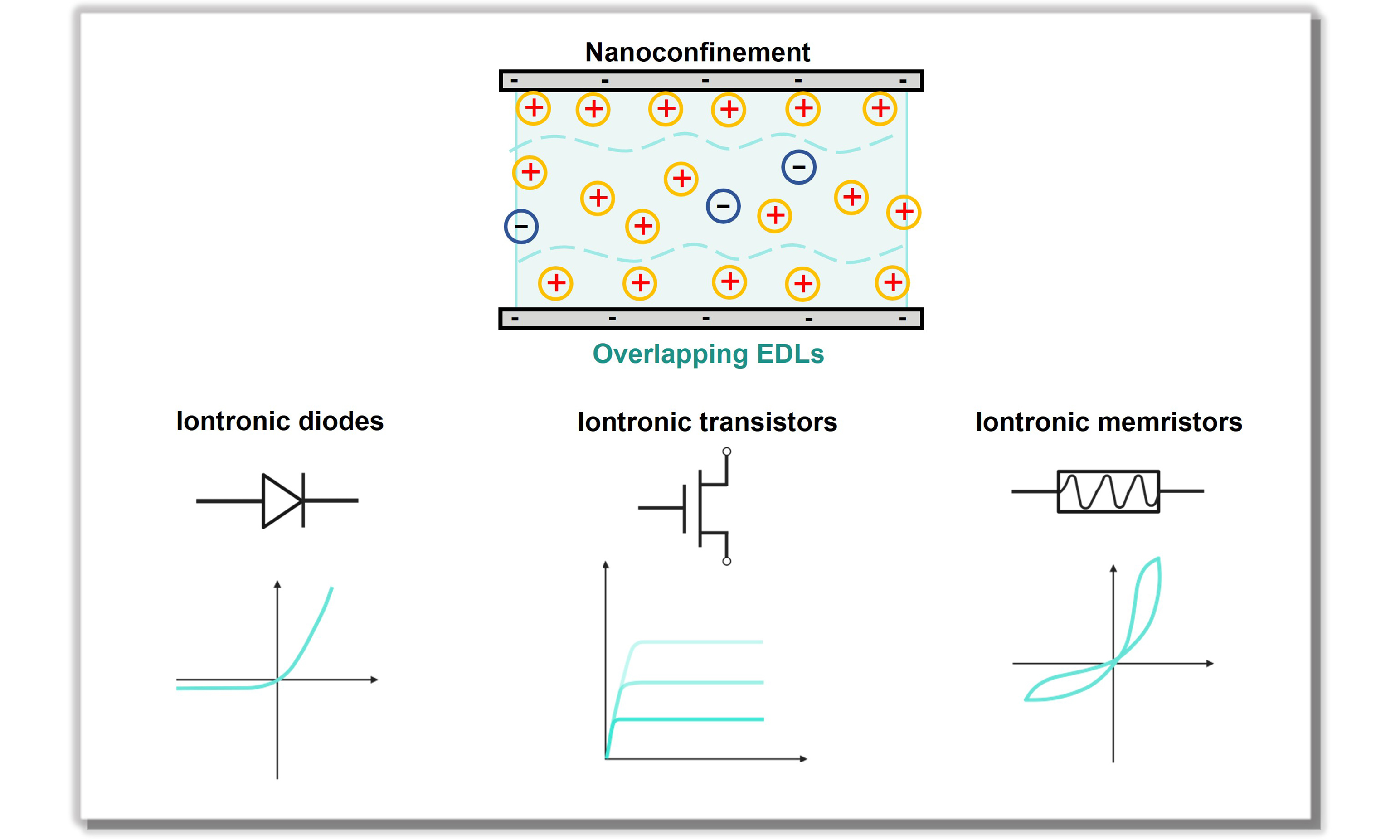
Despite rapid progress in iontronics, existing reviews have largely focused on individual material systems, specific transport phenomena, or isolated device types, while a unified perspective centered on nanoconfined materials as platforms for iontronic logic control remains lacking[24,25,37-39]. In particular, the connections between confinement-induced ionic transport characteristics and the emergence of logic-relevant device functions have not been systematically articulated across diodes, transistors, and memristors. In this review, we therefore examine how nanoconfined materials enable iontronic logic control from a common physicochemical basis. We first discuss why nanoconfined materials are uniquely suited to support ionic logic functions, and then summarize recent advances in iontronic diodes, iontronic transistors, and iontronic memristors built on such platforms. Finally, we outline the key challenges and future opportunities for translating nanoconfined iontronic materials from functional devices toward more integrated logic and information-processing systems [Figure 1].
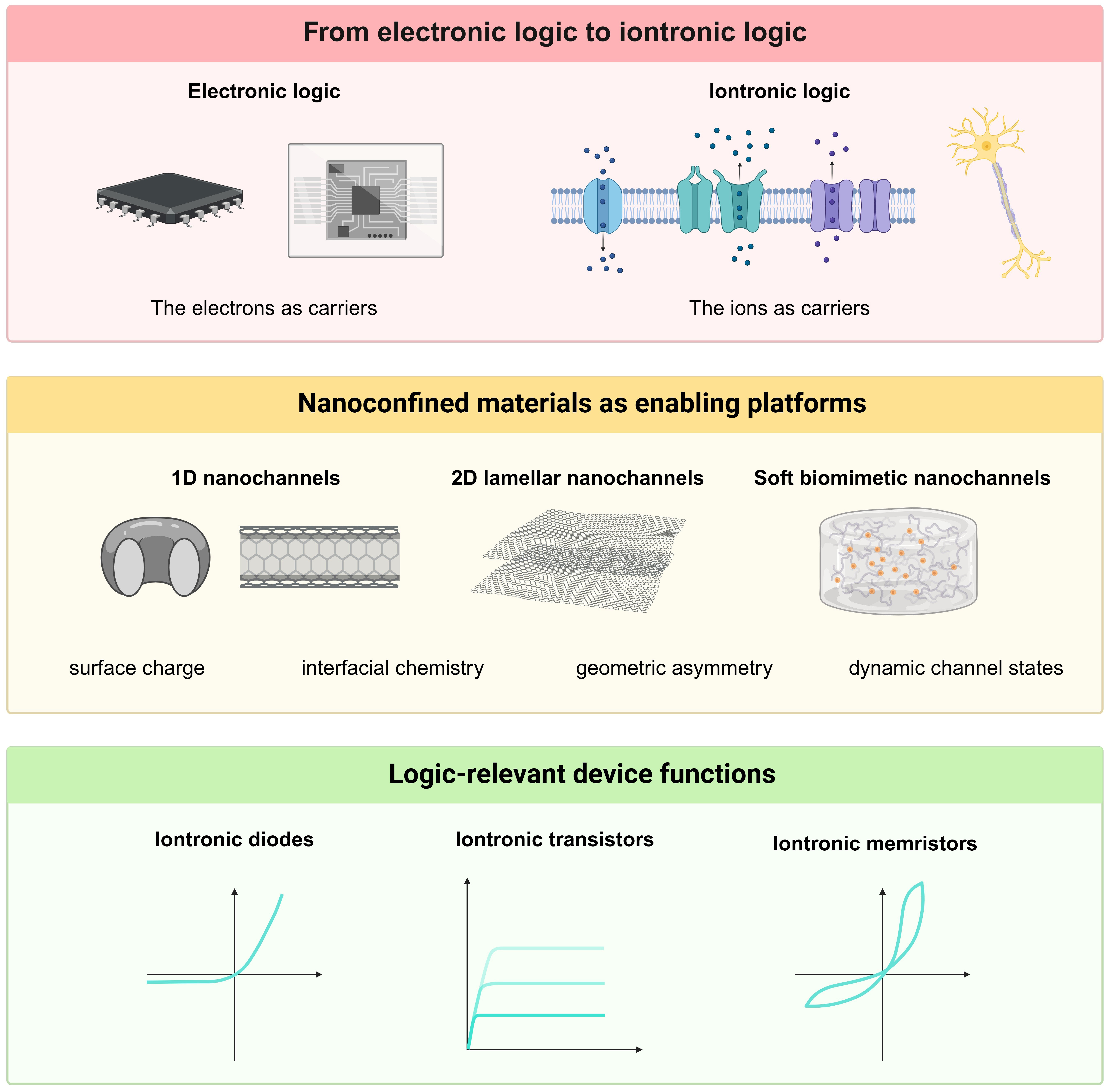
Figure 1. Iontronic logic control enabled by nanoconfined materials.
NANOCONFINED MATERIALS AS PLATFORMS FOR IONTRONIC LOGIC CONTROL
Nanoconfined materials refer to material systems capable of significantly regulating ion transport within nanoscale spaces, typically below 100 nm[1]. They provide the physical foundation for iontronic logic control because ionic transport changes fundamentally once the characteristic channel dimension approaches the EDL thickness or even the size of hydrated ions[38]. Under such conditions, ionic conduction is no longer governed primarily by bulk diffusion, but becomes highly sensitive to surface charge, interfacial chemistry, geometric asymmetry, and local electrostatic perturbations[10,29,40]. As a result, nanoconfined channels can amplify nonlinear ionic responses, including ion selectivity, current rectification, field-effect gating, and history-dependent conductance, thereby enabling logic functions that are inaccessible or poorly expressed in bulk electrolytes[24-26,28,32,37,41]. In this sense, nanoconfined materials are not merely passive supports for ion transport, but active platforms that determine whether iontronic logic control can emerge at all.
As illustrated in Figure 2, ion transport can be broadly divided into three regimes according to the characteristic channel dimension. When the channel dimension is larger than approximately 100 nm, ions predominantly exhibit bulk-like free diffusion, with relatively limited interfacial influence[32]. In the nanoconfined regime of approximately 2-100 nm, interfacial electrostatic interactions become increasingly important[10]. In particular, when the channel dimension approaches the Debye length (λD), EDL overlapping promotes counterion-dominated transport and enhances ion selectivity and rectification[42]. The Debye length is dependent on electrolyte concentration: for monovalent aqueous electrolytes at room temperature, representative 2λD values are approximately 0.60, 1.90, and 6.08 nm at concentrations of 1, 0.1, and 0.01 M, respectively[37]. When the channel dimension decreases below 2 nm, especially when it approaches the size of hydrated ions, steric effects, solvation-shell restructuring, partial dehydration, and ion-ion correlations become increasingly significant, giving rise to anomalous ion-transport behaviors[32]. Figure 2 also summarizes the hydrated sizes of representative ions to provide an intuitive comparison between channel dimensions and ion-specific length scales.
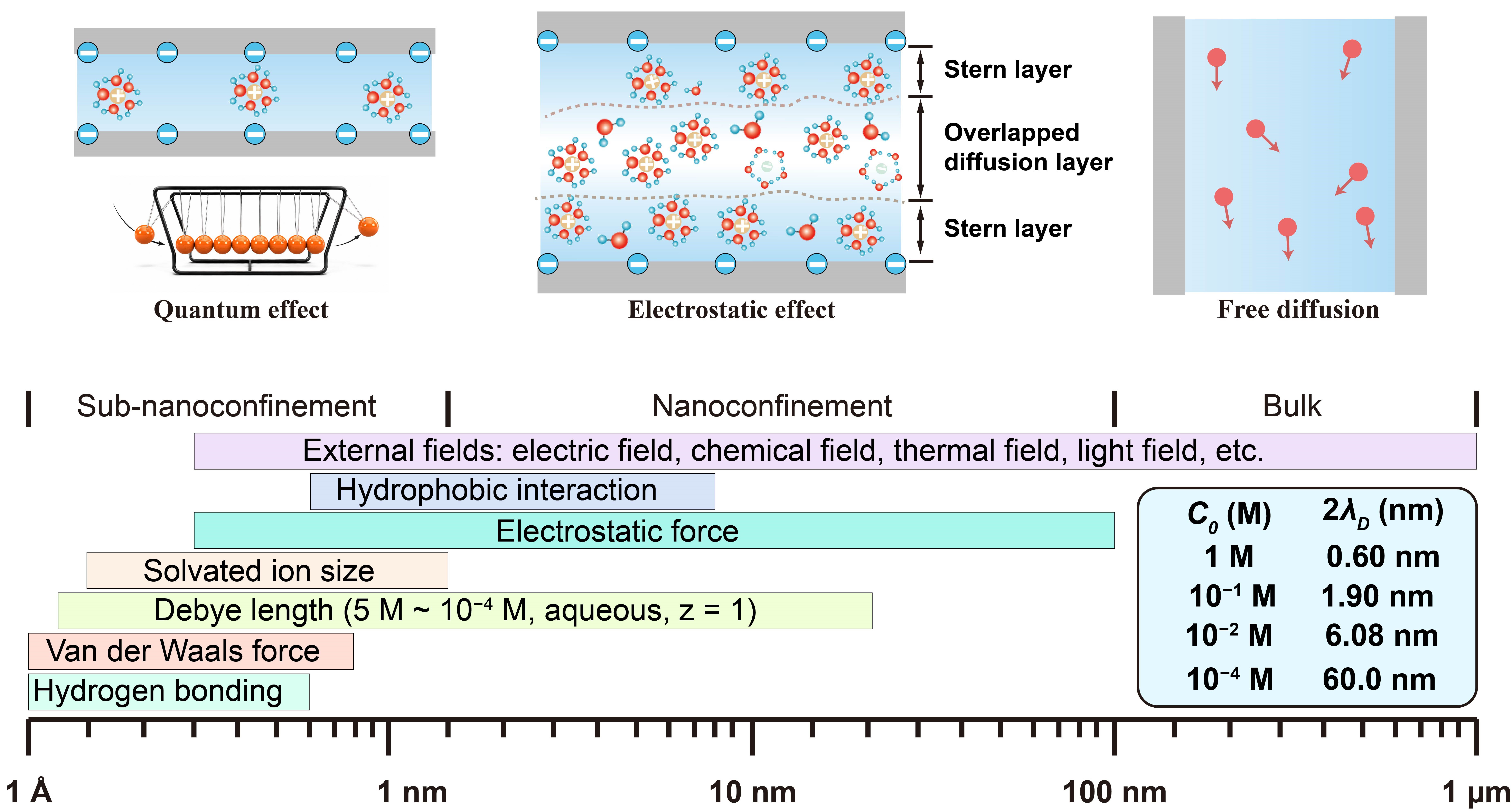
Figure 2. Characteristic interaction scales governing ion transport under confinement.
The logic-enabling characteristics of nanoconfined materials arise mainly from four coupled features: size confinement and EDL overlap[1,43], which promote counterion-dominated transport; surface charge and interfacial chemical functionality[10,42], which regulate ion selectivity and transport polarity; geometric asymmetry and spatial heterogeneity[15,44], which generate nonequivalent ionic environments under opposite bias directions; and dynamic channel states[45,46], including wettability switching, interfacial displacement, and mechanical deformation, which introduce reconfigurable transport pathways. These features are realized across one-dimensional channels such as nanopores[26,27], nanotubes[16,47], and nanopipettes[17,48], two-dimensional lamellar nanochannels based on layered materials[49,50], and softer biomimetic platforms with richer interfacial dynamics[20,21]. Together, these material platforms provide the structural and physicochemical basis for the major iontronics classes discussed below: iontronic diodes based on asymmetric transport, iontronic transistors based on electrostatic or junction regulation, and iontronic memristors based on nonlinear and history-dependent ion transport.
IONTRONIC DIODES BASED ON NANOCONFINED MATERIALS
Iontronic diodes constitute a central class of iontronics because they translate nanoscale asymmetry into directional ionic transport. Nanoconfined materials are particularly well suited for this purpose, as confinement-enhanced ion-wall interactions, surface-charge effects, and EDL overlap make ionic rectification highly sensitive to channel structure and interfacial chemistry[47,51,52]. On this basis, iontronic diodes based on nanoconfined materials can be broadly divided into geometry-based[15,26,27,44,52-54], charge-based[49,55-57], and dynamically regulated[16,17,45-47] systems.
Geometry-based iontronic diodes represent one of the earliest and most intuitive strategies for achieving rectified ion transport in nanoconfined systems[15,26,52]. Their central design principle lies in the synergistic interplay between asymmetric channel geometry and surface charge, which collectively establishes preferential ion transport under opposite bias polarities[44,53]. When the characteristic confinement dimension becomes comparable to the EDL thickness, asymmetric ion-wall interactions and bias-dependent ionic concentration redistribution give rise to diode-like current responses[15,26,27]. Early work on single conical polyethylene terephthalate (PET) nanopores established this paradigm by showing that tip-base asymmetry, together with negatively charged pore walls, was sufficient to generate preferential cation transport from the narrow opening toward the wide opening under symmetric electrolyte conditions[26]. Subsequent studies on conical Au nanotubes further sharpened this picture by showing that the same asymmetric architecture rectified ion transport in KCl but became ohmic in KF [Figure 3A], thereby underscoring that geometry defines the directional transport framework, whereas interfacial charge is indispensable for converting that asymmetry into measurable ionic rectification[52]. This understanding was later generalized as a broader “broken symmetry” framework, in which tapered nanopores, nanotubes, nanocapillaries and related confined systems were recognized as a unified family of abiotic ion-current rectifiers[15]. More recent advances have extended geometry-based iontronic diodes beyond classical single-nanopore systems[27,54]. In conical mesopores partially filled with poly-L-lysine, geometric asymmetry enabled rectification of concentration polarization itself, allowing robust diode behavior with μS-level conductance even in concentrated electrolytes[27]. At the membrane scale, stepped mesochannel architectures further advanced this concept [Figure 3B]: by introducing a pore-size discontinuity within an otherwise unipolar negatively charged framework, these systems generated an interfacial built-in field that promoted unidirectional cation transport while maintaining high selectivity[54] [Figure 3C]. Taken together, these studies show that, in geometry-based iontronic diodes, channel shape is not merely a morphological descriptor but a governing design parameter that dictates where selective transport emerges, how local electrostatic fields are redistributed, and whether rectification can evolve from single-pore proof-of-concept systems to scalable membrane architectures.
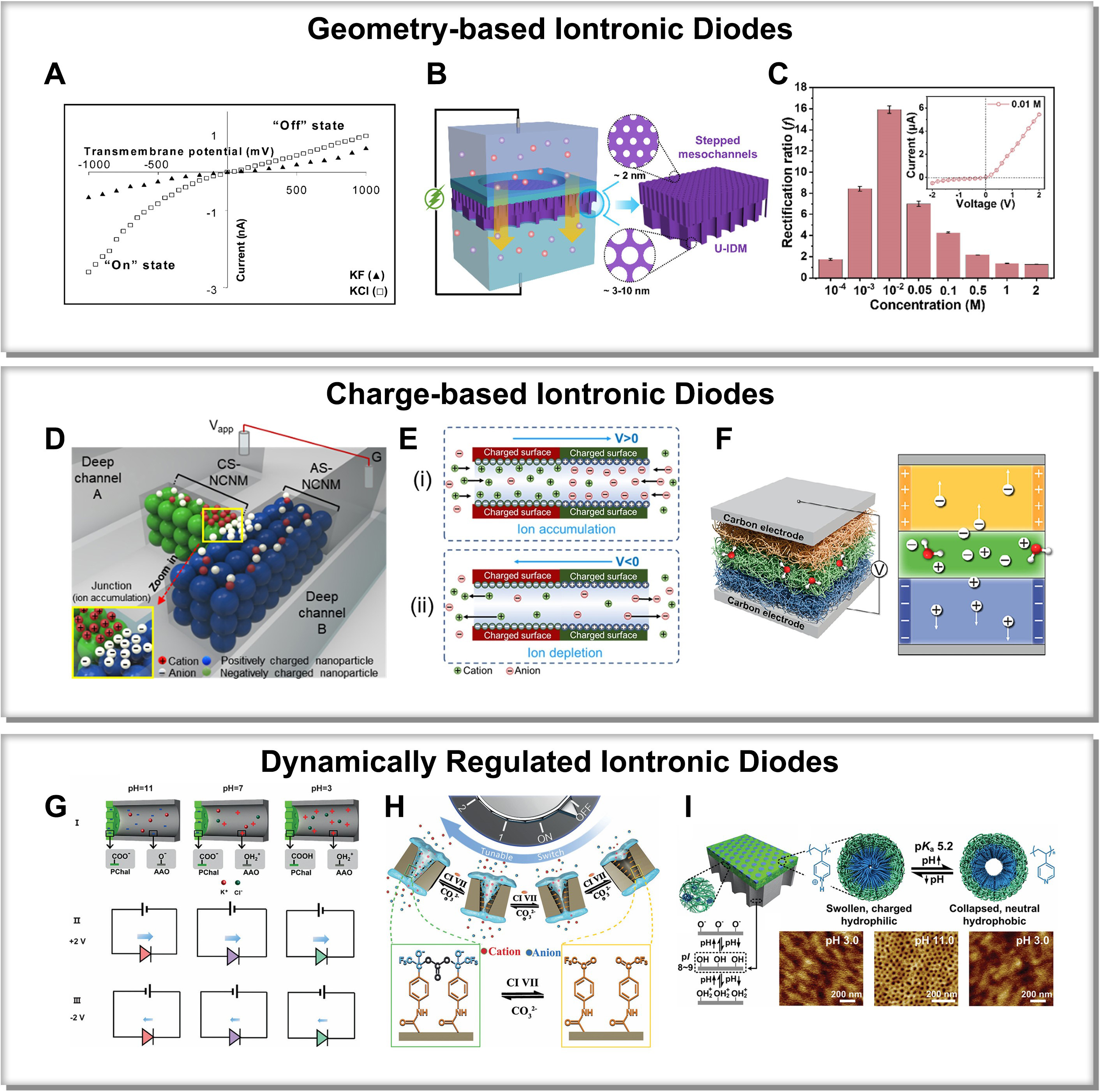
Figure 3. Iontronic diodes based on nanoconfined materials. (A) A geometry-based iontronic diode in a conical Au nanotube exhibits rectification in KCl but ohmic transport in KF. This figure is quoted with permission from American Chemical Society[52]; (B) A unipolar iontronic diode membrane is enabled by stepped mesochannels. This figure is quoted with permission from American Chemical Society[54]; (C) Rectification ratios of the U-IDM at different KCl concentrations are shown. The inset displays the I-V curve in 0.01 M KCl. This figure is quoted with permission from American Chemical Society[54]; (D) A charge-based bipolar iontronic diode is constructed from oppositely charged nanochannel networks. This figure is quoted with permission from the American Chemical Society[55]; (E) A MXene-based p-n iontronic diode operates through bias-dependent ion accumulation and depletion. This figure is quoted with permission from Wiley-VCH GmbH[49]; (F) A trilayer p-i-n nanofluidic diode enables ion-selective transport, moisture-enabled energy harvesting, and ionic logic. This figure is quoted with permission from Wiley-VCH GmbH[56]; (G) A dual amphoteric nanochannel diode maintains a stable rectification direction over a wide pH range. This figure is quoted with permission from Wiley-VCH GmbH[16]; (H) A carbonate-activated nanofluidic diode enables reversible switching between rectification and gating states. This figure is quoted with permission from Wiley-VCH GmbH[17]; (I) A heterogeneous membrane enables pH-responsive rectification and selective anion/cation gating. This figure is quoted with permission from Wiley-VCH GmbH[47]. U-IDM: unipolar iontronic diode membrane; MXene: Ti3C2Tx; p-n: positive-negative charge junction; p-i-n: positive-intrinsic-negative; PAA: porous anodic alumina. NCNM: nanochannel network membrane.
Whereas geometry-based iontronic diodes derive rectification primarily from structural asymmetry, charge-based iontronic diodes encode directional ion transport directly in the electrostatic landscape of nanoconfined channels[16,55]. In these systems, asymmetric surface-charge polarity, charge density, or interfacial chemical functionality establishes built-in ionic junctions that promote ion enrichment under one bias and depletion under the other, thereby enabling diode-like transport even in the absence of strongly tapered geometries[49,55]. A representative example is the bipolar nanochannel-network diode reported by Kim et al., in which oppositely charged nanochannel domains generated a heterogeneous ionic junction and an exceptionally high rectification ratio of about 1600 through junction-induced ion accumulation and depletion[55] [Figure 3D]. A related strategy was realized in MXene-based p-n membranes, where positively and negatively charged lamellar nanochannels were coupled to enhance rectification, ion selectivity, and osmotic energy conversion simultaneously[49] [Figure 3E]. More recent studies have further expanded this framework from static charge junctions to multifunctional iontronic architectures. For example, trilayer p-i-n nanofluidic diodes spatially decouple ion generation from selective transport [Figure 3F], enabling both moisture-driven power generation and ionic logic operations[56]. In parallel, quasi-solid-state proton diodes exploit coupled gradients in proton content, charge distribution, asymmetric structure, and interfacial transport barriers to achieve efficient proton rectification and ionic signal-processing functions[57]. Taken together, these studies show that charge-based iontronic diodes move beyond morphology-centered design by making interfacial electrostatics and chemical-state engineering the primary means of regulating ionic directionality, selectivity, and device-level functionality.
Whereas geometry-based and charge-based iontronic diodes rely primarily on predesigned structural or electrostatic asymmetry, dynamically regulated iontronic diodes introduce a further level of functionality by allowing the rectifying state itself to be reversibly switched, amplified, or continuously tuned by external stimuli[17,47]. In these systems, external chemical, electrochemical, or pH inputs do not merely modulate the magnitude of ionic current, but actively reconfigure the local wettability, surface charge, redox state, or interfacial ion distribution that underpin ion rectification[17,46,47]. An important early example was provided by dual amphoteric hybrid nanochannels, in which pH-dependent protonation and deprotonation of carboxyl- and hydroxyl-bearing channels continuously reconfigured the interfacial charge distribution while maintaining a single rectification direction over a wide pH range, thereby establishing surface ionization as a programmable source of ionic asymmetry[16] [Figure 3G]. This stimulus-responsive design principle was subsequently extended to more versatile surface-adaptive nanofluidic platforms, as exemplified by polydopamine-based nanopores that enabled pH-reversible rectification and postsynthetic chemical reprogramming of the pore surfaces[46]. A more explicit switchable design was demonstrated by Jiang and co-workers, who showed that reversible carbonate binding to the 1-(4-amino-phenyl)-2,2,2-trifluoro-ethanone (APTE)-functionalized conical nanochannel could transform a weakly rectifying, nonconducting pore into a hydrophilic, negatively charged conducting state, yielding an ultrahigh gating ratio of up to 5000 and a rectification ratio of 27[17] [Figure 3H]. A complementary electrochemical strategy was demonstrated by Perez-Mitta et al., who integrated polyaniline into asymmetric nanopores and used reversible redox-driven protonation changes to access multiple rectification states, showing that diode behavior can be preset and dynamically reconfigured by the applied potential[45]. Dynamic regulation can also be extended from single-pore systems to multifunctional membrane architectures, as exemplified by the heterogeneous block-copolymer/alumina membrane reported by Zhang et al., in which pH-responsive changes in charge and wettability across the heterojunction enabled ultrahigh rectification together with selectively switchable anion and cation gating[47] [Figure 3I]. Taken together, these studies show that dynamically regulated iontronic diodes transform nanofluidic rectifiers from static one-way conduits into adaptive iontronic elements capable of reversible switching, tunable rectification, and stimulus-responsive ionic signal control.
IONTRONIC TRANSISTORS BASED ON NANOCONFINED MATERIALS
Beyond iontronic diodes, iontronic transistors introduce a higher level of functional complexity by enabling active, reversible, and amplified regulation of ion transport in response to an external input[25,58,59]. In nanoconfined materials, this behavior becomes particularly pronounced because reduced channel dimensions, strong ion-wall interactions, and overlapping EDL make ionic conductance highly sensitive to local electrostatic and chemical perturbations[60-62]. As a result, nanoconfined architectures provide an ideal platform for constructing transistor-like iontronic elements that not only control ionic flux but also support signal modulation, amplification, and logic operations[63,64]. Broadly, iontronic transistors based on nanoconfined materials can be divided into two major classes: iontronic field-effect transistors (iontronic FETs), which regulate ion transport primarily through gate-induced modulation of channel electrostatics[50,60,62,65-67], and iontronic bipolar junction transistors (iontronic BJTs), which rely on coupled ion-selective junctions to achieve transistor behavior[20,25,58,63]. Together, these two device families illustrate how nanoconfined ion transport can evolve from passive conduction into active information processing, thereby laying the foundation for more advanced iontronic circuits and bioinspired signal-control systems.
The iontronic FETs represent the most established class of iontronic transistors because they translate the three-terminal logic of electronic FETs into nanoconfined ionic systems, where a gate input modulates ion transport between source and drain through a confined channel[25] [Figure 4A]. Their operation relies on gate-induced regulation of channel surface charge and the associated EDL, such that ionic concentration, carrier polarity, and transport flux can be tuned in situ once the channel dimension approaches the Debye screening length[25,60,62]. From this perspective, the development of iontronic FETs can be read as a progression from early proof-of-concept gating to architecturally engineered nanotube, nanochannel, nanopore, and mesoporous devices, and finally to membrane-based and atomic-scale systems[19,67-70]. The conceptual starting point of this field can be traced to the microfluidic flowFET, which showed that a perpendicular electric field could regulate electro-osmotic transport in a fluidic channel, thereby introducing transistor-like field control into fluidic systems[65]. This concept evolved into true nanofluidic FETs when Karnik et al. demonstrated that gate voltage could modulate the concentration of ions and molecules in nanochannels and control ionic conductance in a metal-oxide solution nanofluidic transistor[62]. Shortly thereafter, Fan et al. showed in single-nanotube devices that ionic conductance could be rapidly gated, and that surface functionalization could switch transistor behavior from p-type to ambipolar and n-type, while the transient response was governed by ion-exchange kinetics[60]. Subsequent progress focused on architectural engineering, including aligned mesoporous silica films, gated conical nanopores, and triangular nanochannels, which together established that channel geometry, confinement scale, and gate placement act cooperatively to determine ionic gating efficiency and transport nonlinearity[19,68,71]. In particular, aligned mesoporous silica films enabled electrostatic gating of proton transport with two- to fourfold modulation at gate voltages as low as 1 V[19], whereas triangular nanochannels revealed a clear transition between surface-charge-governed and geometry-governed transport regimes while also supporting iontronic FET operation[68]. This classical architecture-driven route has recently culminated in carbon-nanotube-based nanofluidic iontronic FETs that achieve on/off ratios up to 104 at gate voltages as low as 1 V [Figure 4B], permit polarity switching between p-type and n-type behavior, and support NOT, NAND, and NOR logic gates[72]. A further shift occurred when the field moved from isolated channels to layered membranes, because graphene-based and MXene-based subnanometer membranes provided interconnected transport pathways with much higher flux together with reversible voltage-gated ion transport[50,67]. At still smaller length scales, atomic-scale graphene channels and chemically designable metal-organic framework (MOF) nanosheet channels showed that ionic gating can enter a regime in which steric confinement, dehydration barriers, and strong ion-channel interactions become as important as classical EDL regulation[25,69,73]. Specifically, the copper(II) meso-tetra(4-carboxyphenyl)porphyrin (Cu-TCPP) MOF protonic FET delivered a proton mobility of 9.5 × 10⁻³ cm2 V-1 s-1 and an on/off ratio of 4.1, illustrating how chemically programmable two-dimensional frameworks can extend iontronic FETs beyond conventional inorganic channels[73]. Finally, the biomimetic Janus MXene membrane reported in 2025 points to an emerging membrane-based iontronic transistor paradigm beyond classical gate-voltage control, because transistor-like ion regulation was achieved through salinity-gradient-driven bidirectional multi-ion transport without the need for an external gate voltage[70] [Figure 4C]. Taken together, these advances reveal a clear trajectory in which iontronic FETs evolve from simple electrostatic gating in single confined channels toward biomimetic membrane systems that increasingly integrate selective ion transport, logic behavior, and energy-information coupling within one nanoconfined platform.
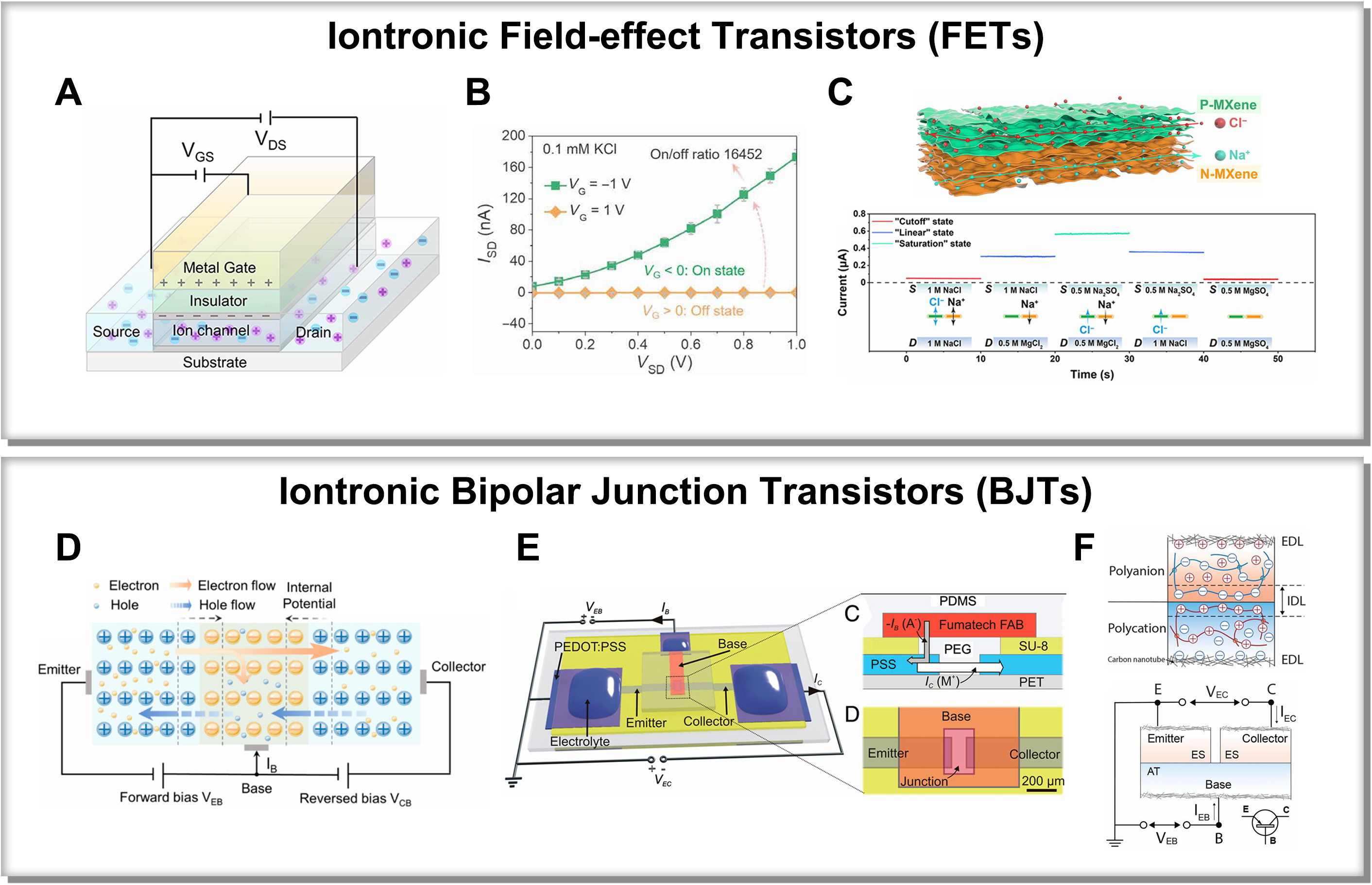
Figure 4. Iontronic transistors based on nanoconfined materials. (A) Concept schematic of iontronic field-effect transistors (iontronic FETs). This figure is quoted with permission from the American Chemical Society[25]; (B) The output curves of carbon-nanotube-based nanofluidic iontronic FET. This figure is quoted with permission from the American Association for the Advancement of Science[72]; (C) The output curves of NP-MXene-based iontronic FET. This figure is quoted with permission from the American Association for the Advancement of Science[70]; (D) Concept schematic of iontronic bipolar junction transistors (iontronic BJTs). This figure is quoted with permission from the American Chemical Society[25]; (E) Architecture of iontronic BJT based on ion-selective membranes. This figure is quoted with permission from the National Academy of Sciences[58]; (F) Schematic illustration of a polyanion/polycation junction architecture of an iontronic BJT based on ionoelastomers. This figure is quoted with permission from the American Association for the Advancement of Science[20]. EDL: Electrical double layer; IDL: ionic double layer; PEDOT:PSS: poly(3,4-ethylenedioxythiophene) :poly(styrenesulfonate); PET: polyethylene terephthalate; PEG: poly(ethylene glycol); ES: polyanionic ionoelastomer layer; AT: polycationic ionoelastomer layer; NP: negatively/positively; EB: emitter-base; CB: collector-base; PDMS: polydimethylsiloxane.
Alongside iontronic FETs, iontronic bipolar junction transistors (iontronic BJTs) constitute the second major class of iontronic transistors, in which ionic transport is regulated through coupled ionic junctions rather than by direct field control of a single channel[25,58,64]. Their design follows the logic of semiconductor BJTs but replaces electronic doping with cation- and anion-selective ionic regions governed by Donnan exclusion, so that ionic enrichment and depletion at interconnected junctions give rise to cutoff, active, and saturation modes[58,61] [Figure 4D]. This junction-based strategy is particularly important because it shifts transistor regulation from surface-charge gating in individual nanochannels to bulk ionic conduction through ion-selective materials, enabling more robust operation under physiologically relevant electrolyte conditions[61,64]. The conceptual basis of iontronic BJTs was established when a bipolar transistor was proposed as two reversed iontronic diodes connected in series[66], and was soon verified experimentally in an hourglass-shaped nanopore that defined emitter, gate, and collector regions through asymmetric surface-charge distribution[25,74]. A decisive advance came from membrane-based solid-state ion bipolar junction transistors developed by Tybrandt et al., where conducting polymers and cation-/anion-selective membranes were integrated into pnp and then complementary npn architectures [Figure 4E], enabling amplification of ionic currents together with active delivery of neurotransmitters such as acetylcholine and glutamic acid[58,61]. Building on these platforms, iontronic BJTs were further extended to circuit-level functions, including inverters and NAND gates in both single-transistor and complementary configurations[64], while later nanopore-based ionic amplifying circuits demonstrated Darlington-like architectures with ionic output and gains of up to approximately 300 at gate voltages below 1 V[63]. More recent work has pushed this class toward higher-performance and more versatile formats: a positive-negative-positive (PNP) nanofluidic transistor based on a polyaniline/PET heterojunction delivered actively tunable current responses, multiple operating modes, and current gains of up to 95 in 100 mM KCl[75], whereas liquid-free ionoelastomer junctions showed that non-faradaic rectification and transistor action can also be realized in soft, stretchable ionic materials[20] [Figure 4F]. Taken together, these studies show that iontronic BJTs provide the most direct route from junction-controlled ionic transport to iontronic logic control, amplification, and integrated chemical circuitry, thereby extending iontronics from fundamental transport regulation to active signal processing and device-level information control.
IONTRONIC MEMRISTORS BASED ON NANOCONFINED MATERIALS
Iontronic memristors based on nanoconfined materials are ionic memory devices whose conductance depends not only on the instantaneous stimulus but also on the history of voltage-driven ion transport within confined fluidic pathways[24,38]. Their design therefore differs fundamentally from that of conventional electronic memristors in that the relevant state variables are carried by ions and small molecules in liquid environments, making these devices intrinsically closer to biological ion channels and synapses[24,76]. A central design principle is that nonlinear ion transport is a prerequisite for memristive behavior, because pinched hysteresis and history-dependent conductance can emerge only when ionic conduction cannot instantaneously follow the applied electrical stimulus[24,77]. In nanoconfined channels, such nonlinearity can be amplified by overlapping EDL, strong ion-wall interactions, asymmetric channel geometry, interfacial chemical modulation, and, in extreme confinement, correlation-driven ionic transport beyond the classical Poisson-Nernst-Planck description[10,24,78].
From this perspective, the rational design of iontronic memristors is essentially the rational design of history-dependent ionic state variables, including ion redistribution within the channel, chemical or physical changes in channel state, and selective ion transfer across membrane-like interfaces[21,22,79]. These principles explain why nanoconfined materials provide a particularly powerful platform for iontronic memristors: they not only make ionic conductance highly tunable, but also allow memory, neuromorphic plasticity, and, in more advanced cases, ion-selective information processing to be integrated within a single fluidic architecture[24,38,80,81].
Ion-redistribution-governed iontronic memristors represent the most direct class of fluidic memristors, in which memory arises because ionic conductance depends on the delayed redistribution of ions under bias within nanoconfined channels[81,82]. An early foundation was established by Wang et al., who observed memristive and memcapacitive ion transport in single conical SiO2 nanopores and attributed the history-dependent response to the finite mobility of ions redistributing within the negatively charged nanopore under applied potentials[82] [Figure 5A]. In that system, a constant cross-point potential separated high- and low-conductivity hysteresis loops across different scan rates, showing that nonequilibrium ion redistribution in an asymmetric charged pore can generate well-defined memristive states. This mechanism was made more explicit by Bu et al., who reported the first nanofluidic memristor based on ion concentration polarization (ICP) and directly correlated the pinched hysteresis loop with the formation and evolution of ion enrichment and depletion zones in nanocapillaries[81]. Their work showed that memristive behavior can emerge when the ion-depleted region cannot instantaneously follow the voltage sweep, so that the device conductivity depends on the prior bias history rather than the instantaneous voltage alone. The same ion-redistribution logic was later extended to extreme confinement by Robin et al., who showed theoretically that in angstrom-scale quasi-two-dimensional slits, ions can form correlated states such as Bjerrum pairs and elongated clusters, whose slow assembly and dissociation produce hysteretic conduction[23] [Figure 5B]. In this regime, the memristor effect no longer arises only from classical concentration polarization, but from confinement-enhanced ionic correlations and field-induced pair breaking, thereby pushing iontronic memory into the molecularly confined limit. This picture was subsequently validated experimentally in two-dimensional nanofluidic channels, where Robin et al. demonstrated both unipolar and bipolar memristors with memory ranging from minutes to hours and linked these long timescales to ionic self-assembly or surface-adsorption-mediated ion escape dynamics[22] [Figure 5C]. Importantly, those channels could be reversibly written, read, and erased through conductance tuning, and were further used to implement Hebbian learning, showing that ion redistribution can support not only memory but also programmable neuromorphic function. Taken together, these studies show that this class of iontronic memristors stores memory through the time-dependent redistribution of ions, spanning enrichment and depletion in conical nanopores and nanocapillaries to correlated ion organization in angstrom-scale and two-dimensional channels.
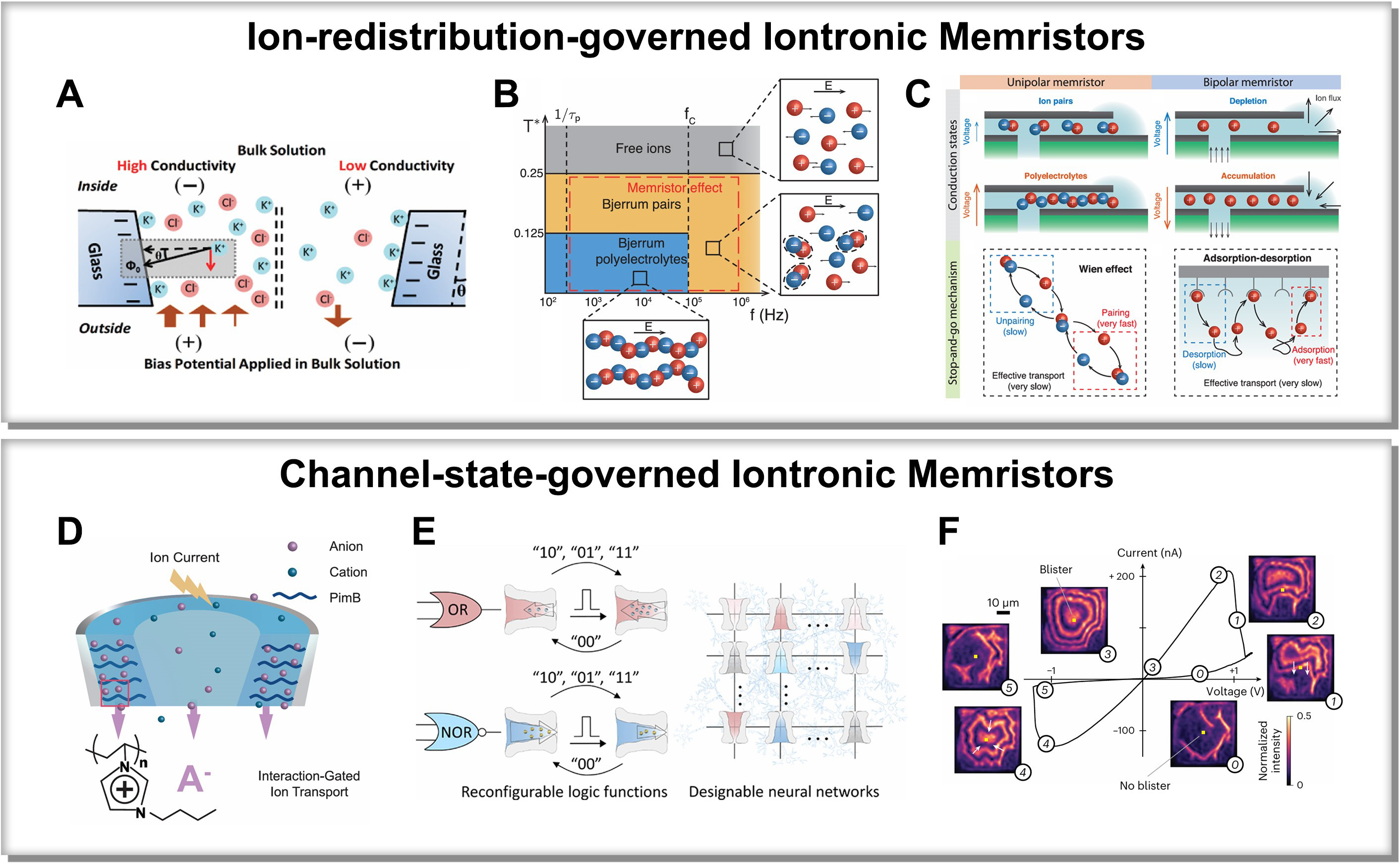
Figure 5. Iontronic memristors based on nanoconfined materials. (A) Memristive ion transport in a single conical SiO2 nanopore originates from bias-dependent ion redistribution. This figure is quoted with permission from the American Chemical Society[82]; (B) Angstrom-scale quasi-two-dimensional slits exhibit memristive behavior through confinement-enhanced ionic correlations. This figure is quoted with permission from the American Association for the Advancement of Science[23]; (C) Two-dimensional nanofluidic channels enable unipolar and bipolar iontronic memristors. This figure is quoted with permission from the American Association for the Advancement of Science[22]; (D) A polyelectrolyte-confined fluidic memristor shows hysteretic conductance and chemical-electric signal transduction. This figure is quoted with permission from the American Association for the Advancement of Science[76]; (E) A single-pore logic memristor achieves reconfigurable synaptic and logic functions through protonation/deprotonation-regulated ion transport. This figure is quoted with permission from the American Chemical Society[83]; (F) Mechano-ionic memristive switches in highly asymmetric channels enable fast switching and nanofluidic logic circuits. This figure is quoted with permission from Springer Nature[78].
Channel-state-governed iontronic memristors are distinguished by the fact that memory arises from changes in the conductive state of the nanoconfined pathway itself, including interfacial adsorption, surface protonation, liquid-state displacement, wettability switching, and channel deformation, rather than from ion redistribution alone in an otherwise static channel[38]. An early example was reported by Sheng et al., who demonstrated a nanofluidic memristor in a conical nanochannel filled with an ionic-liquid/water mixture and showed stable hysteresis with good repeatability, thereby establishing soft-matter channel-state modulation as a viable route to nanofluidic memory[79]. This concept was further developed by Zhang et al., who introduced an immiscible ionic-liquid/KCl system into a nanochannel and showed that gradual, memorable conductance tuning originated from voltage-driven movement of the liquid-liquid interface inside the channel[80]. A chemically richer example was provided by Xiong et al., whose polyelectrolyte-confined fluidic memristor relied on confined polyimidazolium-ion interactions to generate hysteretic conductance, while also enabling chemical-electric signal transduction[76] [Figure 5D]. The channel state can also be tuned through surface ionization: Ling et al. used protonation/deprotonation of functional groups within a single pore to reconfigure ion enrichment and depletion states, enabling chemically reconfigurable logic functions and designable neural networks[83] [Figure 5E]. Along the same line, Portillo et al. showed that pH-dependent protonation and deprotonation of pore surface groups reverse the sign of the surface charge, thereby switching the direction of ion accumulation and depletion and modulating memristive behavior[84]. Additional evidence for channel-state-governed memory arises from electrochemically fabricated polyaniline-gold (PANI:Au) composite devices, where bistable and negative differential resistance (NDR) behaviors emerge due to voltage-induced charge transfer between PANI and embedded Au nanoparticles[85]. Similarly, single-walled carbon nanotubes (SWNTs) dispersed in a polystyrene (PS) matrix within an ionic liquid showed memristive behavior governed by the formation and disruption of nanoscale conductive pathways[86]. More explicit physical state switching was demonstrated by Paulo et al., who showed that hydrophobic nanopores can behave as memristors through electrowetting-controlled transitions between dry, nonconductive and wet, conductive states[87]. Zhou et al. then showed that memristive hysteresis can also arise from elastic deformation of a conical polymer nanopore induced by electrically driven forces on adsorbed nanoparticles[77], whereas Emmerich et al. extended this idea to mechano-ionic memristive switches in highly asymmetric channels and further demonstrated nanofluidic logic circuits[78] [Figure 5F]. Taken together, these studies show that this class of iontronic memristors stores memory by dynamically reconfiguring the nanoconfined transport pathway itself, whether through chemical-state evolution, interfacial displacement, wettability transitions, or mechanically induced channel restructuring.
Ion-shuttling-governed iontronic memristors represent a newly emerging subclass of fluidic memristors in which memory is coupled to carrier-mediated ion transfer across a membrane-like organic phase, rather than arising solely from ion redistribution within fully aqueous rigid nanochannels[21,88]. An important biomimetic precursor was reported by Najem et al., who developed a biomolecular memristor based on alamethicin-doped lipid bilayers and showed that voltage-driven insertion of ion-channel-forming peptides into an insulating biomembrane could generate pinched hysteresis and synapse-like functions[89]. However, that device remained fundamentally distinct from the later ion-shuttling concept because its memristive behavior originated from channel insertion into a lipid bilayer, rather than from selective carrier-mediated ion shuttling across a membrane analog[88]. A more explicit ion-shuttling mechanism was established by Xie et al., who constructed a bioinspired ion-shuttling memristor (ISM) using an organic 1,2-dichloroethane membrane and dibenzo-18-crown-6 carriers to mimic membrane-embedded potassium channels[21]. In this architecture, the organic membrane separates the inner and outer aqueous phases and blocks interfering ions, whereas the ionophore selectively shuttles K+ across the membrane, thereby introducing a membrane-like and ion-selective transport pathway that differs qualitatively from previous aqueous-phase fluidic memristors. The resulting device exhibited the canonical signatures of memristive behavior, including pinched hysteresis, scan-rate dependence, and characteristic impedance responses, confirming that selective ion shuttling can sustain genuine history-dependent conductance states. Mechanistically, the memory effect was attributed to the time-dependent redistribution of coordinated potassium in the organic phase near the conical tip, where negative bias induced K+ accumulation and a high-conductance state, whereas positive bias induced depletion and a low-conductance state. More importantly, this membrane-like shuttling mechanism enabled functions that were difficult to achieve in earlier fluidic memristors, namely the coexistence of neuromorphic memory with ion selectivity, including potassium-selective plasticity and the emulation of resting membrane potential. Although this category remains in its early stages, it defines a clear mechanistic direction for future iontronic memristors by integrating membrane-mimetic architecture, selective ion transfer, and neuromorphic operation within a single device framework.
POTENTIAL APPLICATIONS OF NANOCONFINED IONTRONIC LOGIC CONTROL DEVICES
Beyond their mechanistic significance, nanoconfined iontronic diodes, transistors, and memristors offer complementary application opportunities because they regulate distinct levels of ionic information flow[90]. Iontronic diodes convert asymmetries in channel geometry, surface charge, or interfacial chemistry into directional ion transport, making them relevant to ionic rectification[56], ion-selective transport[45], smart membranes[70], sensing[91], and osmotic or moisture-enabled energy harvesting[56]. Iontronic transistors introduce an external gate or coupled ionic junctions, enabling active modulation and amplification of ionic currents for chemical/biomolecular sensing[58], DNA detection[25], drug or neurotransmitter delivery[25], ionic circuits[92], and soft biointerfaces[25]. Iontronic memristors store information in history-dependent ionic states and are therefore particularly relevant to ionic memory[80], synaptic plasticity[93], reservoir computing[24], neuromorphic computing[89], and adaptive bioinspired information processing[24,78]. Collectively, these three device classes provide complementary functional building blocks for integrated ionic information-processing systems that combine sensing, directional signal transmission, active regulation, amplification, and memory[94].
CONCLUSION AND OUTLOOK
Taken together, the studies discussed in this review show that nanoconfined materials have transformed ion transport from a passive physicochemical process into a programmable platform for iontronic logic control. Across diodes, transistors, and memristors, the same confinement-enabled physicochemical factors, including overlapping EDL, interfacial charge regulation, geometric asymmetry, and dynamic channel states, recurrently determine whether ionic systems can express rectification, gating, amplification, or memory[24,25,27,55,95,96]. From this view, the central advance of the field is not merely the demonstration of isolated ionic functions, but the emergence of a more unified device framework in which nanoconfined materials act as the common enabling basis for logic-relevant ionic behaviors. Iontronic diodes have evolved from static asymmetric rectifiers to dynamically reconfigurable elements[45,49,53]; iontronic transistors have progressed from proof-of-concept gating to junction-based amplification and logic circuits[58,61,64,69]; and iontronic memristors have expanded from delayed ion redistribution to channel-state modulation and ion-shuttling architectures[21,23,78,81]. Collectively, these developments indicate that iontronic logic control is moving beyond transport phenomenology toward programmable ionic information regulation in increasingly sophisticated material and device platforms. To provide a comprehensive and intuitive comparison and summary, the key metrics of the three types of nanoconfined iontronic logic control devices are compared below [Figure 6A].
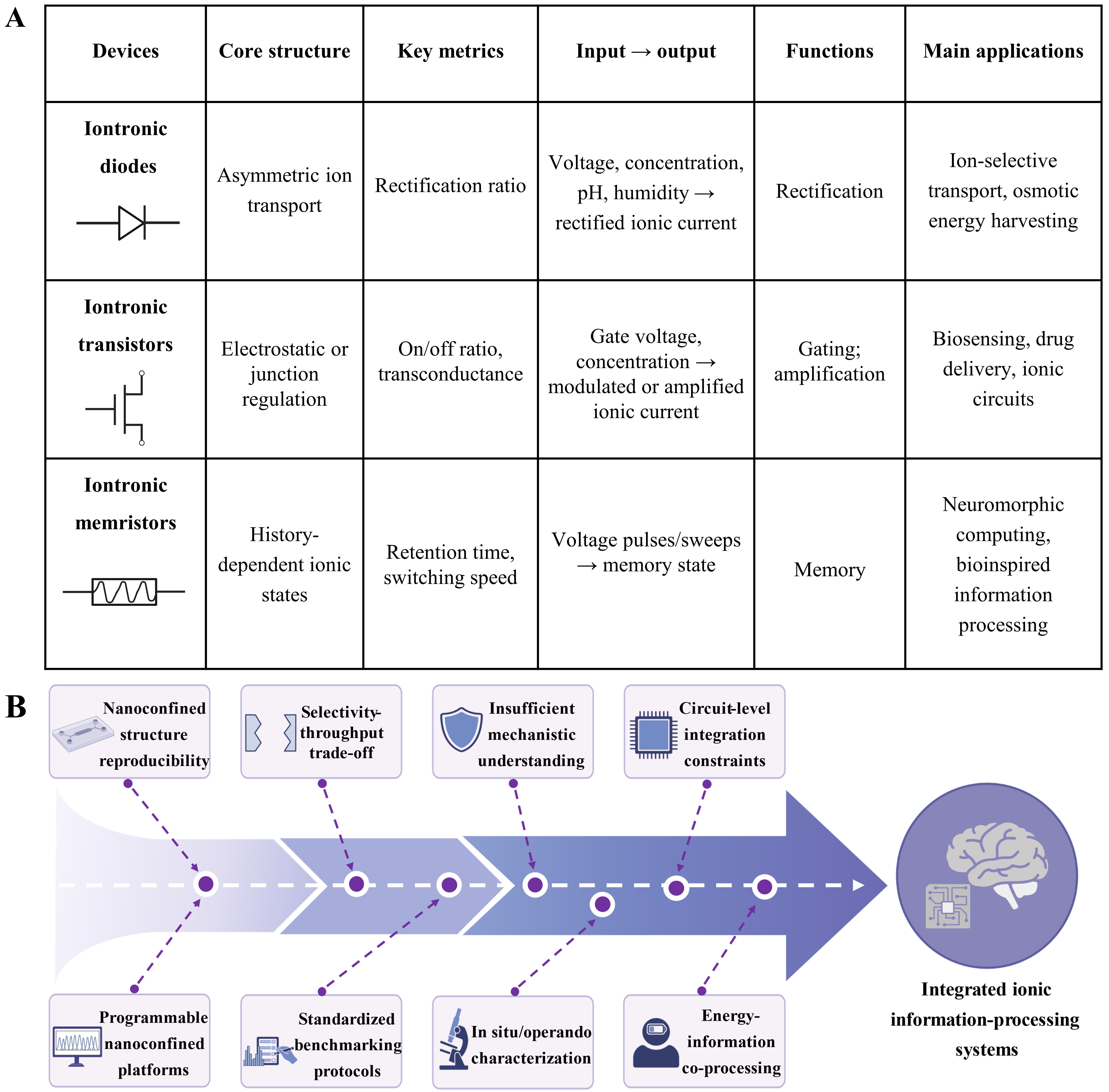
Figure 6. Comparison and future roadmap of nanoconfined iontronic logic control devices. (A) Comparison of key performance metrics for iontronic diodes, iontronic transistors, and iontronic memristors; (B) Future roadmap for nanoconfined iontronic logic devices.
Meanwhile, several bottlenecks still limit the transition from elegant single-device demonstrations to robust iontronic logic control systems. First, the field still depends heavily on precise yet often difficult-to-reproduce nanoconfined architectures, while defects, structural disorder, and nanoscale heterogeneity can strongly perturb ionic transport and degrade functional reproducibility. Second, a persistent trade-off remains between ion selectivity and permeability, because stronger confinement and more selective interfaces often come at the cost of reduced flux and slower response. Third, the mechanistic basis of many devices is still inferred indirectly from electrical output, whereas the decisive processes, such as ion enrichment and depletion, interfacial charge redistribution, wettability evolution, and channel-state switching, are dynamic and often insufficiently captured by ex situ characterization. Fourth, device-to-device consistency, long-term endurance, and circuit-level integration remain underdeveloped, especially given the intrinsically slower migration dynamics of ions relative to electrons and the continued reliance of many nanofluidic platforms on external reservoirs and macroscale measurement configurations. At the circuit level, ionic signals are mediated by ion migration, diffusion, EDL charging, concentration polarization, and internal-state relaxation. Their transient responses and relaxation timescales should therefore be treated as essential design parameters[25]. Moreover, dependence on liquid electrolytes and external reservoirs complicates sealing, miniaturization, and long-term integration. Device miniaturization will require not only smaller channels but also reproducible nanochannel arrays, robust surface functionalization, and compatible ion-electron interfaces[24]. These issues are now becoming more important than the discovery of new device effects, because they determine whether iontronic logic control can mature from a conceptually rich field into a reproducible and integrable device technology.
Looking ahead, progress in iontronic logic control will likely depend on four interconnected directions [Figure 6B]. One is the development of more programmable and scalable nanoconfined platforms, in which confinement geometry, surface charge, chemical functionality, and asymmetry can be designed in a coordinated manner, while reproducible nanochannel arrays and compact or encapsulated electrolyte configurations reduce reliance on bulky external reservoirs. A second is the establishment of standardized benchmarking protocols. In addition to reporting individual performance metrics, future studies should systematically specify channel dimensions, electrolyte composition, operating voltage, response time, retention, endurance, and device-to-device variation, thereby enabling meaningful comparisons across different material platforms and device classes. A third is the integration of in situ/operando characterization with multiscale modeling approaches spanning molecular-scale ion interactions, continuum ion transport, device-level dynamics, and compact circuit models. Such approaches are needed to connect ionic kinetics and channel-state evolution with transient circuit responses. Finally, iontronic logic control should be considered not only in the context of information processing, but also in relation to broader ionic systems that simultaneously carry energy and information. Previous iontronic studies have often emphasized ionic transport as a route to energy harvesting or storage, whereas the informational value encoded in ionic species, fluxes, and electrochemical potentials has been less fully exploited. Future work may therefore move toward energy-information co-processing systems, in which nanoconfined ionic systems do not merely generate power or transmit signals separately, but integrate sensing, regulation, memory, and energy conversion within flexible electronics, bioelectronic interfaces, and adaptive intelligent systems. In that sense, the most exciting future of iontronic logic control may lie not simply in imitating electronic circuits with ions, but in establishing a distinctly ionic paradigm in which confinement-guided ion dynamics co-organize computation, actuation, and energetic function.
DECLARATIONS
Authors’ contributions
Conceptualized the idea and led the project: Wei, D.; Sun, B.; Kvarnström C.
Made substantial contributions to writing the paper: Wei, D.; Qian, H.; Wang, Y.
Availability of data and materials
Not applicable.
Financial support and sponsorship
This work was supported by the National Natural Science Foundation (grant number 22479016).
Conflicts of interest
Wei, D. is Editor-in-Chief of the journal Iontronics. Kvarnström, C. is an Associate Editor of the journal Iontronics. Wei, D. and Kvarnström, C. were not involved in any steps of the editorial process, notably including reviewers’ selection, manuscript handling or decision making. The other authors declare that there are no conflicts of interest.
Ethical approval and consent to participate
Not applicable.
Consent for publication
Not applicable.
AI and AI-assisted tools statement
Not applicable.
Copyright
© The Author(s) 2026.
REFERENCES
1. Qian, H.; Wei, D.; Wang, Z. Bionic iontronics based on nano-confined structures. Nano. Res. 2023, 16, 11718-30.
2. Yang, L.; Yang, F.; Liu, X.; et al. A moisture-enabled fully printable power source inspired by electric eels. Proc. Natl. Acad. Sci. USA. 2021, 118, e2023164118.
3. Burgoyne, R. D. Neuronal calcium sensor proteins: generating diversity in neuronal Ca2+ signalling. Nat. Rev. Neurosci. 2007, 8, 182-93.
4. James, P.; Inui, M.; Tada, M.; Chiesi, M.; Carafoli, E. Nature and site of phospholamban regulation of the Ca2+ pump of sarcoplasmic reticulum. Nature 1989, 342, 90-2.
5. Zhou, B.; Zhou, Q.; Liu, Z.; Zhou, X.; Bao, L. Engineering artificial spider silk from biomimetic synthesis to advanced applications. SmartSys 2025, 1, e70005.
7. Shen, Z.; Zhu, D.; Zhang, M. Synergy of smart materials and structures toward intelligent metamaterials. SmartSys 2025, 1, e70007.
8. Yang, F.; Peng, P.; Yan, Z.; et al. Vertical iontronic energy storage based on osmotic effects and electrode redox reactions. Nat. Energy. 2024, 9, 263-71.
9. Wang, L.; Jiao, Y.; Zhang, H.; et al. Neuromorphic iontronic devices based on soft ionic conductors. Chem. Soc. Rev. 2026, 55, 299-335.
10. Zhan, H.; Xiong, Z.; Cheng, C.; Liang, Q.; Liu, J. Z.; Li, D. Solvation-involved nanoionics: new opportunities from 2D nanomaterial laminar membranes. Adv. Mater. 2019, 32, 1904562.
12. Sun, Z.; He, T.; Ren, Z.; et al. Moving toward human-like perception and sensation systems - from integrated intelligent systems to decentralized smart devices. SmartSys 2025, 1, e4.
13. Ge, K.; Shao, H.; Lin, Z.; Taberna, P.; Simon, P. Advanced characterization of confined electrochemical interfaces in electrochemical capacitors. Nat. Nanotechnol. 2024, 20, 196-208.
14. Edri Fraiman, N.; Sabbagh, B.; Yossifon, G.; Fish, A. Toward an ion-based large-scale integrated circuit: design, simulation, and integration. Commun. Eng. 2025, 4, 180.
15. Siwy, Z. Ion-current rectification in nanopores and nanotubes with broken symmetry. Adv. Funct. Mater. 2006, 16, 735-46.
16. Sui, X.; Zhang, Z.; Zhang, Z.; et al. Biomimetic nanofluidic diode composed of dual amphoteric channels maintains rectification direction over a wide pH range. Angew. Chem. Int. Ed. 2016, 55, 13056-60.
17. Xie, G.; Xiao, K.; Zhang, Z.; et al. A bioinspired switchable and tunable carbonate-activated nanofluidic diode based on a single nanochannel. Angew. Chem. Int. Ed. 2015, 54, 13664-8.
18. Vermesh, U.; Choi, J. W.; Vermesh, O.; Fan, R.; Nagarah, J.; Heath, J. R. Fast nonlinear ion transport via field-induced hydrodynamic slip in sub-20-nm hydrophilic nanofluidic transistors. Nano. Lett. 2009, 9, 1315-9.
19. Fan, R.; Huh, S.; Yan, R.; Arnold, J.; Yang, P. Gated proton transport in aligned mesoporous silica films. Nat. Mater. 2008, 7, 303-7.
20. Kim, H. J.; Chen, B.; Suo, Z.; Hayward, R. C. Ionoelastomer junctions between polymer networks of fixed anions and cations. Science 2020, 367, 773-6.
21. Xie, B.; Xiong, T.; Guo, G.; Pan, C.; Ma, W.; Yu, P. Bioinspired ion-shuttling memristor with both neuromorphic functions and ion selectivity. Proc. Natl. Acad. Sci. USA. 2025, 122, e2417040122.
22. Robin, P.; Emmerich, T.; Ismail, A.; et al. Long-term memory and synapse-like dynamics in two-dimensional nanofluidic channels. Science 2023, 379, 161-7.
23. Robin, P.; Kavokine, N.; Bocquet, L. Modeling of emergent memory and voltage spiking in ionic transport through angstrom-scale slits. Science 2021, 373, 687-91.
24. Xu, G.; Zhang, M.; Mei, T.; Liu, W.; Wang, L.; Xiao, K. Nanofluidic ionic memristors. ACS. Nano. 2024, acsnano.4c06467.
26. Siwy, Z.; Fuliński, A. Fabrication of a synthetic nanopore ion pump. Phys. Rev. Lett. 2002, 89, 198103.
27. Lin, C.; Combs, C.; Su, Y.; Yeh, L.; Siwy, Z. S. Rectification of concentration polarization in mesopores leads to high conductance ionic diodes and high performance osmotic power. J. Am. Chem. Soc. 2019, 141, 3691-8.
28. Kim, S.; Choi, H.; Kim, B.; et al. Extreme ion‐transport inorganic 2D membranes for nanofluidic applications. Adv. Mater. 2023, 35, 2206354.
29. Kavokine, N.; Netz, R. R.; Bocquet, L. Fluids at the nanoscale: from continuum to subcontinuum transport. Annu. Rev. Fluid. Mech. s. 2021, 53, 377-410.
31. Li, S.; Wang, J.; Lv, Y.; Cui, Z.; Wang, L. Nanomaterials-based nanochannel membrane for osmotic energy harvesting. Adv. Funct. Mater. 2023, 34, 2308176.
32. Zhang, J.; Liu, W.; Dai, J.; Xiao, K. Nanoionics from biological to artificial systems: an alternative beyond nanoelectronics. Adv. Sci. 2022, 9, 2200534.
33. Feng, L.; Astumian, R. D.; Stoddart, J. F. Controlling dynamics in extended molecular frameworks. Nat. Rev. Chem. 2022, 6, 705-25.
34. Chen, X.; Zhang, H.; Liu, S.; Zhou, Y.; Jiang, L. Engineering polymeric nanofluidic membranes for efficient ionic transport: biomimetic design, material construction, and advanced functionalities. ACS. Nano. 2022, 16, 17613-40.
36. Gao, J.; Feng, Y.; Guo, W.; Jiang, L. Nanofluidics in two-dimensional layered materials: inspirations from nature. Chem. Soc. Rev. 2017, 46, 5400-24.
37. Qian, H.; Peng, P.; Liu, Y.; Wang, Z. L.; Wei, D. Balancing selectivity and permeability in nanofluidic membranes for osmotic power generation. Prog. Energy. 2025, 7, 042001.
38. Zhou, J.; Li, H.; Hou, Y. Chemical principles in regulating nanofluidic memristors. Chemistry 2025, 7, 133.
39. Yang, L.; Li, S.; Qian, H.; Wang, Z.; Wang, Z. L.; Wei, D. Osmotic power generation based on nanoconfined materials. MRS. Energy. Sustain. 2024, 11, 193-218.
40. Zhang, Z.; Wen, L.; Jiang, L. Nanofluidics for osmotic energy conversion. Nat. Rev. Mater. 2021, 6, 622-39.
41. Qian, H.; Peng, P.; Fan, H.; et al. Horizontal transport in Ti3C2Tx MXene for highly efficient osmotic energy conversion from saline-alkali environments. Angew. Chem. Int. Ed. 2024, 63, e202414984.
42. Xiao, K.; Wan, C.; Jiang, L.; Chen, X.; Antonietti, M. Bioinspired ionic sensory systems: the successor of electronics. Adv. Mater. 2020, 32, 2000218.
43. Peng, P.; Qian, H.; Liu, J.; Wang, Z.; Wei, D. Bioinspired ionic control for energy and information flow. Int. J. Smart. Nano. Mater. 2024, 15, 198-221.
44. Xiao, K.; Chen, L.; Zhang, Z.; et al. A tunable ionic diode based on a biomimetic structure-tailorable nanochannel. Angew. Chem. Int. Ed. 2017, 56, 8168-72.
45. Pérez-Mitta, G.; Marmisollé, W. A.; Trautmann, C.; Toimil-Molares, M. E.; Azzaroni, O. Nanofluidic diodes with dynamic rectification properties stemming from reversible electrochemical conversions in conducting polymers. J. Am. Chem. Soc. 2015, 137, 15382-5.
46. Pérez-Mitta, G.; Tuninetti, J. S.; Knoll, W.; Trautmann, C.; Toimil-Molares, M. E.; Azzaroni, O. Polydopamine meets solid-state nanopores: a bioinspired integrative surface chemistry approach to tailor the functional properties of nanofluidic diodes. J. Am. Chem. Soc. 2015, 137, 6011-7.
47. Zhang, Z.; Kong, X. Y.; Xiao, K.; et al. A bioinspired multifunctional heterogeneous membrane with ultrahigh ionic rectification and highly efficient selective ionic gating. Adv. Mater. 2018, 30, 1707413.
48. Nam, S.; Rooks, M. J.; Kim, K.; Rossnagel, S. M. Ionic field effect transistors with sub-10 nm multiple nanopores. Nano. Lett. 2009, 9, 2044-8.
49. Ding, L.; Zheng, M.; Xiao, D.; et al. Bioinspired Ti3C2Tx MXene-based ionic diode membrane for high-efficient osmotic energy conversion. Angew. Chem. Int. Ed. 2022, 61, e202206152.
50. Cheng, C.; Jiang, G.; Simon, G. P.; Liu, J. Z.; Li, D. Low-voltage electrostatic modulation of ion diffusion through layered graphene-based nanoporous membranes. Nat. Nanotechnol. 2018, 13, 685-90.
51. Sabbagh, B.; Fraiman, N. E.; Fish, A.; Yossifon, G. Designing with iontronic logic gates - from a single polyelectrolyte diode to an integrated ionic circuit. ACS. Appl. Mater. Interfaces. 2023, 15, 23361-70.
52. Siwy, Z.; Heins, E.; Harrell, C. C.; Kohli, P.; Martin, C. R. Conical-nanotube ion-current rectifiers: the role of surface charge. J. Am. Chem. Soc. 2004, 126, 10850-1.
53. Xiao, K.; Xie, G.; Zhang, Z.; et al. Enhanced stability and controllability of an ionic diode based on funnel‐shaped nanochannels with an extended critical region. Adv. Mater. 2016, 28, 3345-50.
54. Yang, Y.; Zhou, S.; Lv, Z.; et al. Unipolar ionic diode nanofluidic membranes enabled by stepped mesochannels for enhanced salinity gradient energy harvesting. J. Am. Chem. Soc. 2024, 146, 19580-9.
55. Kim, J.; Jeon, J.; Wang, C.; Chang, G. T.; Park, J. Asymmetric nanochannel network-based bipolar ionic diode for enhanced heavy metal ion detection. ACS. Nano. 2022, 16, 8253-63.
56. Ni, K.; Ren, Q.; Zhang, X.; Liu, R. A trilayer nanofluidic ionic diode for high-performance moisture-enabled energy harvesting and ionic logic operations. Adv. Mater. 2025, 38, e13405.
57. Wang, X.; Guo, Y.; Zhang, Q.; et al. Efficient proton rectification in quasi-solid-state nanofluidic diode membrane for ionic signal processing and computing. ACS. Nano. 2026, 20, 3667-81.
58. Tybrandt, K.; Larsson, K. C.; Richter-Dahlfors, A.; Berggren, M. Ion bipolar junction transistors. Proc. Natl. Acad. Sci. USA. 2010, 107, 9929-32.
59. Tottori, S.; Karnik, R. Modeling and design of integrated circuits based on ionic bipolar junction transistors. Phys. Rev. Appl. 2025, 24, 054080.
60. Fan, R.; Yue, M.; Karnik, R.; Majumdar, A.; Yang, P. Polarity switching and transient responses in single nanotube nanofluidic transistors. Phys. Rev. Lett. 2005, 95, 086607.
61. Tybrandt, K.; Gabrielsson, E. O.; Berggren, M. Toward complementary ionic circuits: the npn ion bipolar junction transistor. J. Am. Chem. Soc. 2011, 133, 10141-5.
62. Karnik, R.; Fan, R.; Yue, M.; Li, D.; Yang, P.; Majumdar, A. Electrostatic control of ions and molecules in nanofluidic transistors. Nano. Lett. 2005, 5, 943-8.
63. Lucas, R. A.; Lin, C.; Baker, L. A.; Siwy, Z. S. Ionic amplifying circuits inspired by electronics and biology. Nat. Commun. 2020, 11, 1568.
64. Tybrandt, K.; Forchheimer, R.; Berggren, M. Logic gates based on ion transistors. Nat. Commun. 2012, 3, 871.
65. Schasfoort, R. B. M.; Schlautmann, S.; Hendrikse, J.; Van Den Berg, A. Field-effect flow control for microfabricated fluidic networks. Science 1999, 286, 942-5.
66. Daiguji, H.; Oka, Y.; Shirono, K. Nanofluidic diode and bipolar transistor. Nano. Lett. 2005, 5, 2274-80.
67. Wang, Y.; Zhang, H.; Kang, Y.; Zhu, Y.; Simon, G. P.; Wang, H. Voltage-gated ion transport in two-dimensional sub-1 nm nanofluidic channels. ACS. Nano. 2019, 13, 11793-9.
68. Kim, B.; Heo, J.; Kwon, H. J.; et al. Tunable ionic transport for a triangular nanochannel in a polymeric nanofluidic system. ACS. Nano. 2012, 7, 740-7.
69. Xue, Y.; Xia, Y.; Yang, S.; et al. Atomic-scale ion transistor with ultrahigh diffusivity. Science 2021, 372, 501-3.
70. Qian, H.; Fan, H.; Peng, P.; et al. Biomimetic Janus MXene membrane with bidirectional ion permselectivity for enhanced osmotic effects and iontronic logic control. Sci. Adv. 2025, 11, eadx1184.
71. Kalman, E. B.; Sudre, O.; Vlassiouk, I.; Siwy, Z. S. Control of ionic transport through gated single conical nanopores. Anal. Bioanal. Chem. 2008, 394, 413-9.
72. Liu, W.; Mei, T.; Cao, Z.; et al. Bioinspired carbon nanotube-based nanofluidic ionic transistor with ultrahigh switching capabilities for logic circuits. Sci. Adv. 2024, 10, eadj7867.
73. Wu, G. D.; Zhou, H. L.; Fu, Z. H.; et al. MOF nanosheet reconstructed two-dimensional bionic nanochannel for protonic field-effect transistors. Angew. Chem. Int. Ed. 2021, 60, 9931-5.
74. Kalman, E.; Vlassiouk, I.; Siwy, Z. Nanofluidic bipolar transistors. Adv. Mater. 2008, 20, 293-7.
75. Hu, Y.; Hua, Y.; Pan, Z.; et al. PNP nanofluidic transistor with actively tunable current response and ionic signal amplification. Nano. Lett. 2022, 22, 3678-84.
76. Xiong, T.; Li, C.; He, X.; et al. Neuromorphic functions with a polyelectrolyte-confined fluidic memristor. Science 2023, 379, 156-61.
77. Zhou, X.; Zong, Y.; Wang, Y.; et al. Nanofluidic memristor based on the elastic deformation of nanopores with nanoparticle adsorption. Natl. Sci. Rev. 2024, 11, nwad216.
78. Emmerich, T.; Teng, Y.; Ronceray, N.; et al. Nanofluidic logic with mechano-ionic memristive switches. Nat. Electron. 2024, 7, 271-8.
79. Sheng, Q.; Xie, Y.; Li, J.; Wang, X.; Xue, J. Transporting an ionic-liquid/water mixture in a conical nanochannel: a nanofluidic memristor. Chem. Commun. 2017, 53, 6125-7.
80. Zhang, P.; Xia, M.; Zhuge, F.; et al. Nanochannel-based transport in an interfacial memristor can emulate the analog weight modulation of synapses. Nano. Lett. 2019, 19, 4279-86.
81. Bu, Y.; Ahmed, Z.; Yobas, L. A nanofluidic memristor based on ion concentration polarization. Analyst 2019, 144, 7168-72.
82. Wang, D.; Kvetny, M.; Liu, J.; Brown, W.; Li, Y.; Wang, G. Transmembrane potential across single conical nanopores and resulting memristive and memcapacitive ion transport. J. Am. Chem. Soc. 2012, 134, 3651-4.
83. Ling, Y.; Yu, L.; Guo, Z.; et al. Single-pore nanofluidic logic memristor with reconfigurable synaptic functions and designable combinations. J. Am. Chem. Soc. 2024, 146, 14558-65.
84. Portillo, S.; Manzanares, J. A.; Ramirez, P.; Bisquert, J.; Mafe, S.; Cervera, J. pH-Dependent effects in nanofluidic memristors. J. Phys. Chem. Lett. 2024, 15, 7793-8.
85. Wei, D.; Baral, J. K.; Österbacka, R.; Ivaska, A. Electrochemical fabrication of a nonvolatile memory device based on polyaniline and gold particles. J. Mater. Chem. 2008, 18, 1853.
86. Wei, D.; Baral, J. K.; Österbacka, R.; Ivaska, A. Memory effect in an ionic liquid matrix containing single-walled carbon nanotubes and polystyrene. Nanotechnology 2008, 19, 055203.
87. Paulo, G.; Sun, K.; Di Muccio, G.; et al. Hydrophobically gated memristive nanopores for neuromorphic applications. Nat. Commun. 2023, 14, 8390.
88. Xie, B.; Yu, P. Ion-shuttling memristor: towards ionic computing and neuromorphic sensing. Iontronics 2026, 2, 2.
89. Najem, J. S.; Taylor, G. J.; Weiss, R. J.; et al. Memristive ion channel-doped biomembranes as synaptic mimics. ACS. Nano. 2018, 12, 4702-11.
90. Wang, Q.; Qu, Z. Nanoconfined ion transport: Common foundations driving innovative theories and transformative applications. Innov. Energy. 2025, 2, 100075.
91. Zhou, Y.; Xiong, T.; Lu, J.; et al. Highly-efficient ion gating through self-assembled two-dimensional photothermal metal-organic framework membrane. Angew. Chem. Int. Ed. 2023, 62, e202302997.
92. Guan, W.; Fan, R.; Reed, M. A. Field-effect reconfigurable nanofluidic ionic diodes. Nat. Commun. 2011, 2, 506.
93. Xiong, T.; He, X.; Xie, B.; et al. A nanofluidic oscillating neuron. Nat. Commun. 2025, 17, 238.
94. Pandey, S. V.; Saurav, K. V.; Ismail, A.; Rahaman, S.; Radha, B. Nanofluidic ionic memory for next-generation computing. Nat. Rev. Mater. 2026, 1-20.
95. Xu, L.; Chen, L.; Xia, F. Bias-free iontronic memory sensors realize adaptive chemotaxis. Sci. China. Mater. 2025, 69, 1810-1.
Cite This Article
 Open Access
How to Cite
Download Citation
Export Citation File:
Type of Import
Tips on Downloading Citation
Citation Manager File Format
Type of Import
Direct Import: When the Direct Import option is selected (the default state), a dialogue box will give you the option to Save or Open the downloaded citation data. Choosing Open will either launch your citation manager or give you a choice of applications with which to use the metadata. The Save option saves the file locally for later use.
Indirect Import: When the Indirect Import option is selected, the metadata is displayed and may be copied and pasted as needed.
About This Article
Copyright

Data & Comments
Data
0





Comments
Comments must be written in English. Spam, offensive content, impersonation, and private information will not be permitted. If any comment is reported and identified as inappropriate content by OAE staff, the comment will be removed without notice. If you have any queries or need any help, please contact us at [email protected].