



Entropy as a design variable for potassium-ion batteries
 0
0 
POTASSIUM-ION BATTERIES
Electrochemical energy storage technologies are essential for the transition toward sustainable energy systems. Lithium-ion batteries (LIBs) currently dominate applications ranging from portable electronics to electric vehicles due to their high energy density and long cycle life[1]. However, the increasing demand for evenly distributed lithium and its associated cost volatility have motivated the exploration of alternative chemistries based on more abundant elements[2-4]. Among post-lithium batteries, non-aqueous potassium-ion batteries (PIBs) have attracted considerable attention[3,4].
PIBs typically exhibit lower energy densities, although the standard redox potential of the K/K+ couple [-2.93 V vs. the Standard Hydrogen Electrode (SHE)] is close to that of lithium (-3.04 V), suggesting the possibility of relatively high operating voltage. Regarding resource sustainability, potassium is the eighth most abundant element in the Earth’s crust and is widely available at low cost. Despite the large ionic radius of K+, potassium ions exhibit fast diffusion in electrolytes and lower desolvation energy, due to the weaker Lewis acidity of K+, which promotes faster ionic transport and higher conductivity in organic electrolytes[3,4], resulting in excellent rate capability under optimized conditions. Regarding application niches, rather than replacing LIBs, Sodium-ion batteries (SIBs) and PIBs are likely to complement lithium technologies, especially in applications where low cost and resource sustainability outweigh energy density requirements, such as stationary grid storage[4,5].
Despite the benefits of PIBs, bottlenecks in PIBs that limit their electrochemical performance include long-term stability, safety, scalability, and commercial competitiveness. These constraints arise across all battery components. Several classes of electrode materials for PIBs are depicted in Figure 1. For anodes, major bottlenecks include structural degradation, significant volume expansion and poor cycle stability in alloy-based materials, and dendrite growth, unstable solid-electrolyte interphase (SEI) formation, limited storage capacity, and rate performance of carbon-based anodes. For cathodes, challenges include long-term structural evolution and electrode-electrolyte interfacial reactions, sluggish K+ diffusion kinetics, and rapid capacity fading. In electrolytes, the main bottleneck is achieving a balance between electrochemical stability, safety, reliability, environmental adaptability, and low cost. Although organic electrolytes, particularly Potassium bis(fluorosulfonyl) imide (KFSI)/ether-based systems with low additive content, currently offer the most practical pathway toward commercialization, alternative electrolyte chemistries still face significant scalability and performance limitations that restrict their near-term deployment.
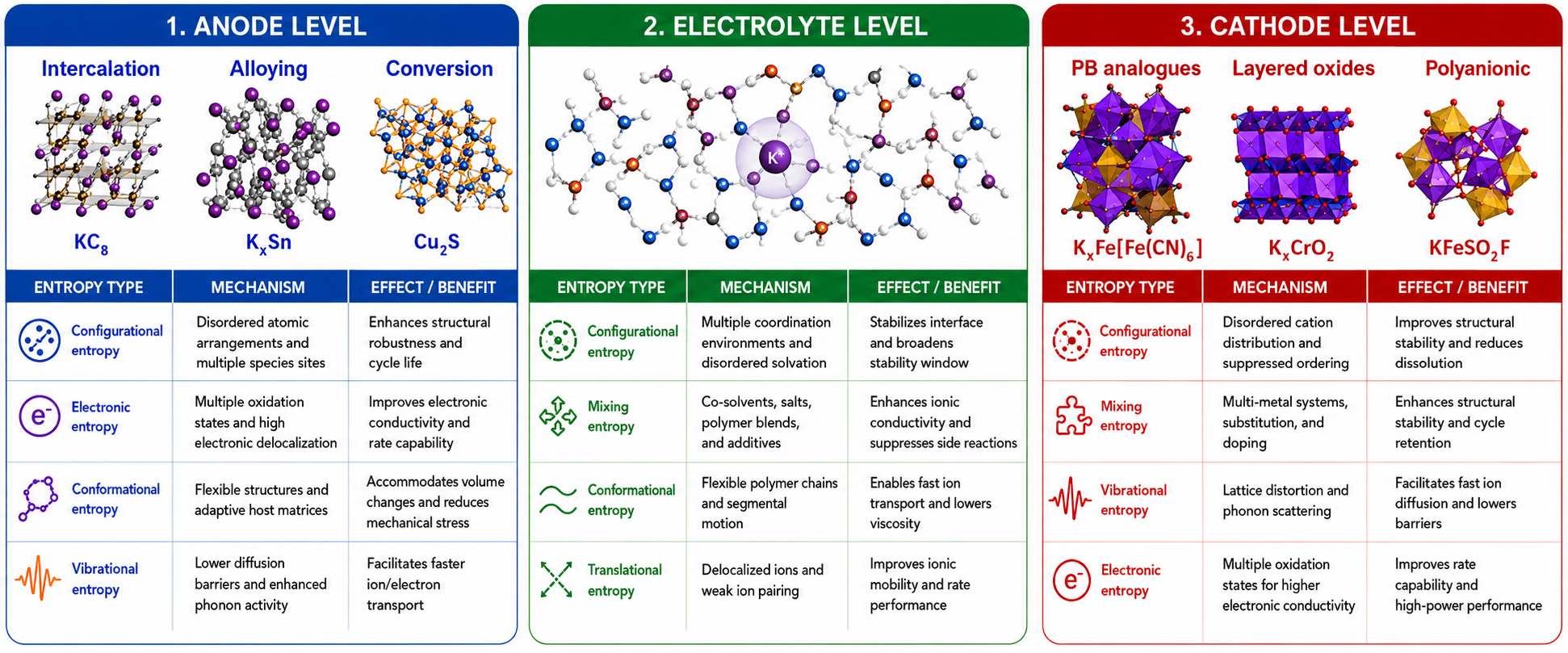
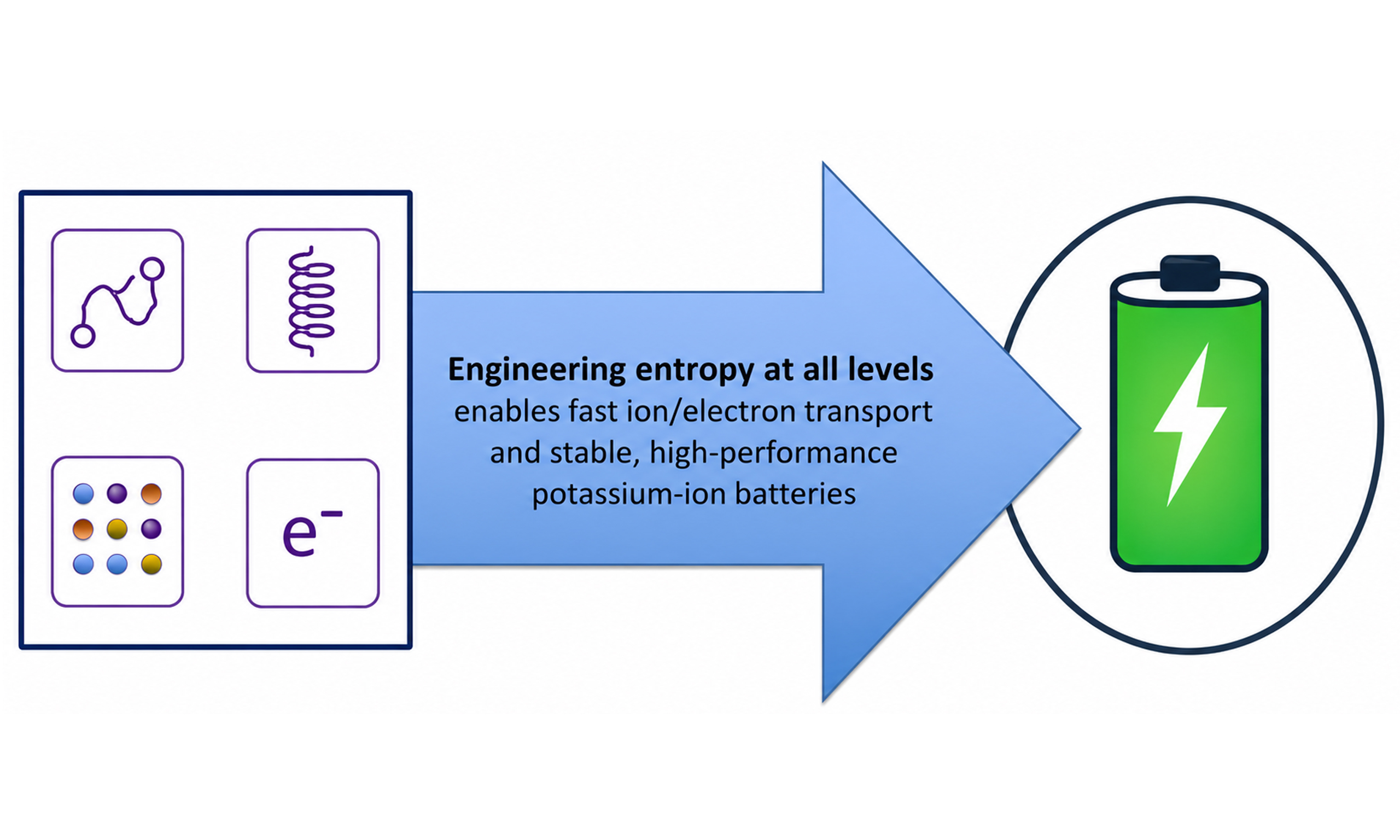
Figure 1. Schematic summary of how entropy engineering can enhance potassium-ion batteries.
ENTROPY DEFINITIONS
Entropy is one of the central concepts of thermodynamics and statistical mechanics and plays a fundamental role in determining the stability, phase evolution, and functional properties of materials. According to the Gibbs equation, G = H - TS, where G is the Gibbs free energy, H is the enthalpy, and S is the total entropy, entropy moderates phase transitions by lowering the free-energy difference between competing phases, stabilizing disordered states, and reducing the thermodynamic driving force for structural transformation.
The total entropy of a material can be decomposed into contributions arising from different classes of degrees of freedom, including configurational, translational, vibrational, electronic, magnetic, conformational, and mixing entropy contributions[5]:
In substitutional solid solutions, configurational entropy is conveniently described in terms of the site fractions (xi) of the constituent species[5],
where (R) is the universal gas constant and (m) is the number of chemical species occupying a given sublattice. Configurational entropy quantifies the number of distinct atomic arrangements compatible with a crystal structure and therefore provides a direct measure of chemical disorder.
Translational entropy originates from the positional and momentum degrees of freedom of particles and constitutes the dominant entropy contribution in dilute gases. In most crystalline solids, translational freedom is largely suppressed because atoms occupy well-defined lattice sites, and translational entropy is effectively replaced by vibrational contributions.
However, translational entropy arises in systems where ions can move freely through the medium - electrode materials and electrolytes - and is proportional to the number of accessible translational microstates. Charge delocalization weakens Coulombic interactions, suppresses ion pairing, increases ionic mobility, and ultimately enhances translational entropy by increasing the number of accessible translational microstates. For this reason, electrolytes containing large, charge-delocalized ions often exhibit higher ionic conductivity than systems containing small, highly localized ions.
Vibrational entropy arises from the thermal population of lattice vibrational modes and is commonly expressed through the phonon partition function.
Vibrational entropy plays a major role in determining phase stability at elevated temperatures. Soft lattice vibrations increase the configurational freedom of the migrating ion and its surroundings, reducing the effective diffusion barrier by entropically stabilizing the transition state.
Electronic entropy originates from the thermal occupation of electronic states and is generally associated with the electronic density of states near the Fermi level. Although typically smaller than vibrational or configurational contributions, electronic entropy may become important for a substitutional solid solution. Higher electronic entropy promotes charge delocalization and increases the number of accessible electronic states, thereby facilitating carrier transport and enhancing electronic conductivity.
Conformational entropy, in contrast, is associated with the distribution of accessible molecular conformations generated by internal rotations and structural rearrangements. Conformational entropy has a minor thermodynamic contribution in conventional solids. However, high conformational entropy in electrolytes enhances ion hopping by increasing molecular flexibility and dynamic structural rearrangements, which create transient transport pathways and lower the free-energy barrier for ion migration.
Closely related to configurational entropy is mixing entropy, which arises from the combinatorial increase in the number of distinguishable arrangements when multiple species occupy a common phase. For ideal random solutions, mixing entropy and configurational entropy are formally equivalent.
A high-entropy material (HEM) is defined as a material containing multiple principal constituents on one or more crystallographic sublattices, which results in better phase stability, phase selection and functional properties than the simple weighted average of the constituent elements (“cocktail effect”). For an equiatomic system containing (m) components, the configurational entropy, equation (2), reaches its maximum value for Sconfig = Rlnm. Consequently, a five-component equiatomic alloy exhibits Sconfig = 1.61R. Values ≥ 1.5R are currently associated with HEM, replacing the early definition as systems containing at least five principal elements with concentrations between approximately 5 at.% and 35 at.%. In contrast, doped materials consist of a host phase intentionally containing one or more additional elements in relatively small concentrations to modify specific properties[6]. The concentration of the host species greatly exceeds that of the dopant species, and the resulting Sconfig remains relatively small.
ENTROPY IN POTASSIUM-ION BATTERY MATERIALS
The earliest reports on HEM for metal-ion batteries were mostly on the lithium and sodium cases. For SIB, high-entropy layered oxides[7], sodium (Na) super ionic conductor (NASICON) cathodes[8] and potassium hexacyanoferrates were used cathode materials[9], while High-Entropy Alloys (HEAs) were used as anode materials[10].
The concept of high-entropy materials, successfully applied to SIBs, was recently extended to PIB systems, including cathodes[11-16], anodes[17-19], and electrolytes[20]. The first example comes from layered potassium oxides. Zhao et al.[11] used entropy tuning to suppress phase transitions and Jahn-Teller distortion in Mn-rich oxides, allowing practical high-mass-loading electrodes. The high configurational entropy of P-phase layered oxide cathodes suppresses the formation of the unfavorable P3’ phase and delays the P3’ phase transition during cycling, which enhances K+ diffusion kinetics and inhibits microcrack propagation. Their results are particularly significant because many low-entropy cathode studies report attractive gravimetric capacities only at low electrode loadings, which often limit their practical relevance. In contrast, the reported thick electrode, with a mass loading of 48.5 mg cm-2 and an areal capacity of 4.0 mAh cm-2, approaches the requirements of practical battery cells[11].
Also, including lithium and copper in the HEM cathodes of the O3-type cancels irreversible oxygen losses and transition metal (TM) migration that reduce voltage hysteresis and voltage decay upon cycling. A highly reversible P3-phase solid-solution mechanism is also achieved by suppressing multiple detrimental irreversible phase transitions[12]. More recently, the same group reported that phase transitions of P-O and P-P’ induced by Jahn-Teller (J-T) lattice distortion and MnO6 layer gliding can be completely suppressed by high-entropy, superlattice stabilization, and geometric and electronic interlayer pinning effect[13]. This results in an increased performance as compared with low-entropy cathodes.
Regarding polyanionic cathodes, the high-entropy materials have been tested for aqueous-electrolyte PIBs, which suppressed the K+-migration barrier and solubility of the entropy-tuned polyanionic cathodes. Impressive rate performances and cycling stabilities were obtained[14]. A medium-entropy Prussian Blue Analog (PBA) cathode was developed by incorporating Fe, Mn, and Sn into the structure, which suppresses defects and phase transitions, improves potassium-ion transport, and stabilizes the crystal lattice. As a result, the material achieves a high energy density of 364.2 Wh kg-1, excellent rate performance, and long-term cycling stability, while full cells retain strong performance over 2,500 cycles with minimal capacity loss[15]. Finally, high entropy in Fe-based PBAs favors hybridization of 3d energy levels, thereby strengthening the Fe-N bond and optimizing the electronic structure. This results in a solid-solution reaction with minimal volume change and a low K+ diffusion barrier in aqueous PIBs as compared with low-entropy PIB cathodes[16].
Regarding alloy anodes for PIBs, the cocktail effect of a high-entropy MnCoNiCuZn alloy enabled fast K+ transport, strong structural stability, and reversible formation of K-interstitial metallic solid solutions, delivering a high capacity of 513 mAh g-1 and exceptional cycling stability with over 3,000 cycles[17]. A different mechanism was reported for the high-entropy telluride conversion-alloying anode, related to the elimination of the band gap, enhanced K-ion adsorption capability, and a lower K-ion migration barrier than low-entropy analogs[18]. This example emphasizes the electronic anisotropy effects in HEMs. In perovskite fluoride anodes, a high-entropy structure suppresses the fluoride conversion reaction and exhibits a low-strain intercalation mechanism, with a positive effect on cycle life[19].
Regarding electrolytes for PIBs, entropy-driven electrolyte design has emerged as an effective strategy to compensate for the inherently weak solvation of K+ ions. High-entropy, phosphate-based Localized High-Concentration Electrolytes (HE-LHCEs) exhibit enhanced ionic conductivity, interfacial stability, oxidative resistance, and safety, while also maintaining excellent low-temperature performance[20].
Figure 1 highlights how targeted entropy engineering can synergistically stabilize bulk structures, interfaces, and solvation environments, enabling high-performance PIBs.
KEY CHALLENGES AND OUTLOOK
In high-entropy potassium-ion batteries, the most fundamental bottleneck is the interaction between the large size of K+ ions and the highly disordered atomic environment created by multiple principal elements[21-24]. High configurational entropy produces a broad distribution of local site energies and migration barriers rather than a single well-defined diffusion pathway[21,22,25]. Because of its size, K+ ions are sensitive to local variations in channel geometry and electrostatic potential[4,23]. As a result, potassium transport becomes controlled by the slowest regions of the network, leading to percolation-limited diffusion, trapped ions, and poor rate capability[23,24,25].
A related limitation is a fundamental entropy-mobility tradeoff. The same atomic disorder that stabilizes the host structure against large-scale phase transitions also disrupts the long-range coherence of diffusion pathways[21,22,25]. High entropy can therefore improve structural robustness while simultaneously reducing potassium mobility. This tradeoff is especially severe in potassium systems because the larger ion requires wider and more uniform migration channels[4,22].
An additional bottleneck is the metastable nature of many high-entropy materials at room temperature. The configurational entropy term that stabilizes these materials becomes less dominant as temperature decreases, while enthalpic driving forces for segregation, clustering, short-range ordering, or phase decomposition become increasingly important[21,25-27]. Consequently, a material that appears as a single high-entropy phase after synthesis at elevated temperature may only be kinetically trapped rather than truly thermodynamically stable under battery operating conditions[25,27].
High entropy also broadens the distribution of redox energies. Instead of a narrow, well-defined electrochemical potential associated with one dominant redox center, different local environments exhibit different redox behaviors. This produces voltage hysteresis, sloping charge-discharge curves, reduced energy efficiency, and incomplete utilization of active material[21,22,25].
At electrode-electrolyte interfaces, multiple principal elements can participate simultaneously in surface reactions. This often leads to chemically heterogeneous interphases whose composition evolves continuously during cycling. Rather than forming a stable passivation layer, the interface may remain reactive, increasing impedance and reducing cycle life[28,29].
The next generation of entropy-designed potassium-ion batteries will likely integrate all three levels simultaneously: high-entropy bulk frameworks, entropy-stabilized interfaces, and entropy-repaired electrolytes. Future strategies are expected to move beyond the simplistic notion that “more elements is better” and instead focus on targeted entropy engineering, where local disorder is deliberately introduced as a programmable design parameter able to mitigate degradation mechanisms across multiple length scales.
Multicomponent compositions should not lead to inhomogeneities that could make the mixing entropy more prominent or finally form multiphase products. In addition, making PIBs compatible with sustainability should avoid the use of critical elements, such as cobalt, or expensive metals, such as copper, to design economically scalable PIBs. High manufacturing costs coupled with complex system integration that hinder industrialization should be overcome.
The translational entropy must be considered in more detail, in relation to potassium-ion diffusivity. By combining metal ions with different electronic configurations, electronic entropy can give clues to better conductivity. Conformational entropy is a parameter to optimize particularly in electrolytes.
DECLARATIONS
Authors’ contributions
The author contributed solely to the article.
Availability of data and materials
Not applicable.
AI and AI-assisted tools statement
During the preparation of this manuscript, the AI tool ChatGPT (version GPT-5.5 Thinking, released 2026-04-23) was used for language editing and to assist in image optimization. The tool did not influence the study design, data collection, analysis, interpretation, or the scientific content of the work. All authors take full responsibility for the accuracy, integrity, and final content of the manuscript
Financial support and sponsorship
The author acknowledges financial support from the European Union European research project “Mastering electrode surface to achieve ultra-high reversible capacity” (MASTER), contract PCI2023-143355 financed in Spain by MCIN/AEI /10.13039/501100011033/UE), and the Junta de Andalucía (group FQM288).
Conflicts of interest
The author declared that there are no conflicts of interest.
Ethical approval and consent to participate
Not applicable.
Consent for publication
Not applicable.
Copyright
© The Author 2026.
REFERENCES
1. Ngoy, K. R.; Lukong, V. T.; Yoro, K. O.; et al. Lithium-ion batteries and the future of sustainable energy: a comprehensive review. Renew. Sustain. Energy. Rev. 2025, 223, 115971.
2. Wu, Y.; Shuang, W.; Wang, Y.; et al. Recent progress in sodium-ion batteries: advanced materials, reaction mechanisms and energy applications. Electrochem. Energy. Rev. 2024, 7, 215.
3. Vaalma, C.; Buchholz, D.; Passerini, S. Non-aqueous potassium-ion batteries: a review. Curr. Opin. Electrochem. 2018, 9, 41-8.
4. Xu, Y.; Du, Y.; Chen, H.; et al. Recent advances in rational design for high-performance potassium-ion batteries. Chem. Soc. Rev. 2024, 53, 7202-98.
5. Miracle, D.; Senkov, O. A critical review of high entropy alloys and related concepts. Acta. Mater. 2017, 122, 448-511.
6. Erwin, S. C.; Zu, L.; Haftel, M. I.; Efros, A. L.; Kennedy, T. A.; Norris, D. J. Doping semiconductor nanocrystals. Nature 2005, 436, 91-4.
7. Zhao, C.; Ding, F.; Lu, Y.; Chen, L.; Hu, Y. S. High-entropy layered oxide cathodes for sodium-ion batteries. Angew. Chem. Int. Ed. 2020, 59, 264-9.
8. Wu, X.; Li, Z.; Zhang, J.; et al. Insight into highly reversible multielectron V3+/V4+/V5+ reaction of high-entropy doped NASICON cathode for sodium ion batteries. ACS. Appl. Mater. Interfaces. 2025, 17, 12227-36.
9. Dai, J.; Tan, S.; Wang, L.; et al. High-voltage potassium hexacyanoferrate cathode via high-entropy and potassium incorporation for stable sodium-ion batteries. ACS. Nano. 2023, 17, 20949-61.
10. Zheng, S.; Tian, Y.; Liu, Y.; et al. Alloy anodes for sodium‐ion batteries. Rare. Met. 2021, 40, 272-89.
11. Zhao, S.; Huang, Y.; Song, W.; et al. High entropy‐tuning enables suppressed phase transition of layered manganese‐based oxides for high‐mass‐loading potassium‐ion batteries. Adv. Funct. Mater. 2025, 35, e11706.
12. Ma, M.; Yao, K.; Zhai, X.; et al. Tailoring lattice oxygen redox and robust structure stability in high-entropy superlattice layered cathode for superior potassium-ion storage. Angew. Chem. Int. Ed. 2025, 64, e202513581.
13. Ma, M.; Yao, K.; Zhu, Y.; et al. An Adaptive high-entropy superstructure cathode: concurrently tackling phase transition, oxygen redox, and ambient stability for potassium-ion batteries. Angew. Chem. Int. Ed. 2026, 65, e6193851.
14. Liu, B.; Zhang, Q.; Yu, X.; et al. Unlocking polyanion-type materials through high-entropy effect for aqueous potassium-ion batteries. J. Am. Chem. Soc. 2025, 147, 38291-300.
15. Huang, H.; Qiao, S.; Lv, B.; Liu, H. K.; Dou, S. X.; Chong, S. Manipulating phase stability and kinetics in prussian blue cathode via entropy engineering and d10 cation incorporation for potassium-ion batteries. Nano. Lett. 2025, 25, 15062-71.
16. Min, F.; Zhang, Q.; Ali, U.; et al. D-band center modulation of Prussian blue analogues through a high-entropy strategy for aqueous potassium-ion batteries. Green. Chem. 2025, 27, 11115-24.
17. Zhang, R.; Xue, H.; Du, D.; et al. Regulation of configurational entropy to realize long cycle lifespan of high entropy alloy anodes for potassium batteries. Adv. Funct. Mater. 2025, 35, 2422218.
18. Wang, Z.; Qiao, S.; Ma, M.; et al. High-entropy conversion-alloying anode material for advanced potassium-ion batteries. ACS. Nano. 2025, 19, 15148-60.
19. Liao, J.; Shao, C.; Han, J.; et al. High-entropy perovskite fluoride ultrasmall nanoparticles embedded in carbon nanofibers enable accelerated redox kinetic for K storage. Energy. Environ. Sci. 2024, 17, 7362-71.
20. Yuan, Z.; Liao, J.; Song, L.; et al. Entropy-repaired solvation structure strategy for high-efficiency phosphate-based localized high-concentration electrolytes in potassium batteries. Angew. Chem. Int. Ed. 2025, 64, e202415923.
22. Ran, B.; Li, H.; Cheng, R.; et al. High-entropy oxides for rechargeable batteries. Adv. Sci. 2024, 11, e2401034.
23. Lee, J.; Lee, J.; Lim, E. Recent progress and challenges in potassium-ion battery anodes: towards high-performance electrodes. Sci. Technol. Adv. Mater. 2025, 26, 2518746.
24. Zhang, W.; Liu, Y.; Guo, Z. Approaching high-performance potassium-ion batteries via advanced design strategies and engineering. Sci. Adv. 2019, 5, eaav7412.
25. Barber, J. P.; Deary, W. J.; Titus, A. N.; Bejger, G. R.; Almishal, S. S. I.; Rost, C. M. Disorder by design: unveiling local structure and functional insights in high entropy oxides. Mater. Horiz. 2025, 12, 10453-77.
26. Dhir, S.; Cattermull, J.; Jagger, B.; et al. Characterisation and modelling of potassium-ion batteries. Nat. Commun. 2024, 15, 7580.
27. Ghosh, S.; Sotskov, V.; Shapeev, A. V.; Neugebauer, J.; Körmann, F. Short-range order and phase stability of CrCoNi explored with machine learning potentials. Phys. Rev. Mater. 2022, 6.
28. Han, Y.; Vijaya Kumar Saroja, A. P.; Tinker, H. R.; Xu, Y. Interphases in the electrodes of potassium ion batteries. J. Phys. Mater. 2022, 5, 022001.
Cite This Article
 Open Access
How to Cite
Download Citation
Export Citation File:
Type of Import
Tips on Downloading Citation
Citation Manager File Format
Type of Import
Direct Import: When the Direct Import option is selected (the default state), a dialogue box will give you the option to Save or Open the downloaded citation data. Choosing Open will either launch your citation manager or give you a choice of applications with which to use the metadata. The Save option saves the file locally for later use.
Indirect Import: When the Indirect Import option is selected, the metadata is displayed and may be copied and pasted as needed.
About This Article
Copyright

Data & Comments
Data
0











Comments
Comments must be written in English. Spam, offensive content, impersonation, and private information will not be permitted. If any comment is reported and identified as inappropriate content by OAE staff, the comment will be removed without notice. If you have any queries or need any help, please contact us at [email protected].