

First reported laparoscopic conversion of magnetic side-to-side duodeno-ileostomy to single-anastomosis duodeno-ileal bypass with sleeve gastrectomy
 0

Graphical Abstract
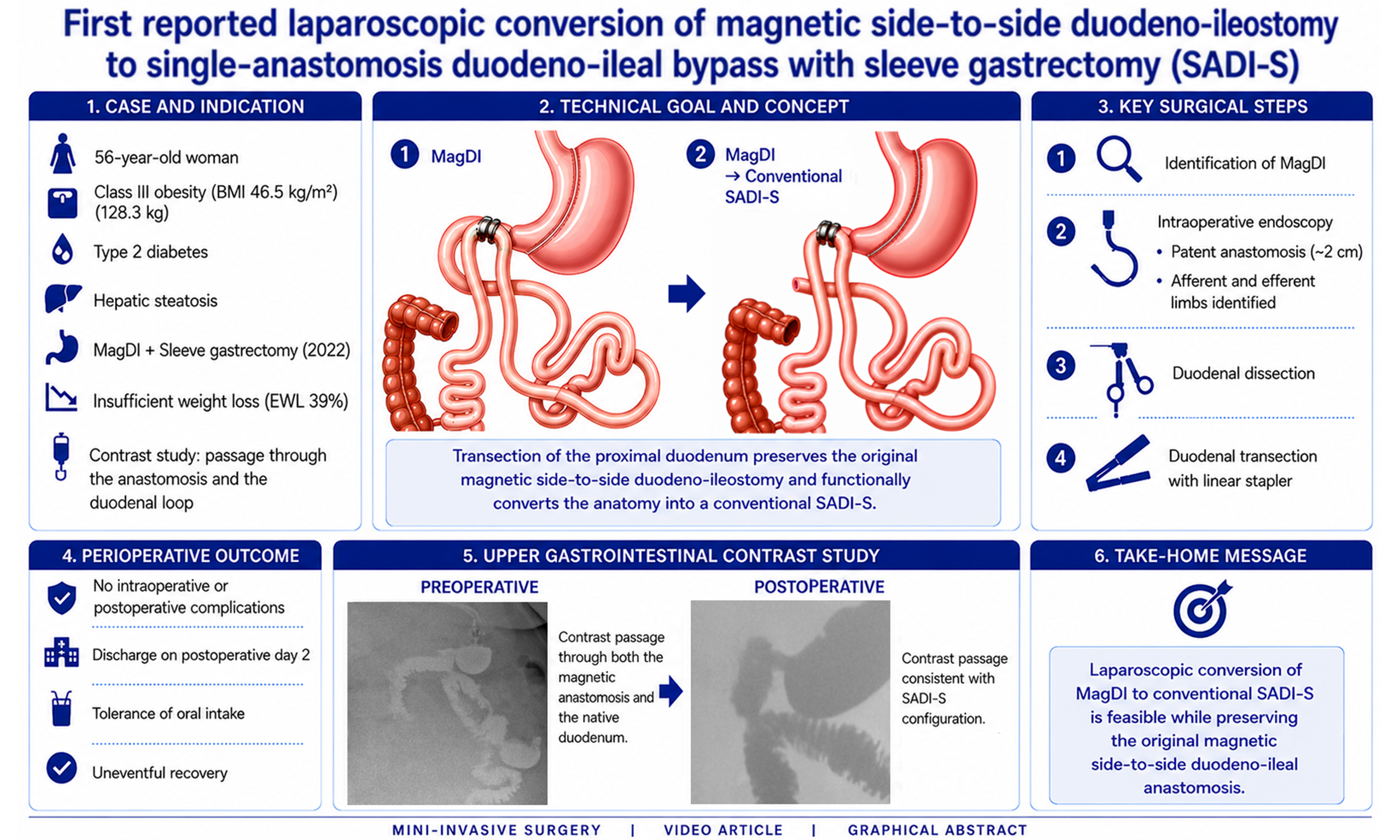
Abstract
Watch a video of this article.
Keywords


 Download PDF
BRIEF EXPLANATION
Single-anastomosis duodeno-ileal bypass with sleeve gastrectomy (SADI-S) is an established bariatric and metabolic procedure providing durable weight loss and metabolic improvement[1-3]. Magnetic compression anastomosis has been introduced to create a magnetic side-to-side duodeno-ileostomy (MagDI), avoiding complications related to conventional hand-sewn or stapled intestinal anastomosis, while demonstrating encouraging early and medium-term postoperative outcomes[4,5]. As clinical adoption expands, revisional procedures will inevitably become necessary; however, the optimal revisional surgical strategy has not yet been described.
A 56-year-old woman with class III obesity [128.3 kg; body mass index (BMI) 46.5 kg/m2], type 2 diabetes and hepatic steatosis underwent MagDI associated with sleeve gastrectomy in 2022. Despite a patent magnetic anastomosis, weight loss was insufficient after 22 months [105 kg; BMI 38.1 kg/m2; excess weight loss (EWL) 39%]. Upper gastrointestinal contrast study demonstrated contrast passage through both the magnetic anastomosis and the native duodenum [Figure 1]. Following multidisciplinary evaluation of the anatomical findings, insufficient weight loss, the patient’s preferences and alternative revisional and pharmacological options, laparoscopic completion of the duodenal bypass was indicated. To the best of our knowledge, this is the first reported laparoscopic conversion of MagDI to a SADI-S configuration.
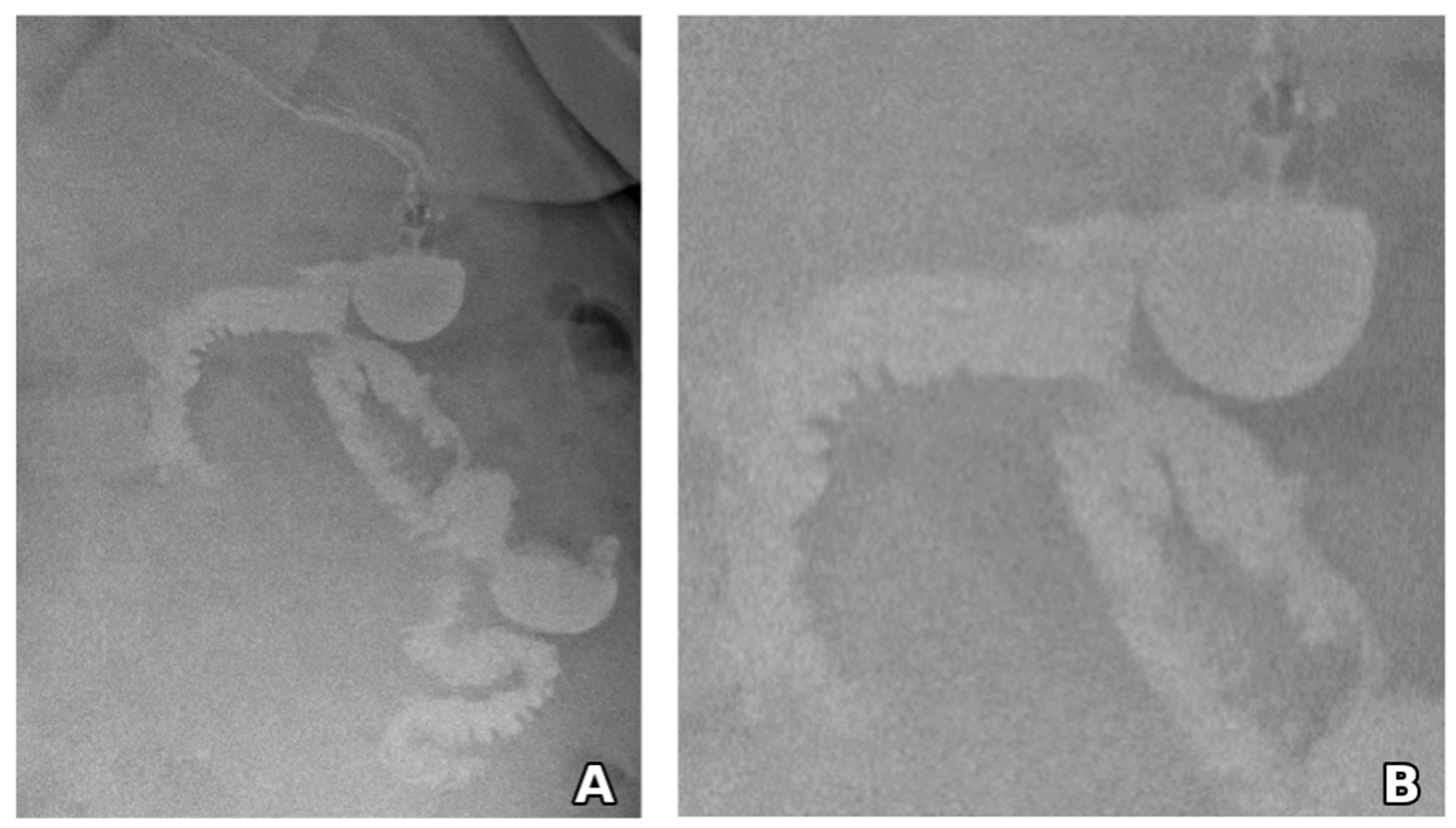
Figure 1. Preoperative upper gastrointestinal contrast study. (A) Contrast passage through both the magnetic anastomosis and the native duodenum; (B) Magnified view of (A).
SURGICAL TECHNIQUE
The key operative steps are shown in Figure 2 and Video 1. Laparoscopic exploration identified the gastric sleeve and the MagDI, with the presence of mild-to-moderate fibrosis and adhesions around the previous magnetic anastomosis. Intraoperative upper gastrointestinal endoscopy demonstrated a patent anastomosis measuring approximately 2 cm, and confirmed access to both the afferent and efferent limbs. Careful adhesiolysis and duodenal dissection were performed. The duodenum was transected 1.5-2 cm distal to the magnetic anastomosis using a linear stapler, thereby achieving functional conversion to a SADI-S configuration while preserving the original magnetic anastomosis.
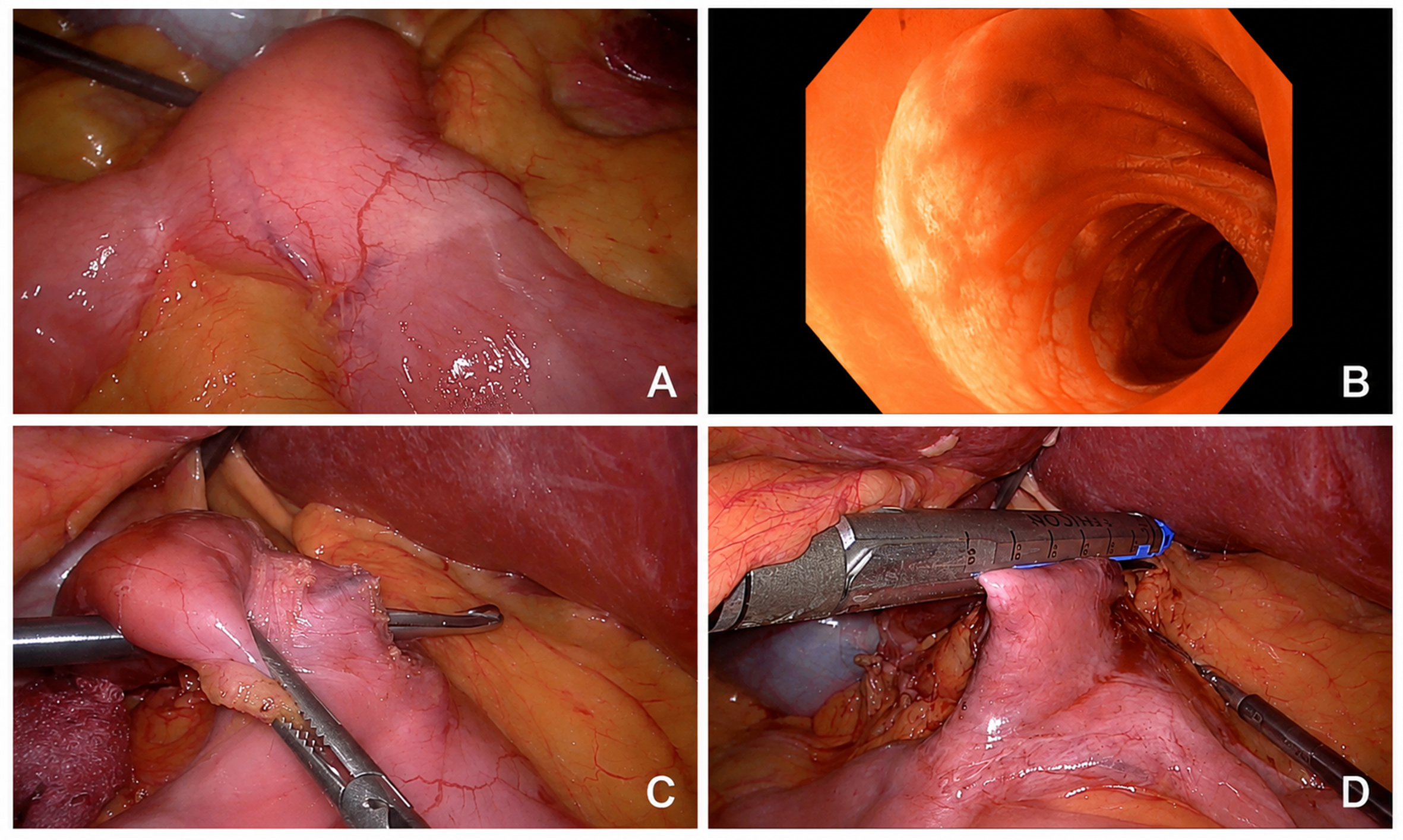
Figure 2. Key operative steps. (A) Identification of MagDI; (B) Intraoperative endoscopy: patent anastomosis (~2 cm) and limbs identified; (C) Duodenal dissection; (D) Duodenal transection using linear stapler. MagDI: Magnetic side-to-side duodeno-ileostomy.
The postoperative course was uneventful. The patient was discharged on postoperative day two and no leak, bleeding, stenosis or readmission occurred. At 24 months after revisional surgery, she remained asymptomatic, with sustained weight loss [96 kg; BMI 34.8 kg/m2, EWL 54%, total weight loss (TWL) 25%] and remission of diabetes (HbA1c 5.5%). Postoperative upper gastrointestinal contrast study confirmed adequate contrast passage consistent with SADI-S configuration [Figure 3].
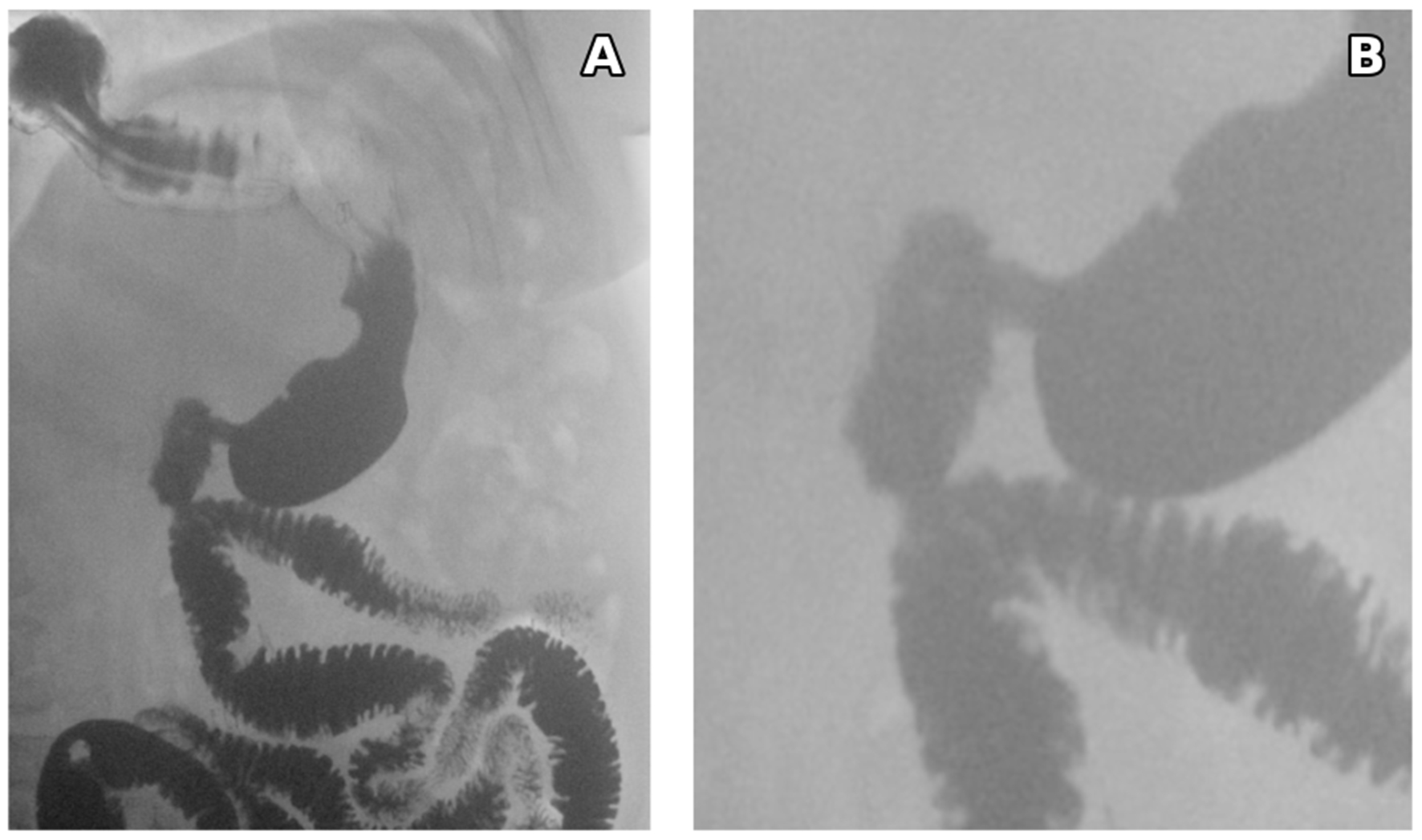
Figure 3. Postoperative upper gastrointestinal contrast study. (A) Contrast passage consistent with SADI-S configuration; (B) Magnified view of (A). SADI-S: Single-anastomosis duodeno-ileal bypass with sleeve gastrectomy.
DECLARATIONS
Authors’ contributions
Conceptualization and manuscript drafting: Gallardo A, Lasses B
Video preparation: Gallardo A, Lasses B
Manuscript revision and final approval: Torres A
Availability of data and materials
Not applicable.
AI and AI-assisted tools statement
During the preparation of this manuscript, the AI tool ChatGPT (OpenAI; GPT-5.6 Sol) was used to assist with English language editing and with the design and generation of schematic illustrations for the graphical abstract. Clinical radiological, endoscopic, and intraoperative images were original patient images and were not AI-generated. The authors take full responsibility for the scientific content, clinical interpretation, and final manuscript preparation.
Financial support and sponsorship
None.
Conflicts of interest
Torres A is an Editorial Board Member of the journal Mini-invasive Surgery. He was not involved in any steps of the editorial process, notably including reviewer selection, manuscript handling, and decision-making. The other authors declare that there are no conflicts of interest.
Ethical approval and consent to participate
According to the institutional policy of the Comité de Ética para la Asistencia Sanitaria (CEAS) of the Hospital Clínico San Carlos, ethics committee approval was not required for this video article/case-based educational report. Informed consent was obtained from the patient.
Consent for publication
Written informed consent for publication of the video and related images was obtained from the patient.
Copyright
© The Author(s) 2026.
Supplementary Materials
REFERENCES
1. Sánchez-Pernaute A, Rubio Herrera MA, Pérez-Aguirre E, et al. Proximal duodenal-ileal end-to-side bypass with sleeve gastrectomy: proposed technique. Obes Surg. 2007;17:1614-8.
2. Sánchez-Pernaute A, Rubio MA, Pérez N, et al. Single anastomosis duodeno-ileal bypass with sleeve gastrectomy (SADI-S). One- to three-year follow-up. Obes Surg. 2010;20:1720-6.
3. Sánchez-Pernaute A, Rubio MÁ, Pérez N, Marcuello C, Torres A, Pérez-Aguirre E. Single-anastomosis duodeno-ileal bypass as a revisional or second-step operation after sleeve gastrectomy. Surg Obes Relat Dis. 2020;16:1491-6.
4. Gagner M, Cadiere GB, Sanchez-Pernaute A, et al. Side-to-side magnet anastomosis system duodeno-ileostomy with sleeve gastrectomy: early multi-center results. Surg Endosc. 2023;37:6452-63.
Cite This Article
 Open Access
How to Cite
Gallardo A, Lasses B, Torres A. First reported laparoscopic conversion of magnetic side-to-side duodeno-ileostomy to single-anastomosis duodeno-ileal bypass with sleeve gastrectomy. Mini-invasive Surg. 2026;10:38. https://dx.doi.org/10.20517/2574-1225.2026.69
Download Citation
If you have the appropriate software installed, you can download article citation data to the citation manager of your choice. Simply select your manager software from the list below and click on download.
Export Citation File
Type of Import
Tips on Downloading Citation
Citation Manager File Format
Type of Import
Direct Import: When the Direct Import option is selected (the default state), a dialogue box will give you the option to Save or Open the downloaded citation data. Choosing Open will either launch your citation manager or give you a choice of applications with which to use the metadata. The Save option saves the file locally for later use.
Indirect Import: When the Indirect Import option is selected, the metadata is displayed and may be copied and pasted as needed.
About This Article
Special Topic
Copyright

Data & Comments
Data
0









Comments
Comments must be written in English. Spam, offensive content, impersonation, and private information will not be permitted. If any comment is reported and identified as inappropriate content by OAE staff, the comment will be removed without notice. If you have any queries or need any help, please contact us at [email protected].